

Aegean
The image on this page is AI-generated and does not depict a real animal.
- Species
- Cat
- Origin
- Greece
- Size
- Medium
- Lifespan
- 9 - 12 years
- Temperament
- Affectionate Social Intelligent Playful Active
- Description
Native to the Greek islands, a naturally developed breed that is friendly toward people and children.
- Physical Traits
Medium-length silky coat, usually colored patches on a white background (bicolor/tricolor), a proportionate athletic body.
- Care / Environment Info
Lives indoors. Sheds moderately. Requires moderate grooming, brushing a few times a week recommended. Moderate energy. Moderately vocal/talkative. Generally a very healthy breed.
Aegean Owner's Guide
Last updated:
Is an Aegean cat right for you?
The Aegean is a semi-longhaired, mostly white bicolour or tricolour domestic cat that developed naturally on Greece's Cycladic islands. It is not a breed "designed" by people but a natural population of cats that has lived around harbours and fishing villages for centuries. Sources note the same type of cat is also found along the western coast of Turkey, so the sociable, white-patched cats of the Aegean shores on both sides are close relatives.
It is a social, chatty and active cat. The most important fact, though: the Aegean is not recognised as a breed by any of the major international cat registries such as CFA, TICA, FIFe or WCF.
| Situation | Suitability | Note |
|---|---|---|
| Apartment | Good | Adapts well, but needs play and climbing space for its energy |
| Family with young children | Good | Usually friendly towards people and playful |
| First-time cat owner | Good | Easy care and a generally easygoing temperament |
| Alone 8+ hours a day | Medium | Social and talkative; gets bored with long periods alone |
| Home with cat allergies | Poor | Semi-long coat with seasonal shedding |
| Wants a pedigree or show cat | Not suitable | Not recognised by major registries |
| Hot climate | Good | Developed on Mediterranean islands; sheds undercoat in summer |
Before you adopt
Be cautious with kittens sold as "Aegean cats". Without recognition from major international registries there is no pedigree system or breed standard that can reliably document that a kitten really is an Aegean. In practice these cats look no different from the white-patched, semi-longhaired mixed-breed cats of coastal towns around the eastern Mediterranean.
If you want this type of cat, the most sensible route is adoption through shelters and cat rescue groups. In regions where this type is common, such as the Greek islands and Turkey's Aegean and Mediterranean coasts, such cats are frequently waiting in shelters and on the streets.
After adoption, book a vet visit in the first week: general exam, FeLV/FIV testing, parasite treatment, vaccinations and a neutering plan. Microchipping is required in many countries (in Turkey, for example, owned cats must be registered in the PETVET system).
Temperament
Sources agree on the picture: intelligent, lively, social and a good communicator. It is described as a cat that greets its owner at the door and "talks" with chirps and short meows.
- Sociability: Usually friendly towards people and good with families and children.
- Energy: Active and playful; keen on hunting games.
- Interest in water: Linked to its harbour origins, it is said not to fear water and even to try catching fish in shallow water. Don't expect this from every individual.
- Apartment life: Sources say it adapts well to apartments, provided it has enough mental and physical stimulation.
Keep in mind that because it comes from a natural population without a recognised standard, individual cats vary more in temperament than in pedigree breeds. Watching an adult cat from a shelter or rescue before adopting is the most reliable way to know what you'll get.
Health issues and lifespan
Shaped by natural selection rather than selective breeding, the Aegean is generally described as a healthy, hardy type, with no known breed-specific inherited disease reported. That does not mean it won't have health problems:
- Sun-related skin cancer (squamous cell carcinoma): White, lightly pigmented ear tips, nose and eyelids are prone to sunburn and, over time, cancer. See a vet for redness, crusting or non-healing sores on the ear tips. A mostly white coat plus a sunny climate makes this relevant; limit midday sunbathing on balconies.
- Obesity: Common in active cats that are neutered and moved indoors.
- Dental and gum disease: Bad breath, drooling, chewing on one side.
- Infections in cats from the street: FIV, FeLV, upper respiratory infections, parasites.
- Hearing: Congenital deafness is more common in all-white, blue-eyed cats. In a mostly white cat with blue eyes, watch how it reacts to sounds and ask your vet if in doubt.
Lifespan data are unreliable: some popular breed sites quote a short 9-12 years, but no study supports this. As a domestic cat type, living conditions are the real driver; indoor, vaccinated, neutered cats commonly live well beyond that range.
Feeding
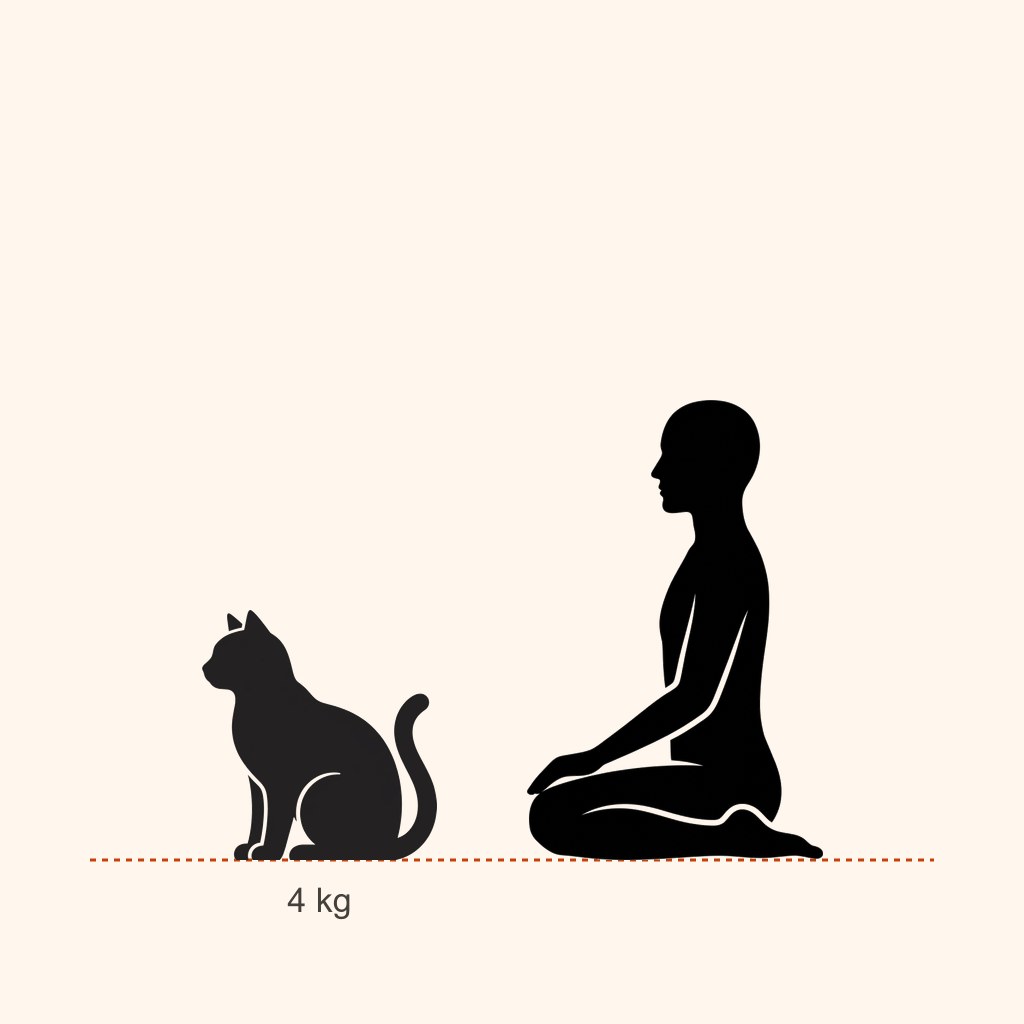
Adult Aegeans are medium-sized; sources give roughly 3-4.5 kg.
- Kitten (2-12 months): Kitten food, 3-4 meals a day.
- Adult: Meat-based, high-protein complete food. Start with the chart on the pack and adjust to body condition.
- Neutered cat: Reduce portions; an active cat that moves indoors needs less energy.
Don't let the fishing-village image lead you to feed raw fish regularly; raw fish carries parasite risk and is not a balanced diet on its own. If you offer fish, make it cooked and occasional. In summer water intake matters: use wet food and several water bowls.
Grooming and coat
The coat is semi-long but lacks a dense, mat-prone undercoat, so care is much easier than for longhairs like the Persian or Maine Coon.
- Brush two or three times a week with a slicker brush.
- The undercoat sheds in hot weather; daily brushing in that period reduces hairballs.
- Indoor cats under artificial light may shed year-round.
- Check nails every 2-3 weeks and ears weekly; follow the tooth-brushing routine your vet recommends.
- White fur can stain under the eyes and on the chin; wiping with a damp cloth is enough.
Living space and enrichment
- Vertical space. An active, curious cat; cat trees and shelves are essential.
- Daily hunting play. At least two 10-15 minute sessions a day with a wand toy.
- Safe windows and balconies. Fit netting, and leave a shaded area that protects light-coloured ears from midday sun.
- Food puzzles. Mental work for a clever, curious cat.
- Water play. For individuals that like water, floating toys in a shallow dish can be fun; never leave unsupervised.
- Company. If you're away for long hours, a compatible second cat can meet its social needs.
History
Cats are thought to have reached the Cyclades in the Bronze Age. For centuries the cats living around harbours, fishing villages and settlements took on their present look through natural selection, without people steering their breeding.
In the early 1990s breeders in Greece's young cat fancy began developing the Aegean as a formal breed from cats selected on the islands. In Greece it is valued as the country's only native cat type and is recognised by the national Greek federation, but it has not gained recognition from the major international registries.
The practical meaning of this history is simple: "Aegean cat" is the name of a cat population shared by the coasts of the Aegean Sea. Many cats of this type are waiting for homes in shelters and on the streets of the region.
This guide is for information only and is not a substitute for veterinary advice. Prices are approximate and vary by region and time.
Adoption Prep Checklist
Housing
-
Cat bed
Cats want a safe space of their own to rest.
-
Cat scratching post
Satisfies the natural scratching instinct and protects furniture.
Feeding
-
Dry/wet cat food
Quality cat food is needed for balanced nutrition.
-
Food and water bowl set
Needed for daily feeding and water access.
Grooming
-
Cat litter and litter box
Essential for the cat's toilet needs.
-
Cat de-shedding brush
Regular brushing reduces hairball formation.
Activity
-
Cat toy
Cats release energy through play.
-
Cat carrier
Needed for safe transport to vet visits.
Frequently Asked Questions
Does the Aegean shed?
It sheds a moderate amount. Brushing two or three times a week noticeably reduces both loose hair and matting.
Can the Aegean live in an apartment?
Yes. It lives comfortably in an apartment as long as its daily needs are met. What matters is not floor area but consistent exercise and mental stimulation.
Is the Aegean good with children?
Generally yes. It adapts well to families with children. Even so, interactions should be supervised and children taught to respect the animal’s boundaries.
Is the Aegean suitable for first-time cat owners?
Partly. Someone with basic experience will manage well, but it would not be the first choice for a complete beginner.
How much exercise does the Aegean need?
It needs a moderate amount of exercise. Daily activity plus some play time makes for a balanced routine.
Can the Aegean be left alone during the day?
It can be left alone for a few hours. Long, routine absences can bring on boredom-driven behaviour problems; enrichment and a predictable routine reduce that risk.
How long does the Aegean live?
The Aegean lives 9 - 12 years on average. Diet, regular veterinary check-ups and early screening for hereditary conditions all affect this directly.
Where does the Aegean come from?
The Aegean originates from Greece. The geography a breed was developed in, and the job it was bred for, explain much of its temperament and care needs today.