

American Curl
The image on this page is AI-generated and does not depict a real animal.
- Species
- Cat
- Origin
- United States
- Size
- Small
- Lifespan
- 12 - 16 years
- Temperament
- Affectionate Curious Intelligent Interactive Lively active Playful Social
- Description
Very devoted to people, loyal, and quickly adapts to new environments.
- Physical Traits
Characteristic curled-back ears forming an elegant arc; short or medium-long coat, seen in nearly every color and pattern.
- Care / Environment Info
Lives indoors. Sheds moderately. Easy to care for, brushing once a week is enough. Moderate energy. Moderately vocal/talkative. Generally a very healthy breed.
American Curl Owner's Guide
Last updated:
Is an American Curl right for you?
What sets the American Curl apart from every other cat is its ears, which curl gracefully backward. Its temperament is affectionate, social, and stays kitten-playful well into adulthood. The real special-care need is not, as it looks, the coat, but the delicate ear cartilage.
| Situation | Suitability | Note |
|---|---|---|
| Apartment | Excellent | Calm-to-moderate energy, well suited to indoor life |
| Family with young children | Good | Affectionate and tolerant; children need to learn gentle ear handling |
| First-time cat owner | Good | Easy care, aside from the ear precautions |
| Alone 8+ hours a day | Moderate | Strongly bonded; doesn't enjoy long solitude |
| Household with fur allergies | Moderate | Both short and long coat variants exist, with little undercoat |
| Household that likes touching ears a lot | Caution | Cartilage is fragile; over-cleaning and forcing cause damage |
| Home that needs quiet | Good | Generally a quiet-voiced breed |
The question to ask before choosing this breed: can you handle its ears gently and only when needed, never by force? Done right, an American Curl's ears can stay trouble-free for life.
Before you adopt
When choosing a kitten, note the ear timeline: kittens are born with straight ears, curling begins within the first 2-5 days, and the final shape sets around 4 months. So a very young kitten's "flat" ear is normal, not a fault. Nearly all kittens from a Curl x Curl pairing are born with curled ears; if you can see both parents, confirm their ear shape.
Temperament
The American Curl is affectionate, curious, and people-oriented. It follows you from room to room, takes interest in household goings-on, and adapts relatively easily to new places and people. It isn't overly demanding, but it doesn't enjoy being ignored either.
Its playfulness persists into adulthood; fetch-playing individuals are common. Some sources note this breed is less averse to water than most cats. Its voice is usually soft and infrequent; it is not a constantly "talking" breed like the Siamese.
Reaching physical maturity takes about 3 years. It gets on well with other cats and children, enjoys a lap but isn't clingy.
Health issues and lifespan
Sources generally report a lifespan of 12-16 years. Aside from the ear structure, there is no serious documented breed-specific genetic disease; observations on the dominant curl gene (Cu) have found no bone or joint abnormalities even in cats carrying two copies (CuCu), unlike the cartilage/bone developmental disorder seen in Scottish Folds.
- Ear canal infections: The most commonly reported health issue in this breed. The curled ear structure can narrow the canal slightly and make wax and debris buildup easier. Scratching, head shaking, bad odor, or dark discharge are signs; see a vet if you notice them.
- Ear cartilage sensitivity: At least the bottom third of the ear is firm cartilage, and this tissue can be damaged easily. Never force the ear to "unfold" or reposition it; broken cartilage can cause permanent deformity.
- Over-cleaning risk: Never insert a cotton swab into the ear canal; it can injure the inner ear and can also push debris deeper. Clean only when visibly dirty, using a vet-approved solution and cotton applied gently near the ear base.
- Tartar and gum disease: As in the general cat population, preventable with regular dental care.
- Obesity: Given its moderate energy level, it can gain weight if left inactive.
Feeding
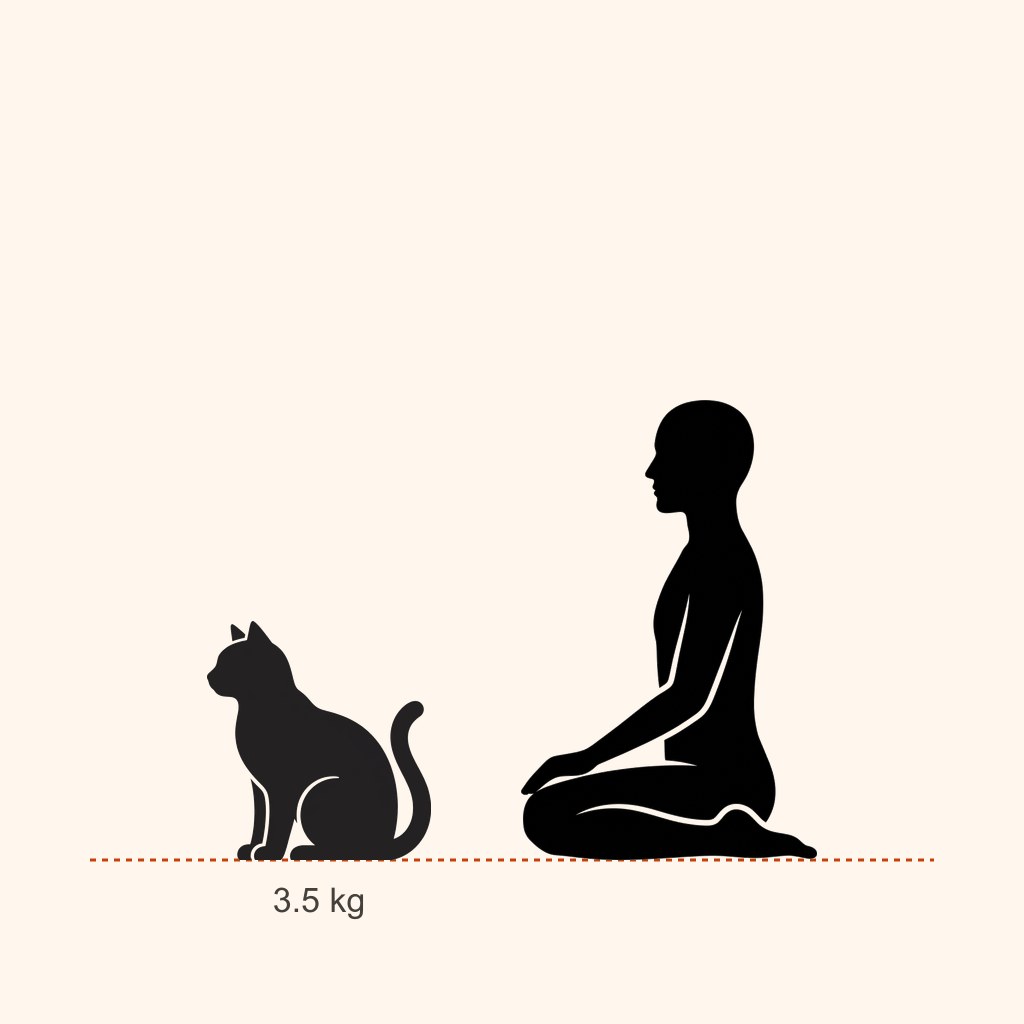
An adult American Curl (2.5-4.5 kg) needs the energy equivalent of about 40-60 g of dry food per day; it is a small-to-medium-sized breed.
- Kitten (2-12 months): Kitten food, three to four meals a day.
- Adult: High protein, moderate carbohydrate. Given its moderate energy level, watch portion sizes.
- Senior (8+ years): Switching to food that supports dental and joint health can help.
As active playtime shortens, reducing food amounts accordingly is the most practical way to manage weight.
Grooming and coat
The American Curl's most special care need is not its coat but its ears.
- Check the ears weekly, and clean only when they look dirty. Never use a cotton swab; use damp cotton or a soft cloth with a vet-approved solution instead.
- Never force the ear or bend it into an unnatural position; the cartilage can break, causing permanent deformity.
- It comes in both short- and long-haired variants; both have little undercoat, so matting risk is low. Weekly brushing is usually enough.
- Trim nails every two to three weeks, brush teeth several times a week.
- Bathing is rarely needed.
Living space and enrichment
- A gentle ear routine. Associate ear handling with a positive experience from a young age, making checks and cleaning easier later.
- Social contact. Active attention several times a day; this breed doesn't like being alone.
- Moderate vertical space. A cat tree and shelves help, though extreme height isn't essential since it isn't an extremely high-energy breed.
- Daily play. Ten to fifteen minutes twice a day, with fetch and wand toys.
- Teach children. If there are children at home, teach them to touch the ears gently and never pull them.
History
The breed's story begins in June 1981 in Lakewood, California, when a black stray kitten named Shulamith turned up at the home of Grace and Joe Ruga with ears curled backward. When some of Shulamith's own kittens showed the same trait, it became clear it was heritable.
Genetic studies showed the curl gene to be dominant and not linked to the sex chromosomes. TICA recognized the breed in 1987 and granted championship status in 1992. CFA registered it in 1999, making the American Curl the first breed CFA accepted with both short- and long-haired divisions at once.
The breed remains relatively rare today, and every modern line traces back to the original Shulamith.
This guide is for information only and is not a substitute for veterinary advice. Prices are approximate and vary by region and time.
Adoption Prep Checklist
Housing
-
Cat bed
Cats want a safe space of their own to rest.
-
Cat scratching post
Satisfies the natural scratching instinct and protects furniture.
Feeding
-
Dry/wet cat food
Quality cat food is needed for balanced nutrition.
-
Food and water bowl set
Needed for daily feeding and water access.
Grooming
-
Cat litter and litter box
Essential for the cat's toilet needs.
-
Short-hair cat brush
Regular brushing reduces hairball formation.
Activity
-
Cat toy
Cats release energy through play.
-
Cat carrier
Needed for safe transport to vet visits.
Frequently Asked Questions
Does the American Curl shed?
Shedding is low. Brushing once a week is usually enough, with a mild increase during seasonal changes.
Can the American Curl live in an apartment?
Yes. It lives comfortably in an apartment as long as its daily needs are met. What matters is not floor area but consistent exercise and mental stimulation.
Is the American Curl good with children?
Generally yes. It adapts well to families with children. Even so, interactions should be supervised and children taught to respect the animal’s boundaries.
Is the American Curl suitable for first-time cat owners?
Yes. Its care and training are relatively forgiving, which makes it a sound choice for first-time owners.
How much exercise does the American Curl need?
It needs a moderate amount of exercise. Daily activity plus some play time makes for a balanced routine.
Can the American Curl be left alone during the day?
It can be left alone for a few hours. Long, routine absences can bring on boredom-driven behaviour problems; enrichment and a predictable routine reduce that risk.
How long does the American Curl live?
The American Curl lives 12 - 16 years on average. Diet, regular veterinary check-ups and early screening for hereditary conditions all affect this directly.
Where does the American Curl come from?
The American Curl originates from United States. The geography a breed was developed in, and the job it was bred for, explain much of its temperament and care needs today.