

Bombay
The image on this page is AI-generated and does not depict a real animal.
- Species
- Cat
- Origin
- United States
- Size
- Medium
- Lifespan
- 9-15 years
- Temperament
- Affectionate Devoted (attached to its owner) Gentle Intelligent Playful
- Description
Usually bonds with a single family member, enjoys getting attention and being carried.
- Physical Traits
Sleek shiny jet-black short coat, copper/gold round eyes, an appearance resembling a small panther.
- Care / Environment Info
Lives indoors. Sheds moderately. Very easy to care for, infrequent brushing needed. Moderate energy. Very talkative and can meow loudly. Some breed-specific health monitoring is recommended.
Bombay Owner's Guide
Last updated:
Is a Bombay right for you?
The Bombay is an American breed developed to look like a "miniature panther", with a glossy jet-black short coat and copper eyes. It is not an Asian breed; it was created in the United States by crossing the Burmese with black American Shorthairs. It is people-oriented, playful and social. The short coat makes care easy, but there is one important genetic issue to understand before you choose this breed: the head and face defect found in some Burmese-derived lines.
| Situation | Suitability | Note |
|---|---|---|
| Apartment | Perfect | Adapts well to indoor life |
| Family with young children | Good | Playful and social; also likes calm surroundings |
| First-time cat owner | Good | Easy care, friendly temperament; choosing a breeder needs care |
| Alone 8+ hours a day | Poor | Very attached to people; does not handle solitude well |
| Household with fur allergies | Moderate to poor | Short coat, moderate shedding; no guarantee against allergies |
| Home with other pets | Good | Usually gets along |
| Owner able to manage weight carefully | Required | Food-motivated and gains weight easily |
The most realistic question: can you give this cat time during the day and keep a disciplined eye on its weight? A Bombay wants your lap, follows you and joins in; it is not a cat that simply waits for mealtime.
Before you adopt
The Bombay is uncommon in many countries, and black shorthaired mixed cats, especially copper-eyed ones, are often advertised as "Bombays". Shelters are full of black cats waiting for homes; if the look is what you want, that is a great route. If you are buying a pedigree cat:
- Burmese head defect (BHD): A change in the ALX1 gene, identified by researchers at UC Davis, is common in the "Contemporary" Burmese lines of the United States. Cats carrying one copy are healthy but have shorter (brachycephalic) faces, a look that was selected for over years. Kittens inheriting two copies from two carrier parents are born with a severe skull and face defect that is incompatible with life. Affected US Bombay kittens were also included in the research. Ask the breeder for the parents' BHD genetic test results.
- Don't favour the shortest faces. Knowing that carriers tend to be flatter-faced, choosing a kitten with a moderate nose is safer for both breathing and breeding health.
- HCM screening: CFA notes that responsible breeders test for hypertrophic cardiomyopathy; ask about the parents' heart ultrasound history.
- Hypokalaemia test: The inherited hypokalaemia mutation described in the Burmese was reported in a scientific study in Burmese-derived breeds, including the Bombay.
In the UK the name "Bombay" is used for a different line from European Burmese and black shorthairs, classed in the Asian group. Whatever the background, your testing questions are the same.
Temperament
CFA calls the Bombay "part cat, part dog, and part clown". It shows affection by head-butting and snuggling, is intelligent and playful, and adjusts easily to new surroundings.
According to PetMD, a Bombay is not content to sit alone waiting for food; it needs regular quality time with its people to thrive. It follows you around and turns up wherever you are working.
Some individuals learn fetch and get used to a harness. Its voice is not as loud as a Siamese's, and it likes warm spots such as under a blanket or a sunny window.
It usually gets on with children and cat-friendly dogs. Wikipedia notes it prefers quieter environments, so in a noisy, busy home it should have a retreat of its own.
Health issues and lifespan
Sources generally give 12 to 16 years; PetMD cites 9 to 15, Wikipedia about 15, with some cats reaching 20. Things to watch:
- Hypertrophic cardiomyopathy (HCM): The heart disease CFA specifically mentions for this breed. Often silent; fast or open-mouth breathing, lethargy or sudden hind-leg paralysis is an emergency. The heart should be listened to at every annual check, with echocardiography if a murmur is found.
- Watery eyes: CFA and PetMD mention excessive tearing. Wipe clear discharge with damp cotton; yellow, green or dark discharge, redness or squinting needs a vet.
- Nasal and sinus problems: Wikipedia reports a tendency to nasal and sinus issues in this short-nosed breed. Persistent sneezing, nasal discharge or noisy breathing warrants an exam.
- Hypokalaemia: Recurrent muscle weakness; head held bent downward, stiff gait and tremors, usually starting young. See a vet the same day; potassium supplementation can control it.
- Obesity: A muscular, food-loving breed. Wikipedia notes the need for controlled feeding, and a vet quoted by PetMD calls obesity the most pressing nutritional issue in cats. Excess weight speeds up diabetes and joint problems.
- Gingivitis: Bad breath, red gum margins and reluctance to chew are signs. Tooth brushing and annual oral checks are recommended.
For older Bombays, PetMD reports breeders noting kidney and pancreas problems. After age 8, have blood and urine tests yearly.
Feeding
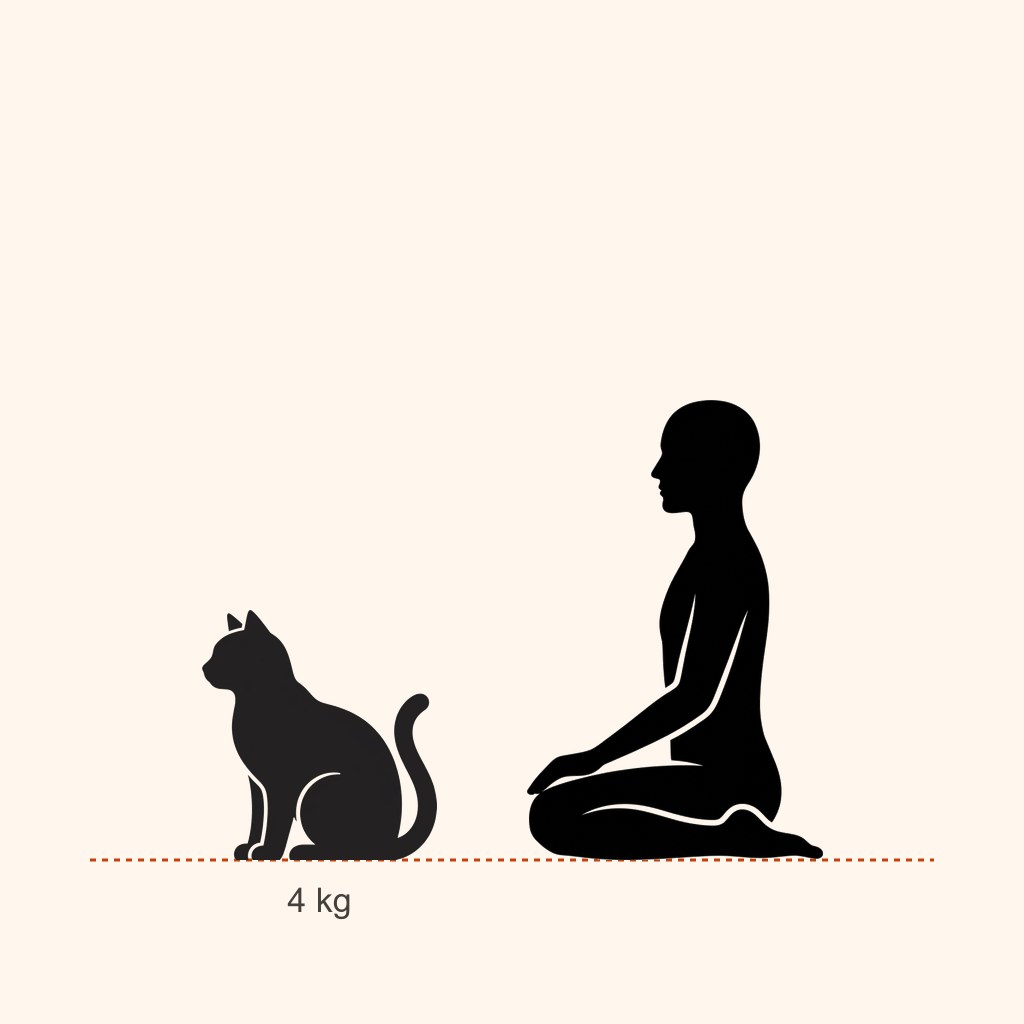
An adult Bombay usually weighs 2.5 to 5 kg, with males heavier than females. It is heavier than it looks and its muscle makes weight hard to judge by eye, so weigh it regularly.
- Kitten (2-12 months): Kitten food, 3 to 4 meals a day.
- Adult: High-protein food in measured portions; 2 to 3 meals a day. Free feeding quickly turns into weight gain in this hungry breed.
- After neutering: Reduce portions and weigh monthly.
- Senior (10+ years): A diet set with your vet based on kidney values and body condition.
Serve part of the ration in puzzle feeders to work its brain and slow eating. Wet food and a fountain increase water intake. If you cannot feel the ribs with light pressure, review portions.
Grooming and coat
The Bombay's short, satin-textured coat is among the easiest to care for. PetMD notes it does not need regular brushing, with heavier shedding in spring and autumn.
- Once a week, a rubber brush or a damp hand: Removes dead hair and boosts shine.
- Bathing: Usually unnecessary.
- Eye cleaning: Wipe the eye corners every few days, daily if needed, with damp cotton.
- Tooth brushing: Several times a week.
- Nails every 2 to 3 weeks; check ears weekly.
Living space and enrichment
- Daily play. At least two 10 to 15 minute sessions with wand toys or fetch.
- Warm, cosy spots. A soft bed and window cushion; but in summer a cool room and plenty of water too.
- Climbing space. A sturdy, medium-height cat tree.
- Brain games. Puzzle feeders and clicker training.
- Safe windows and balconies. Fit nets; indoor life is recommended.
If nobody is home for long periods, a compatible second cat eases a Bombay's loneliness.
History
According to CFA, the breed was born when Kentucky breeder Nikki Horner crossed a black American Shorthair male with a Burmese female. Her goal was a cat resembling a small panther, with a gleaming black coat and copper eyes. Wikipedia says the work began in the late 1950s, while CFA dates the birth of the breed to 1966.
CFA began registering the breed in 1970 and granted championship status in 1976.
The American Bombay shares the Burmese's short, rounded face type, which is why the head defect variant common in Contemporary American Burmese lines can also occur in the Bombay. In the UK there is a separate Bombay line based on the European Burmese type and classed in the Asian group.
This guide is for information only and is not a substitute for veterinary advice. Prices are approximate and vary by region and time.
Adoption Prep Checklist
Housing
-
Cat bed
Cats want a safe space of their own to rest.
-
Cat scratching post
Satisfies the natural scratching instinct and protects furniture.
Feeding
-
Dry/wet cat food
Quality cat food is needed for balanced nutrition.
-
Food and water bowl set
Needed for daily feeding and water access.
Grooming
-
Cat litter and litter box
Essential for the cat's toilet needs.
-
Short-hair cat brush
Regular brushing reduces hairball formation.
Activity
-
Cat toy
Cats release energy through play.
-
Cat carrier
Needed for safe transport to vet visits.
Frequently Asked Questions
Does the Bombay shed?
Shedding is low. Brushing once a week is usually enough, with a mild increase during seasonal changes.
Can the Bombay live in an apartment?
Yes. It lives comfortably in an apartment as long as its daily needs are met. What matters is not floor area but consistent exercise and mental stimulation.
Is the Bombay good with children?
Generally yes. It adapts well to families with children. Even so, interactions should be supervised and children taught to respect the animal’s boundaries.
Is the Bombay suitable for first-time cat owners?
Yes. Its care and training are relatively forgiving, which makes it a sound choice for first-time owners.
How much exercise does the Bombay need?
It needs a moderate amount of exercise. Daily activity plus some play time makes for a balanced routine.
Can the Bombay be left alone during the day?
It can be left alone for a few hours. Long, routine absences can bring on boredom-driven behaviour problems; enrichment and a predictable routine reduce that risk.
How long does the Bombay live?
The Bombay lives 9-15 years on average. Diet, regular veterinary check-ups and early screening for hereditary conditions all affect this directly.
Where does the Bombay come from?
The Bombay originates from United States. The geography a breed was developed in, and the job it was bred for, explain much of its temperament and care needs today.