

California Spangled
The image on this page is AI-generated and does not depict a real animal.
- Species
- Cat
- Origin
- United States
- Size
- Large
- Lifespan
- 10 - 14 years
- Temperament
- Affectionate Curious Intelligent Loyal Social
- Description
Despite its wild appearance, an affectionate, gentle and social cat.
- Physical Traits
Distinctly spotted coat resembling a wild cat, a muscular athletic body.
- Care / Environment Info
Lives indoors. Sheds very little. Very easy to care for, infrequent brushing needed. Very high energy, needs plenty of play and stimulation. Very quiet. Generally a very healthy breed.
California Spangled Owner's Guide
Last updated:
Is a California Spangled cat right for you?
The California Spangled is a spotted, muscular, long-bodied cat that gives the impression of a miniature leopard. But that look is entirely deceptive: the breed carries no wild cat blood whatsoever (no serval, no leopard cat, nothing); it was created purely by crossing domestic breeds. The real story for anyone hoping to adopt one today is this: the California Spangled is one of the rarest cat breeds in the world and is almost impossible to find.
| Situation | Suitability | Note |
|---|---|---|
| Apartment | Good | Active but not hyperactive; enjoys vertical space |
| Family with young children | Good | Affectionate and social, tolerates rough play |
| First-time cat owner | Good | Easy temperament; the real challenge is finding the breed at all |
| Alone 8+ hours a day | Poor | Dislikes long solitude and wants social interaction |
| Household with fur allergies | Moderate | Short coat, sheds little, but no guarantee |
| Someone wanting a "wild" cat because of the look | Wrong expectation | Genetically fully domestic, and its behavior is not wild at all |
| An adopter seeking a rare/collectible breed | Caution | Active breeding has essentially stopped; finding a real individual is difficult |
The most honest question: are you interested in a leopard-looking cat with an entirely domestic temperament, or are you drawn by the look and hoping for a "wild" experience? In the second case you'll be disappointed; this breed is at heart an affectionate, ordinary house cat.
Before you adopt
The most important point: at no stage was a serval, a leopard cat, or any other wild species used in creating the California Spangled. The breed was created in the 1970s by screenwriter and physicist Paul Casey together with anthropologist Louis Leakey, crossing fully domestic breeds — Siamese, Abyssinian, British Shorthair, American Shorthair, Manx, and spotted street cats of Egyptian and Malaysian origin. The goal was to help people feel emotionally closer to wild cats, especially hunted leopards.
Today the breed is rare to the point that active breeding has essentially stopped and registered numbers have stayed extremely low; the total number ever registered is estimated at no more than around 60, and the worldwide population is thought to have never exceeded roughly 200. Breeding largely stopped after Paul Casey's death in 2007. So if you see a listing selling a "California Spangled kitten," be highly skeptical — it is most likely a misidentified spotted mixed-breed cat; ask for genuine pedigree documentation.
Temperament
Despite its wild look, the California Spangled has an extremely affectionate, curious, and social personality. It follows its owner around and enjoys interactive play, but it is not as demanding or hyper-energetic as some other spotted breeds like the Bengal.
It is intelligent and open to learning; it can pick up simple commands and fetch games. It generally gets along easily with everyone in the family, with children, and with other pets.
It enjoys climbing and high observation points; its long, muscular body allows for agile movement. It does not like being alone and gets bored if left without interaction for long periods.
Health issues and lifespan
Sources generally give a lifespan of 10 to 15 years (some up to 16). No breed-specific hereditary disease has been reported, which may be explained both by its broad crossbred foundation and by careful health selection within a small population.
- General heart screening: Not breed-specific, but since hypertrophic cardiomyopathy (HCM) is the most common heart disease in all cats, regular veterinary heart checks should not be skipped.
- Dental health: As with any cat, regular dental care should not be neglected; no breed-specific predisposition has been reported.
- Weight and joint monitoring: As an athletic, muscular breed, an inactive lifestyle can lead to weight gain and the resulting joint strain.
Because this breed's population is so small, there are no large-scale health studies; while no serious hereditary disease is known, this could also reflect a lack of broad data.
Feeding
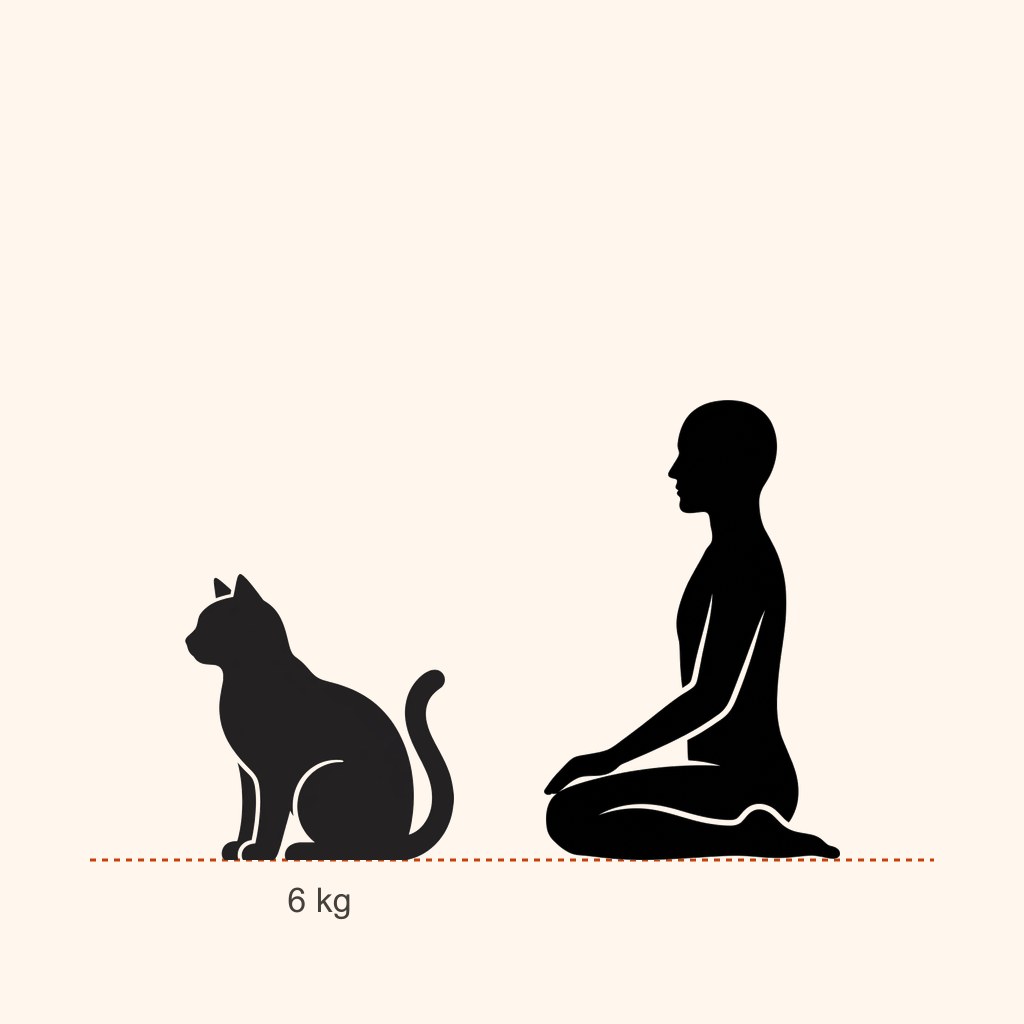
An adult California Spangled is medium-to-large (4.5-7 kg); its long, muscular body can make it feel heavier than its height suggests.
- Kitten (2-12 months): Kitten food, three to four meals a day.
- Adult: A high-protein, quality diet; meat-forward formulas can help support its athletic build.
- Senior (8+ years): A diet set with your vet based on weight and joint monitoring.
Because it is an active breed, inactivity combined with overfeeding quickly adds weight; check portions regularly against a scale.
Grooming and coat
Its short, dense coat makes it one of the easiest breeds to groom.
- Weekly brushing is enough; it sheds little.
- Bathing is usually unnecessary.
- Nails every two to three weeks.
- Teeth brushed several times a week.
- Ears checked monthly.
Living space and enrichment
- Vertical space. A cat tree and shelves satisfy its climbing and observation instincts.
- Daily interactive play. At least two sessions of 10-15 minutes a day, with wand toys and hunting simulation.
- Mind games. Puzzle feeders engage its intelligence.
- A social environment. Consider household interaction or a companion animal so it isn't left alone for long stretches.
- A secure indoor life. It should not be allowed to roam freely outdoors, both because it is a rare and valuable individual and for general safety.
History
The California Spangled's story begins in 1971, when screenwriter and physicist Paul Casey, on a trip to Africa's Olduvai Gorge, learned that one of the region's last wild leopards had just been killed by poachers. Together with anthropologist Louis Leakey, he developed the idea that people living with a cat that looked like a leopard, but was entirely domestic, would become more aware of wildlife and the fur trade.
Casey built the line using eight different domestic breeds and finally added a spotted street cat of Egyptian origin to the program to achieve the primitive, wild look he wanted. Having achieved the type he sought by 1985, Casey introduced the breed in 1986 through a Neiman Marcus catalog; this generated intense demand but also created unexpected pressure that strained the breeding program.
The breed never gained broad acceptance from major registries, and active breeding largely stopped by the late 1990s. Paul Casey's death in 2007 removed the main driving force behind the breed's continued development. Today the California Spangled is regarded as one of the rarest cat breeds in the world.
This guide is for information only and is not a substitute for veterinary advice. Prices are approximate and vary by region and time.
Adoption Prep Checklist
Housing
-
Cat bed
Cats want a safe space of their own to rest.
-
Cat climbing tree
Satisfies the natural scratching instinct and protects furniture.
Feeding
-
Dry/wet cat food
Quality cat food is needed for balanced nutrition.
-
Food and water bowl set
Needed for daily feeding and water access.
Grooming
-
Cat litter and litter box
Essential for the cat's toilet needs.
-
Short-hair cat brush
Regular brushing reduces hairball formation.
Activity
-
Interactive cat toy
Cats release energy through play.
-
Cat carrier
Needed for safe transport to vet visits.
Frequently Asked Questions
Does the California Spangled shed?
Shedding is low. Brushing once a week is usually enough, with a mild increase during seasonal changes.
Can the California Spangled live in an apartment?
Yes. It lives comfortably in an apartment as long as its daily needs are met. What matters is not floor area but consistent exercise and mental stimulation.
Is the California Spangled good with children?
Generally yes. It adapts well to families with children. Even so, interactions should be supervised and children taught to respect the animal’s boundaries.
Is the California Spangled suitable for first-time cat owners?
Yes. Its care and training are relatively forgiving, which makes it a sound choice for first-time owners.
How much exercise does the California Spangled need?
It is high-energy and needs vigorous daily activity. Mental stimulation matters as much as physical exercise; without enough to do, destructive behaviour follows.
Can the California Spangled be left alone during the day?
It can be left alone for a few hours. Long, routine absences can bring on boredom-driven behaviour problems; enrichment and a predictable routine reduce that risk.
How long does the California Spangled live?
The California Spangled lives 10 - 14 years on average. Diet, regular veterinary check-ups and early screening for hereditary conditions all affect this directly.
Where does the California Spangled come from?
The California Spangled originates from United States. The geography a breed was developed in, and the job it was bred for, explain much of its temperament and care needs today.