

Cheetoh
The image on this page is AI-generated and does not depict a real animal.
- Species
- Cat
- Origin
- United States
- Size
- Large
- Lifespan
- 12 - 14 years
- Temperament
- Affectionate Gentle Intelligent Social
- Description
Extremely affectionate, intelligent and a quick learner; loves to play and run.
- Physical Traits
Distinctly spotted coat (a Bengal-Ocicat hybrid), a large muscular body.
- Care / Environment Info
Lives indoors. Sheds very little. Very easy to care for, infrequent brushing needed. Quite energetic and playful. Very talkative and can meow loudly. Generally a very healthy breed.
Cheetoh Owner's Guide
Last updated:
Is a Cheetoh cat right for you?
The Cheetoh is a fairly new breed created by crossing the Bengal with the Ocicat, notable for its large spotted pattern and athletic build. The idea was to combine the Bengal's striking looks and energy with the Ocicat's calmer, more social temperament. The result is a cat that's more demanding than it looks, but not as "high-maintenance" as a Bengal.
| Situation | Suitability | Note |
|---|---|---|
| Apartment | Moderate | Possible, but vertical space and regular play are essential |
| Family with young children | Good | Social and gentle; reported to get along well with families |
| First-time cat owner | Moderate | Easier than a Bengal, but still wants high energy and attention |
| Alone 8+ hours a day | Poor | A bored Cheetoh can become destructive |
| Household with fur allergies | Moderate | Short coat, low maintenance, but no guarantee |
| Quiet, orderly home | Poor | An energetic, curious cat that opens cabinets |
| An active owner who likes to play | Excellent | A cat that plays fetch, learns tricks, and bonds like a dog |
| An inexperienced but time-rich family | Good | A more accessible "exotic-looking" option than the Bengal |
The most honest question: can you keep up daily with the energy of an athletic, leopard-spotted cat? If yes, the Cheetoh is a somewhat calmer, but still active, alternative to the Bengal.
Before you adopt
The Cheetoh was developed in 2001 by American breeder Carol Drymon and is recognized by TICA only as an experimental breed, meaning it's still in development and cannot compete for championship titles. Other major registries such as the CFA do not yet recognize the Cheetoh.
The Cheetoh's Bengal parentage matters here: the Bengal's earliest generations (F1-F3) are restricted in some countries because of their closeness to the Asian leopard cat, and their temperament is not fully domestic. Bengals used to produce Cheetohs are expected to come from fourth-generation-and-later (SBT, fully domestic) lines; it's good practice to ask about the generation of the Bengal parent when choosing a kitten. The Cheetoh is extremely rare in many countries; be cautious of undocumented "Cheetoh" listings and ask for genuine pedigree records.
Temperament
The Cheetoh is outgoing, loyal, and full of personality; it follows its owner around the house with a dog-like devotion. It enjoys interactive play, thrives on mental stimulation, and quickly picks up routines and even simple tricks.
Unlike the Bengal, it tends to be less shy with strangers and more consistently social; it's reported to adapt well to large families and homes with children. Still, its energy is high, and it can get bored without regular, active play.
It's a vocal breed and makes its needs known. Its prey drive, while less pronounced than the Bengal's, is still present; care is needed in homes with small rodents or birds.
Health issues and lifespan
Sources generally give a lifespan of around 12 to 15 years. Coming from the relatively broad gene pool of the Bengal and Ocicat, the Cheetoh is generally considered healthy and robust; no widespread breed-specific hereditary disease has been well documented.
- Hypertrophic cardiomyopathy (HCM): The most common heart disease in cats, reported in both parent breeds. See a vet if you notice lethargy, rapid breathing, or sudden difficulty moving; periodic echocardiograms are recommended from adulthood onward.
- Patellar luxation (kneecap dislocation): Mentioned in some sources as a mild risk in this breed; signs can include limping or occasionally lifting a leg.
- Anesthesia sensitivity: Noted in some sources via the Bengal line; tell your vet your cat is a Bengal/Cheetoh cross before any procedure.
- Cataracts: Reported as an occasional risk; an eye exam should be part of the annual check-up.
- Dental health: Needs regular care, as in any cat.
Feeding
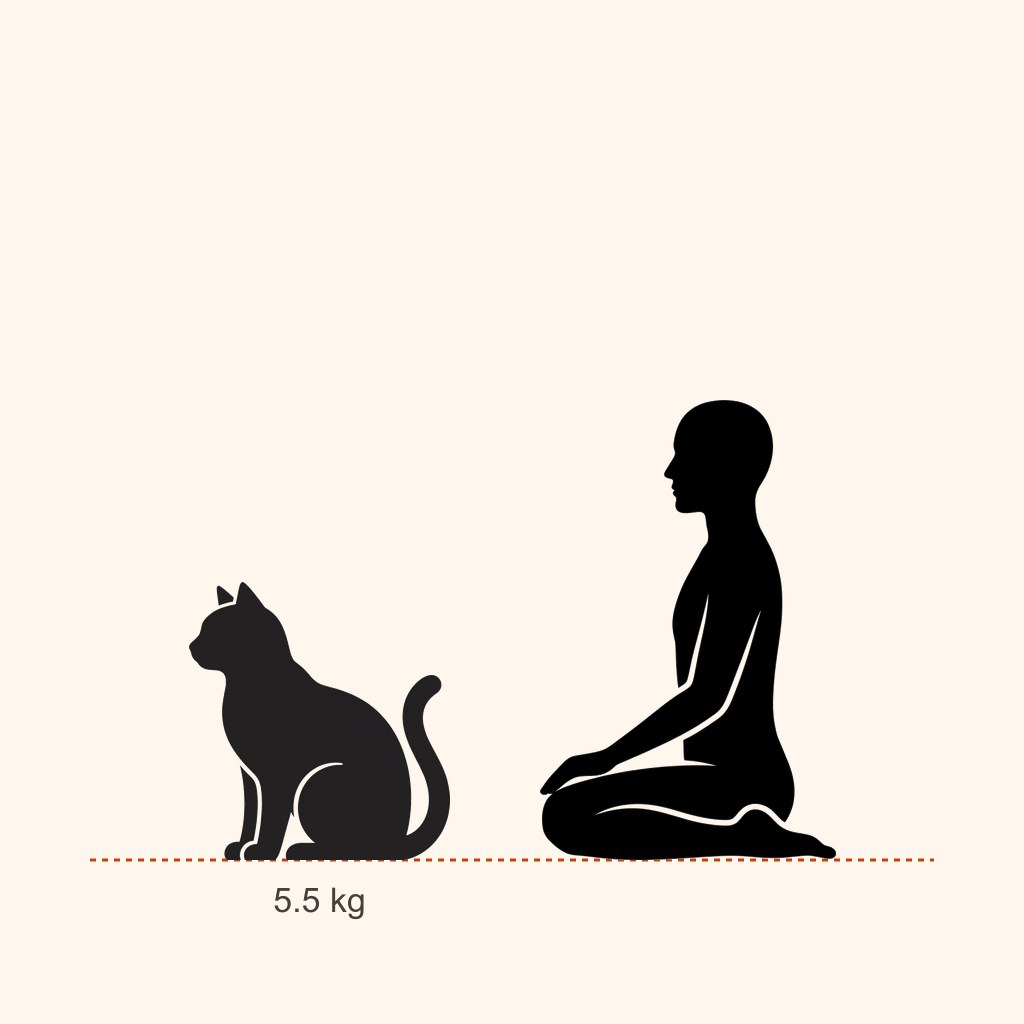
An adult Cheetoh is medium-to-large (5.5-10 kg); males can be notably heavier than females.
- Kitten (2-15 months): Kitten food; because of its Bengal line, this breed can also grow slowly and keep developing until age 2.
- Adult: A high-protein, low-carbohydrate diet; meat-forward, grain-free or low-grain formulas generally work well.
- Senior (10+ years): A diet set with your vet based on heart and joint monitoring.
Being an energetic breed, its calorie needs can run above average; track weight regularly with a scale.
Grooming and coat
Its short, glossy coat makes it one of the easier breeds to groom.
- Weekly brushing is enough; it sheds little.
- Bathing is usually unnecessary.
- Nails every two weeks; regular checks matter for this athletic, climbing breed.
- Teeth brushed several times a week.
- Ears checked monthly.
Living space and enrichment
- Vertical space. A tall cat tree and wall shelves; this breed enjoys observing from height.
- Active play at least twice a day. Wand toys and hunting simulation are the most effective way to prevent boredom.
- Mind games. Puzzle feeders and clicker training keep its intelligence engaged.
- Social interaction. This breed doesn't like being alone and should be part of the family's daily routine.
- A secure indoor life. It should not roam freely outdoors, both for safety and because of hunting pressure on local wildlife.
History
The Cheetoh was developed in 2001 by American breeder Carol Drymon, aiming to combine the Bengal's leopard-like pattern with the Ocicat's naturally spotted coat and calmer character. The breed's name comes from the visual resemblance of its spotted pattern to that of a cheetah.
TICA accepted and registered the Cheetoh as an experimental breed; it has not yet reached championship status and is not recognized by major bodies such as the CFA. Being new and produced by a relatively small number of breeders, it remains a rare breed worldwide. By aiming to deliver the visual impact of the Bengal's wild-derived genetics with a more accessible and predictable temperament, the Cheetoh has drawn growing interest, especially among those seeking an exotic-looking but fully domestic cat.
This guide is for information only and is not a substitute for veterinary advice. Prices are approximate and vary by region and time.
Adoption Prep Checklist
Housing
-
Cat bed
Cats want a safe space of their own to rest.
-
Cat climbing tree
Satisfies the natural scratching instinct and protects furniture.
Feeding
-
Dry/wet cat food
Quality cat food is needed for balanced nutrition.
-
Food and water bowl set
Needed for daily feeding and water access.
Grooming
-
Cat litter and litter box
Essential for the cat's toilet needs.
-
Short-hair cat brush
Regular brushing reduces hairball formation.
Activity
-
Interactive cat toy
Cats release energy through play.
-
Cat carrier
Needed for safe transport to vet visits.
Frequently Asked Questions
Does the Cheetoh shed?
Shedding is low. Brushing once a week is usually enough, with a mild increase during seasonal changes.
Can the Cheetoh live in an apartment?
Yes. It lives comfortably in an apartment as long as its daily needs are met. What matters is not floor area but consistent exercise and mental stimulation.
Is the Cheetoh good with children?
Generally yes. It adapts well to families with children. Even so, interactions should be supervised and children taught to respect the animal’s boundaries.
Is the Cheetoh suitable for first-time cat owners?
Yes. Its care and training are relatively forgiving, which makes it a sound choice for first-time owners.
How much exercise does the Cheetoh need?
It is high-energy and needs vigorous daily activity. Mental stimulation matters as much as physical exercise; without enough to do, destructive behaviour follows.
Can the Cheetoh be left alone during the day?
It can be left alone for a few hours. Long, routine absences can bring on boredom-driven behaviour problems; enrichment and a predictable routine reduce that risk.
How long does the Cheetoh live?
The Cheetoh lives 12 - 14 years on average. Diet, regular veterinary check-ups and early screening for hereditary conditions all affect this directly.
Where does the Cheetoh come from?
The Cheetoh originates from United States. The geography a breed was developed in, and the job it was bred for, explain much of its temperament and care needs today.