

Japanese Bobtail
The image on this page is AI-generated and does not depict a real animal.
- Species
- Cat
- Origin
- Japan
- Size
- Small
- Lifespan
- 14 - 16 years
- Temperament
- Active Agile Intelligent Adaptable easygoing Intelligent Lively active Loyal Playful Social
- Description
Active, sweet, affectionate and very intelligent; a social cat that loves to play with people.
- Physical Traits
Short 'pompon' tail, short or long coat, often tricolor (mi-ke) patterns.
- Care / Environment Info
Lives indoors. Sheds moderately. Very easy to care for, infrequent brushing needed. Very high energy, needs plenty of play and stimulation. Very talkative and can meow loudly. Generally a very healthy breed.
Japanese Bobtail Owner's Guide
Last updated:
Is a Japanese Bobtail cat right for you?
The Japanese Bobtail is a natural breed known in Japan for centuries, recognised by its short, kinked tail — no two are exactly alike, like a fingerprint. This look inspired the country's best-known lucky charm, the maneki-neko (beckoning cat). It's an active, social, and talkative cat that would rather be the centre of the household than forgotten in a quiet corner.
| Situation | Suitability | Note |
|---|---|---|
| Apartment | Good | Active; needs enrichment and climbing space |
| Family with young children | Very good | Playful, social, dog-like devotion |
| First-time cat owner | Good | Easy temperament but high energy; daily play is a must |
| Alone 8+ hours a day | Moderate | A social breed; long solitude can lead to boredom-driven mischief |
| Household with fur allergies | Moderate | Single coat, sheds moderately |
| Home that needs quiet | Poor | Talkative, known for multi-toned "singing" |
| Adopter worried about tailless-cat health issues | Very good | This breed's tail gene works by a different mechanism than the Manx's (see below) |
The question to ask yourself: can you give an energetic, vocal, interaction-hungry cat daily attention? If yes, the Japanese Bobtail makes a fun and reassuringly healthy companion.
Before you adopt
The question people most often confuse is whether this breed's short tail is the same thing as Manx taillessness. Genetic research shows they're governed by entirely different genes: in the Manx, taillessness comes from a T-box gene mutation that shortens spinal development and can be lethal in double dose. In the Japanese Bobtail, the responsible gene is HES7, and its effect is limited to fusion and a reduced number of some of the lower tail vertebrae. A published spinal imaging study found this vertebral variation was not associated with illness or death — meaning the bladder, bowel, and hind-leg problems specific to Manx syndrome are not expected in this breed. In short: the Japanese Bobtail's tail is a cosmetic difference, not a neurological risk.
When choosing a kitten, know that the tail's unique kink shape (whisk, spiral, short, etc.) is part of the breed standard, not a fault. Buying from a registered breeder makes it easier to find a healthy line in this genetically diverse natural breed.
Temperament
The Japanese Bobtail is intelligent, active, and extremely attached to people; many sources compare its loyalty to a dog's. It can learn to fetch, walk on a leash, and pick up new tricks.
Its voice covers a wide tonal range, earning it the nickname "singing cat" — it really does produce varied tones beyond a plain meow. If you're after a quiet household, this isn't the breed for you.
Energy levels are high: it loves climbing, running, and jumping. It's sociable, generally curious and friendly with strangers, and gets on well with other cats and dogs. Without enough stimulation it can turn to mischief, so daily active play isn't optional for this breed.
Health issues and lifespan
Sources give a wide lifespan range, from 9-15 years in some to as much as 15-18 in others. As a natural breed with high genetic diversity, it's generally considered healthy; no common, serious hereditary disease stands out in the literature for this breed specifically.
- Fused tail vertebrae: As explained above, this is a natural breed trait, not a disease, and hasn't been linked to illness or death. Still, handle the tail gently and don't be rough with it.
- Obesity: This breed can beg persistently, and unchecked feeding leads to weight gain. Portion control and active play help balance this out.
- Hypertrophic cardiomyopathy (HCM): The most common heart disease in cats generally; don't overlook it in this breed either — periodic checks in adulthood are advisable.
- Tartar and gum disease: As in the general cat population, preventable with regular dental care.
If you notice sudden lethargy, loss of appetite, or laboured breathing, see a vet promptly — these aren't breed-specific, but they're signs to take seriously in any cat.
Feeding
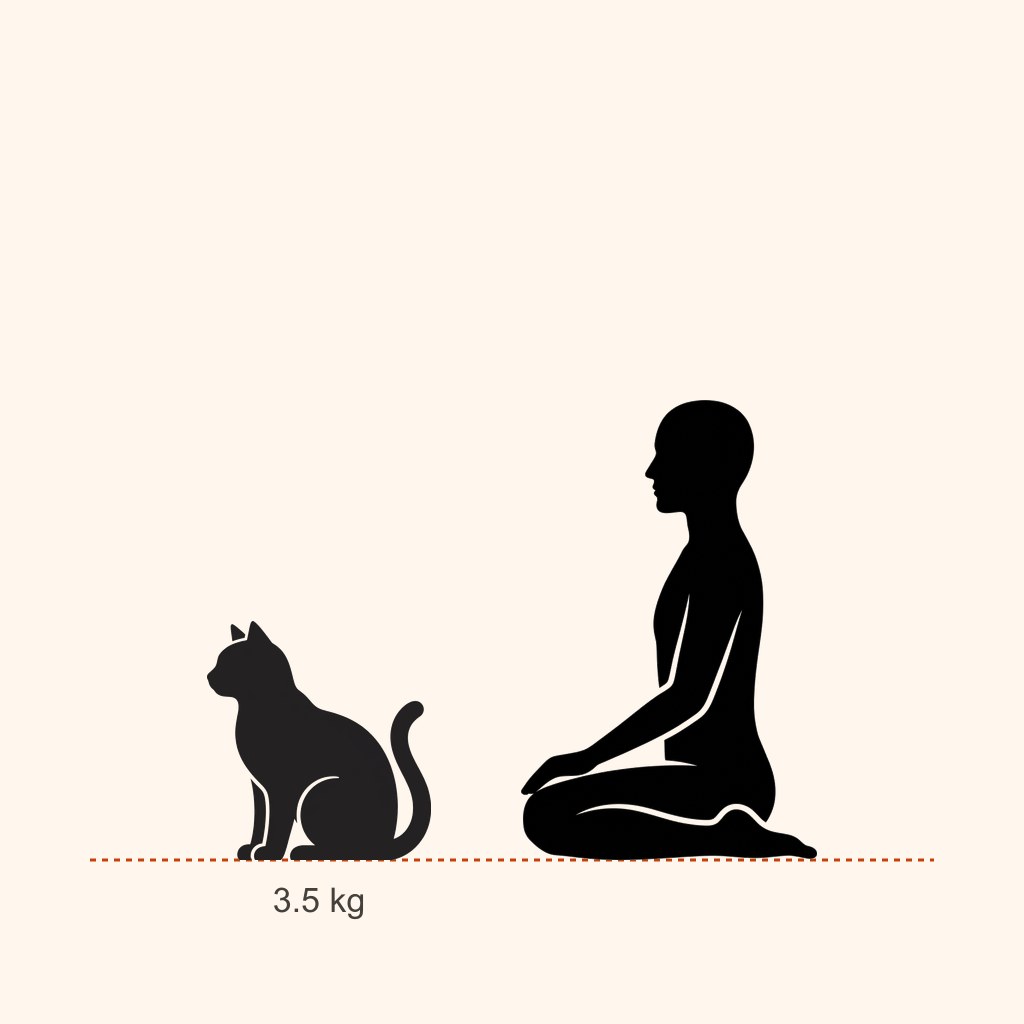
An adult Japanese Bobtail (2.5-4 kg / 5.5-9 lb) can be fed the standard amount for a small-to-medium cat.
- Kitten (2-12 months): Kitten food, three to four meals a day.
- Adult: High protein, moderate calories. Since this active, food-motivated breed tends to beg, weighing out portions helps prevent obesity.
- Senior (8+ years): Heart health should be checked yearly, and food quantity adjusted as calorie needs drop.
Puzzle feeders both help prevent excess weight and meet this intelligent breed's mental needs.
Grooming and coat
The Japanese Bobtail comes in both a short-haired and a less common long-haired variety; both have a single coat with no thick undercoat.
- Brush short coats weekly or twice weekly, long coats every couple of days.
- Because the undercoat is thin, matting risk is low.
- Handle the tail area gently; while its vertebral structure differs, if you notice pain or flinching when touched, see a vet.
- Nails every two to three weeks, teeth brushed several times a week.
Living space and enrichment
- Vertical space. A cat tree, shelves, high vantage points — it loves to climb.
- At least two active play sessions a day. Wand toys, fetch, and short leash walks are all worth trying.
- Mental stimulation. Puzzle feeders and trick training satisfy this intelligent breed.
- Social interaction. It dislikes being left alone; pairing it with another pet if possible helps.
- Respond to its vocalising. Answering its varied tones strengthens the bond.
History
The Japanese Bobtail's ancestors were likely short-tailed cats that reached Japan via Southeast Asia and China, possibly travelling with Buddhist monks around the 6th century. In 1602 Japanese authorities ordered all cats released to control the rodents threatening silkworm production, a decree that let short-tailed cats breed freely and spread across the country. The breed appears often in Japanese ukiyo-e woodblock prints and everyday life.
It was first brought to the West in 1968 by Elizabeth Freret, and the CFA officially recognised the breed in 1976. In Japanese culture, these cats — especially tricolour ("mi-ke") individuals — are considered symbols of luck and prosperity. The maneki-neko figurine, shown with a raised, beckoning paw, is thought to have been inspired by cats resembling the Japanese Bobtail; displayed at business entrances to attract customers, it remains a globally recognised icon of Japanese culture today.
This guide is for information only and is not a substitute for veterinary advice. Prices are approximate and vary by region and time.
Adoption Prep Checklist
Housing
-
Cat bed
Cats want a safe space of their own to rest.
-
Cat climbing tree
Satisfies the natural scratching instinct and protects furniture.
Feeding
-
Dry/wet cat food
Quality cat food is needed for balanced nutrition.
-
Food and water bowl set
Needed for daily feeding and water access.
Grooming
-
Cat litter and litter box
Essential for the cat's toilet needs.
-
Cat de-shedding brush
Regular brushing reduces hairball formation.
Activity
-
Interactive cat toy
Cats release energy through play.
-
Cat carrier
Needed for safe transport to vet visits.
Frequently Asked Questions
Does the Japanese Bobtail shed?
It sheds a moderate amount. Brushing two or three times a week noticeably reduces both loose hair and matting.
Can the Japanese Bobtail live in an apartment?
Yes. It lives comfortably in an apartment as long as its daily needs are met. What matters is not floor area but consistent exercise and mental stimulation.
Is the Japanese Bobtail good with children?
Generally yes. It adapts well to families with children. Even so, interactions should be supervised and children taught to respect the animal’s boundaries.
Is the Japanese Bobtail suitable for first-time cat owners?
Yes. Its care and training are relatively forgiving, which makes it a sound choice for first-time owners.
How much exercise does the Japanese Bobtail need?
It is high-energy and needs vigorous daily activity. Mental stimulation matters as much as physical exercise; without enough to do, destructive behaviour follows.
Can the Japanese Bobtail be left alone during the day?
It can be left alone for a few hours. Long, routine absences can bring on boredom-driven behaviour problems; enrichment and a predictable routine reduce that risk.
How long does the Japanese Bobtail live?
The Japanese Bobtail lives 14 - 16 years on average. Diet, regular veterinary check-ups and early screening for hereditary conditions all affect this directly.
Where does the Japanese Bobtail come from?
The Japanese Bobtail originates from Japan. The geography a breed was developed in, and the job it was bred for, explain much of its temperament and care needs today.