

Javanese
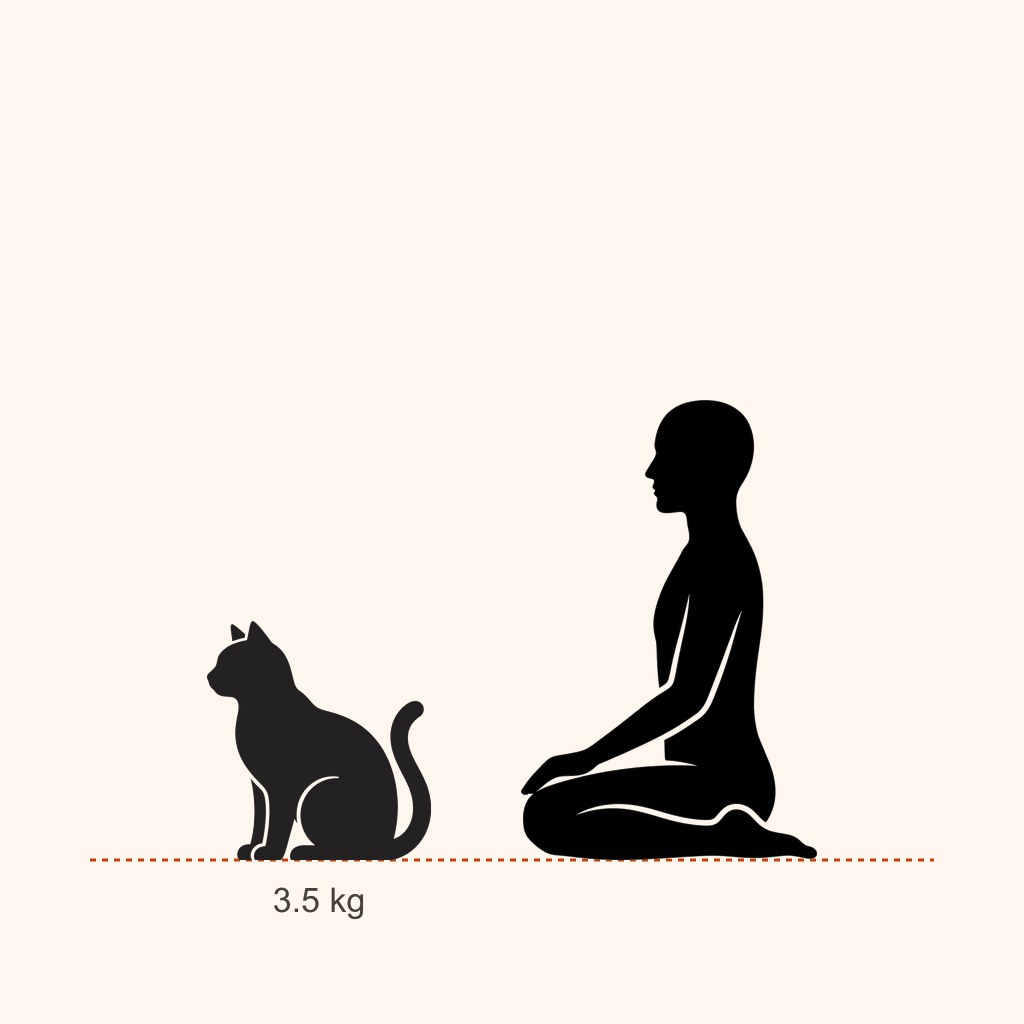
The image on this page is AI-generated and does not depict a real animal.
- Species
- Cat
- Origin
- United States
- Size
- Small
- Lifespan
- 10 - 12 years
- Temperament
- Active Devoted Intelligent Playful
- Description
Constantly curious, intelligent and active; loves jumping to heights and exploring.
- Physical Traits
Long silky coat without an undercoat, color-point pattern, a slender elegant body.
- Care / Environment Info
Lives indoors. Sheds little. Very easy to care for, infrequent brushing needed. Very high energy, needs plenty of play and stimulation. Very talkative and can meow loudly. Its allergy-triggering potential is considered somewhat lower than other breeds (not fully hypoallergenic). Some breed-specific health monitoring is recommended.
Javanese Owner's Guide
Last updated:
Is a Javanese cat right for you?
The Javanese comes from the same family as the Balinese: a long-haired, Oriental-bodied cat where the main difference is almost entirely the colour palette. While the Balinese is limited to the four traditional Siamese colours (seal, blue, chocolate, and lilac point), the Javanese was developed for the "new colours" — lynx point, tortie point, and red/cream point. In temperament the two are cut from the same cloth: vocal, people-attached, intelligent, and energetic.
| Situation | Suitability | Note |
|---|---|---|
| Apartment | Very good | Wants attention and mental stimulation more than space |
| Family with young children | Very good | Playful, social, generally patient |
| First-time cat owner | Good | Moderate grooming difficulty; be ready for its high social needs |
| Alone 8+ hours a day | Poor | Strong Siamese-line attachment to people; unhappy with long solitude |
| Household with fur allergies | Moderate | The single coat sheds, but not as heavily as a Persian's |
| Home that needs quiet | Poor | Vocal, "talks" insistently to get attention |
| Adopter wanting an unusual color/pattern | Very good | Shimmering lynx and tortie patterns are this breed's signature |
The question to ask: are you ready for the Siamese family's personality, paired with unusual colours and patterns? If yes, the Javanese is both visually distinctive and an emotionally intense companion.
Before you adopt
The Javanese wasn't developed as a separate breed but as the "new colours division" of the Balinese; that's why associations like the CFA still treat it as a Balinese colour category today, while TICA treats it as a Balinese variation outright. In practice, this means that even though a kitten is labelled "Javanese," the health and genetic background you'll see in its pedigree largely overlaps with the Balinese and Siamese line. When choosing a kitten, ask the breeder about heart screening (echocardiogram for HCM) and an eye exam; knowing which lines it comes from (Siamese, Colorpoint Shorthair) also clarifies what health profile to expect.
Temperament
The Javanese is intelligent, curious, and extremely attached to people; it dislikes being alone and wants to be part of every family activity. It's vocal — not as loud as the Siamese, but insistent — and lets you know when it isn't getting enough attention.
It's playful and athletic, enjoying climbing, jumping, and prey-simulating toys. Thanks to its intelligence, some individuals learn to fetch, figure out how to open doors, or master puzzle feeders quickly. It gets on well with other cats and gentle children; left alone, it may act out from boredom (knocking things over, persistent meowing).
Health issues and lifespan
Sources generally report a lifespan of 10-16 years; with good care, individuals from this Siamese-derived line are sometimes seen exceeding that upper range. Because the Javanese comes from the same gene pool as the Balinese and Siamese, its health profile largely overlaps too.
- Amyloidosis: A known inherited risk from its Siamese ancestry, involving abnormal protein buildup in the liver. It can present at a young-to-middle age with lethargy, loss of appetite, and jaundice.
- Hypertrophic cardiomyopathy (HCM): The most common heart disease in cats; periodic cardiac checks are recommended.
- Progressive retinal atrophy (PRA): Reported in Siamese-derived lines; can lead to vision loss over time.
- Asthma and respiratory sensitivity: Reported more often in Siamese and related breeds than in cats generally; a cough-like spasm or wheezing can be a sign.
- Dental crowding: The short jaw shape can speed up tartar buildup; regular dental care matters.
Feeding
An adult Javanese (2.5-5 kg / 5.5-11 lb) can be fed the standard amount for a small-to-medium cat; it's a lean-bodied breed, so looking slim is normal.
- Kitten (2-12 months): Kitten food, three to four meals a day.
- Adult: High protein, low carbohydrate.
- Senior (9+ years): Liver values should be checked annually given the amyloidosis risk.
As an active breed, puzzle feeders both tire the mind and slow down eating, which can reduce both obesity and hairball risk.
Grooming and coat
Although the Javanese's coat looks long, it's single-layered and doesn't carry the dense undercoat a Persian's does, which makes grooming noticeably easier.
- Brushing two or three times a week is generally enough to prevent matting.
- Because the undercoat is nearly absent, this breed doesn't need the Persian's daily brushing routine.
- Nails every two to three weeks, teeth brushed several times a week.
- Bathing is rarely needed.
Living space and enrichment
- Social contact. Several bouts of active attention a day — this breed's most important need.
- Vertical space. A cat tree, shelves, high vantage points; it loves to climb.
- Two active play sessions a day. Wand toys, fetch, mental puzzles.
- A second cat. Worth seriously considering if it will be alone for long stretches.
- Respond to its vocalising. This breed communicates through sound; answering it strengthens the bond.
History
The Javanese traces back to the Balinese, which itself developed from a spontaneous long-hair mutation that appeared in Siamese litters in the 1950s. In the late 1970s, North American breeders began producing Balinese-type cats in colours and patterns beyond the traditional four — lynx point, tortie point, red/cream point — by outcrossing to the Colorpoint Shorthair. The CFA approved the name "Javanese" in 1979, granted provisional status in 1984, and full championship status in 1986. The name references the island of Java, near Bali, rather than any direct connection to Indonesia.
In 2008 the CFA merged the Javanese back in as a colour division of the Balinese, while TICA has always treated it as part of the Balinese/Siamese group rather than a separate breed. Today the name "Javanese" is mainly used to describe Balinese-type cats in non-traditional colours; the two share largely the same history, structure, and temperament.
This guide is for information only and is not a substitute for veterinary advice. Prices are approximate and vary by region and time.
Adoption Prep Checklist
Housing
-
Cat bed
Cats want a safe space of their own to rest.
-
Cat climbing tree
Satisfies the natural scratching instinct and protects furniture.
Feeding
-
Dry/wet cat food
Quality cat food is needed for balanced nutrition.
-
Food and water bowl set
Needed for daily feeding and water access.
Grooming
-
Cat litter and litter box
Essential for the cat's toilet needs.
-
Short-hair cat brush
Regular brushing reduces hairball formation.
Activity
-
Interactive cat toy
Cats release energy through play.
-
Cat carrier
Needed for safe transport to vet visits.
Frequently Asked Questions
Does the Javanese shed?
Shedding is low. Brushing once a week is usually enough, with a mild increase during seasonal changes.
Can the Javanese live in an apartment?
Yes. It lives comfortably in an apartment as long as its daily needs are met. What matters is not floor area but consistent exercise and mental stimulation.
Is the Javanese good with children?
Generally yes. It adapts well to families with children. Even so, interactions should be supervised and children taught to respect the animal’s boundaries.
Is the Javanese suitable for first-time cat owners?
Yes. Its care and training are relatively forgiving, which makes it a sound choice for first-time owners.
How much exercise does the Javanese need?
It is high-energy and needs vigorous daily activity. Mental stimulation matters as much as physical exercise; without enough to do, destructive behaviour follows.
Can the Javanese be left alone during the day?
It can be left alone for a few hours. Long, routine absences can bring on boredom-driven behaviour problems; enrichment and a predictable routine reduce that risk.
How long does the Javanese live?
The Javanese lives 10 - 12 years on average. Diet, regular veterinary check-ups and early screening for hereditary conditions all affect this directly.
Where does the Javanese come from?
The Javanese originates from United States. The geography a breed was developed in, and the job it was bred for, explain much of its temperament and care needs today.