

Khao Manee
The image on this page is AI-generated and does not depict a real animal.
- Species
- Cat
- Origin
- Thailand
- Size
- Medium
- Lifespan
- 10 - 12 years
- Temperament
- Calm Easygoing calm Talkative (loves to meow) Playful Warm-hearted
- Description
Very intelligent, outgoing and curious, but also a calm and easygoing lap cat.
- Physical Traits
Short pure white coat, often 'odd-eyed' with one blue and one gold eye.
- Care / Environment Info
Lives indoors. Sheds moderately. Requires moderate grooming, brushing a few times a week recommended. Moderate energy. Very talkative and can meow loudly. Generally a very healthy breed.
Khao Manee Owner's Guide
Last updated:
Is a Khao Manee cat right for you?
The Khao Manee is a very rare breed from Thailand, known for its pure white coat and often two different-coloured eyes ("odd-eye"). Kept for centuries around the Thai royal court and nicknamed the "diamond eye" cat, it only reached the West in 1999. Even today it's hard to find worldwide; adopting one takes patience and research.
| Situation | Suitability | Note |
|---|---|---|
| Apartment | Good | Active but adapts to indoor life |
| Family with young children | Good | Social and playful, gets on well with gentle children |
| First-time cat owner | Moderate | Easy temperament, but the breed is very rare; finding a kitten takes time |
| Alone 8+ hours a day | Moderate | A social breed that feels the lack of attention over long solitude |
| Household with fur allergies | Moderate | Short-coated with no undercoat, low shedding, but allergy risk is never zero |
| Home that needs quiet | Moderate | A talkative breed that loves to meow |
| Adopter wanting to knowingly take on the hearing-risk of a blue/odd-eyed white cat | Good | Be sure to read the health section below |
The realistic question here: can you spend the time to find a rare breed and work with a trustworthy breeder? The Khao Manee rewards a patient search with a striking, affectionate companion.
Before you adopt
The Khao Manee's white coat is produced by the feline "dominant white" (W) gene. In the scientific literature, this gene has complete penetrance for suppressing coat pigmentation, but only incomplete penetrance for deafness and for lightening the iris (blue eyes) — meaning not every white cat carrying this gene goes deaf, but the risk is elevated compared with the general cat population, and is reported more often in blue-eyed or odd-eyed individuals specifically. There's no large, breed-specific hearing-test (BAER) study for the Khao Manee, so quoting a precise "deafness rate for the breed" would be misleading. When choosing a kitten, ask the breeder whether BAER testing has been done; a cat that's deaf in only the ear on the blue-eye side can still live an entirely normal life, sometimes just needing extra household safety precautions (for example, extra care around outdoor access).
Temperament
The Khao Manee is intelligent, athletic, and loves to communicate. It enjoys toys, prey-simulating activities, and mental puzzles, while also having a real "lap cat" side that likes being carried on a shoulder.
It vocalises often and communicates a great deal through body language too, making its needs clear. It generally gets on well with other cats and children and has a social nature. Its curious character means it likes exploring every corner of the house; closed cupboards and drawers are an adventure to it.
Health issues and lifespan
Registries generally give a lifespan of around 10-12 years, though this figure is noted to come from general estimates rather than a large cohort study; individual care quality will be a determining factor in this breed too.
- Deafness risk (linked to white coat + blue/odd eyes): A white coat, and especially a blue iris, share a genetic mechanism associated with congenital deafness in cats. This link isn't specific to the Khao Manee — it's described in the scientific literature for white cats in general. Eye colour alone doesn't determine hearing status: a blue-eyed cat can hear perfectly, and a yellow- or green-eyed cat can be deaf. A BAER test is needed for certainty.
- Hypertrophic cardiomyopathy (HCM): The most common heart disease in cats; shouldn't be overlooked in this breed either.
- Tartar and gum disease: Preventable with regular care, as in the general cat population.
- Kidney and liver values: No documented breed-specific risk, but for rare, small-population breeds, an annual routine blood panel is a sensible general precaution.
If you notice sudden signs suggesting deafness (no response to sounds, unusually loud meowing), loss of appetite, or lethargy in a Khao Manee, see a vet.
Feeding
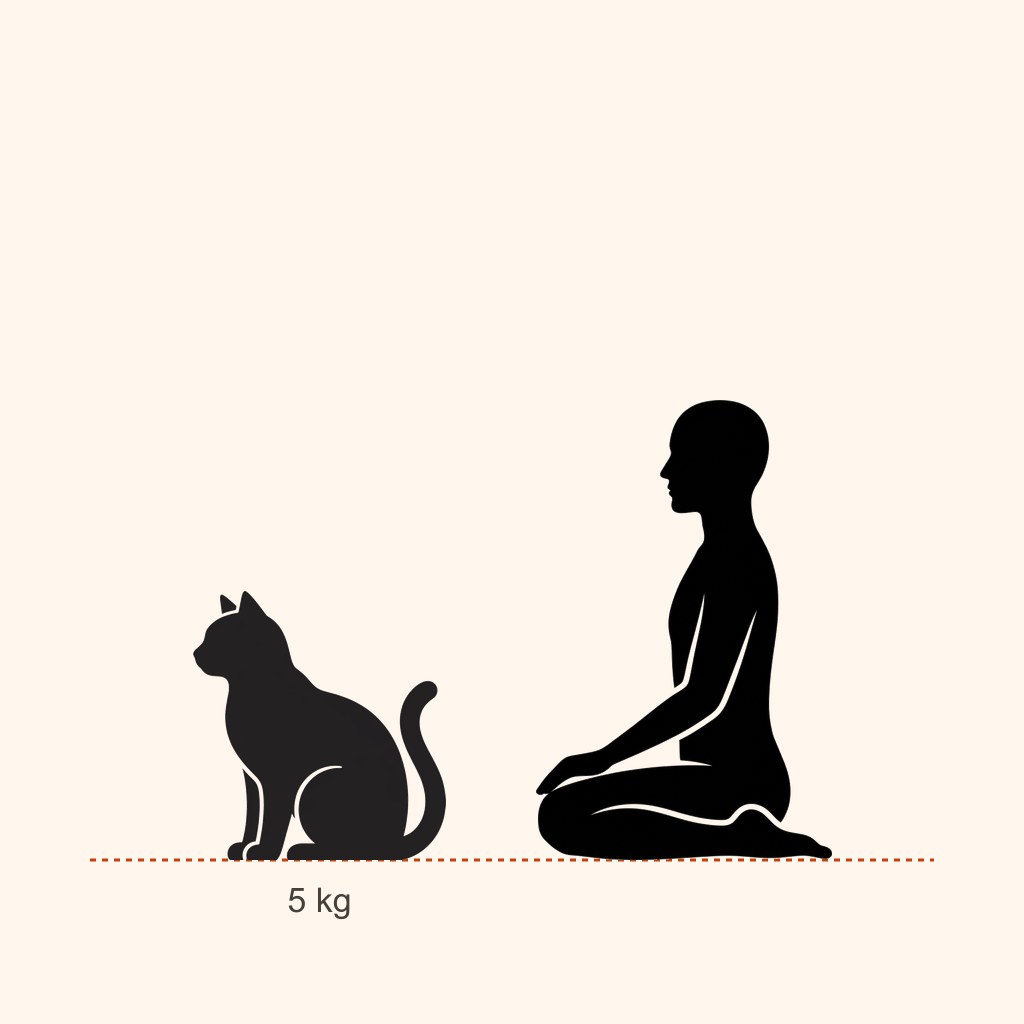
An adult Khao Manee (2.5-5 kg / 5.5-11 lb) can be fed the standard amount for a medium-sized cat.
- Kitten (2-12 months): Kitten food, three to four meals a day.
- Adult: High protein, balanced mineral content; avoid excess calories to keep its athletic build.
- Senior (8+ years): Heart and kidney values should be checked annually.
As an active breed, puzzle feeders both tire the mind and help with weight control.
Grooming and coat
The Khao Manee's short, undercoat-free coat is one of the easiest to maintain.
- Weekly brushing is enough to keep shedding down and the coat glossy.
- The white coat can be prone to staining; wiping around the eyes with a damp cloth helps prevent tear stains.
- Nails every two to three weeks.
- Teeth brushed several times a week.
- Check ears regularly; general ear care attention is worthwhile in a breed with an elevated hearing risk.
Living space and enrichment
- Interactive toys. Prey-simulating wand toys and mental puzzles satisfy this curious breed.
- Vertical and exploratory spaces. A cat tree, shelves, boxes that open and close — all appeal to its curious nature.
- Safety precautions. Given the possible hearing risk, take extra care around outdoor access and secure windows and balconies.
- Social time. Several bouts of active attention and lap time a day.
- Respond to its vocal/visual communication. It communicates through body language and sound; answering it strengthens the bond.
History
The Khao Manee is an ancient breed named in Thailand's "Tamra Maew" (Cat-Book Poems), dated to 1350-1767, and considered a symbol of luck, prosperity, and longevity. For centuries it was kept largely within the Thai royal court and almost never left the country.
It was first introduced to the West in 1999, when breeder Colleen Freymuth brought a female named Sripia from Thailand to the United States. TICA accepted the breed for registration in 2009, as a preliminary new breed in 2012, and granted championship status in 2015; the CFA accepted it for registration in 2018. It remains an extremely rare breed outside Thailand today; odd-eyed individuals in particular are known as the most sought-after type among collectors and breeders.
This guide is for information only and is not a substitute for veterinary advice. Prices are approximate and vary by region and time.
Adoption Prep Checklist
Housing
-
Cat bed
Cats want a safe space of their own to rest.
-
Cat scratching post
Satisfies the natural scratching instinct and protects furniture.
Feeding
-
Dry/wet cat food
Quality cat food is needed for balanced nutrition.
-
Food and water bowl set
Needed for daily feeding and water access.
Grooming
-
Cat litter and litter box
Essential for the cat's toilet needs.
-
Cat de-shedding brush
Regular brushing reduces hairball formation.
Activity
-
Cat toy
Cats release energy through play.
-
Cat carrier
Needed for safe transport to vet visits.
Frequently Asked Questions
Does the Khao Manee shed?
It sheds a moderate amount. Brushing two or three times a week noticeably reduces both loose hair and matting.
Can the Khao Manee live in an apartment?
Yes. It lives comfortably in an apartment as long as its daily needs are met. What matters is not floor area but consistent exercise and mental stimulation.
Is the Khao Manee good with children?
Generally yes. It adapts well to families with children. Even so, interactions should be supervised and children taught to respect the animal’s boundaries.
Is the Khao Manee suitable for first-time cat owners?
Partly. Someone with basic experience will manage well, but it would not be the first choice for a complete beginner.
How much exercise does the Khao Manee need?
It needs a moderate amount of exercise. Daily activity plus some play time makes for a balanced routine.
Can the Khao Manee be left alone during the day?
It can be left alone for a few hours. Long, routine absences can bring on boredom-driven behaviour problems; enrichment and a predictable routine reduce that risk.
How long does the Khao Manee live?
The Khao Manee lives 10 - 12 years on average. Diet, regular veterinary check-ups and early screening for hereditary conditions all affect this directly.
Where does the Khao Manee come from?
The Khao Manee originates from Thailand. The geography a breed was developed in, and the job it was bred for, explain much of its temperament and care needs today.