

Kurilian
The image on this page is AI-generated and does not depict a real animal.
- Species
- Cat
- Origin
- Russia
- Size
- Large
- Lifespan
- 15 - 20 years
- Temperament
- Independent Very intelligent Intelligent Curious inquisitive Social Playful Trainable
- Description
Independent, very intelligent, curious, social and trainable; shows deep devotion to its person.
- Physical Traits
Short bobtail tail, short or medium-long coat, found in various colors.
- Care / Environment Info
Lives indoors. Sheds little. Very easy to care for, infrequent brushing needed. Very high energy, needs plenty of play and stimulation. Moderately vocal/talkative. Generally a very healthy breed.
Kurilian Owner's Guide
Last updated:
Is a Kurilian Bobtail cat right for you?
The Kurilian Bobtail (Kurilian cat) is a naturally developed breed from Russia's Kuril Islands, Sakhalin Island, and the Kamchatka Peninsula, known for over 200 years. It's recognised by its short, uniquely kinked tail, sturdy build, and a surprising fondness for water. Despite its wild look, its temperament is remarkably gentle and people-attached.
| Situation | Suitability | Note |
|---|---|---|
| Apartment | Good | Active and large-bodied; needs room to move and enrichment |
| Family with young children | Very good | Affectionate, patient, and playful |
| First-time cat owner | Good | Easy temperament; the breed's health history is still rare and under-documented |
| Alone 8+ hours a day | Moderate | Social but also somewhat independent; doesn't prefer total solitude |
| Household with fur allergies | Moderate | Both short and semi-long coated varieties exist, both shedding moderately |
| Home bothered by water play | Poor | This breed may take an interest in the bathtub, tap, or even the shower |
| Adopter looking for a natural, unbred breed | Very good | Unlike the Japanese Bobtail, this is a fully natural breed shaped without human intervention |
The question to ask: are you ready for a sturdy, curious cat that isn't shy about playing in water? If yes, the Kurilian cat makes a robust and affectionate companion.
Before you adopt
The Kurilian's short tail comes from a natural mutation, and the number of tail vertebrae can range from 2 to 10; each individual can have its own tail shape (whisk, spiral, and others). This breed is still rare worldwide and holds "advanced new breed" status with TICA, meaning large-scale, breed-specific health studies are limited in the veterinary literature. Buying from a registered breeder and seeing the parents' general health checks (including a heart listen) is your best assurance in a breed with this little documentation.
Temperament
The Kurilian Bobtail is intelligent, curious, and independent-minded, while also being affectionate and social toward people. It typically forms a special bond with one or a few people. Its strong hunting instinct comes from its island ancestors' skill at catching rodents and even fish; it loves prey-simulating play with toys.
This breed's most notable trait is its love of water: its coat is water-resistant, and unlike most cats, it doesn't avoid getting wet. Individuals have been reported to come check out the bathtub during a bath, or even want to join the shower. It generally gets on well with children and other pets, making it an adaptable family cat.
Health issues and lifespan
Sources generally report a notably long lifespan of 14-20 years, attributed to the breed's natural origin and genetic diversity. No common, breed-specific inherited disease has been documented to date.
- General heart health: While no documented breed-specific inherited heart disease exists, it's sensible not to overlook hypertrophic cardiomyopathy (HCM), the most common heart disease in cats generally, and to monitor it with periodic checks.
- Tail area sensitivity: With a reduced number of tail vertebrae, handle this area gently; consult a vet if you notice pain or flinching when touched.
- Obesity: As a sturdy, large-bodied breed, weight gain can be harder to notice than in other breeds if it isn't kept active; regular weigh-ins are advisable.
- Tartar and gum disease: Preventable with regular care, as in the general cat population.
Because the breed is rare, large-scale health screening data is limited — this doesn't mean "no problems exist," just that data is scarce, so don't skip annual checkups.
Feeding
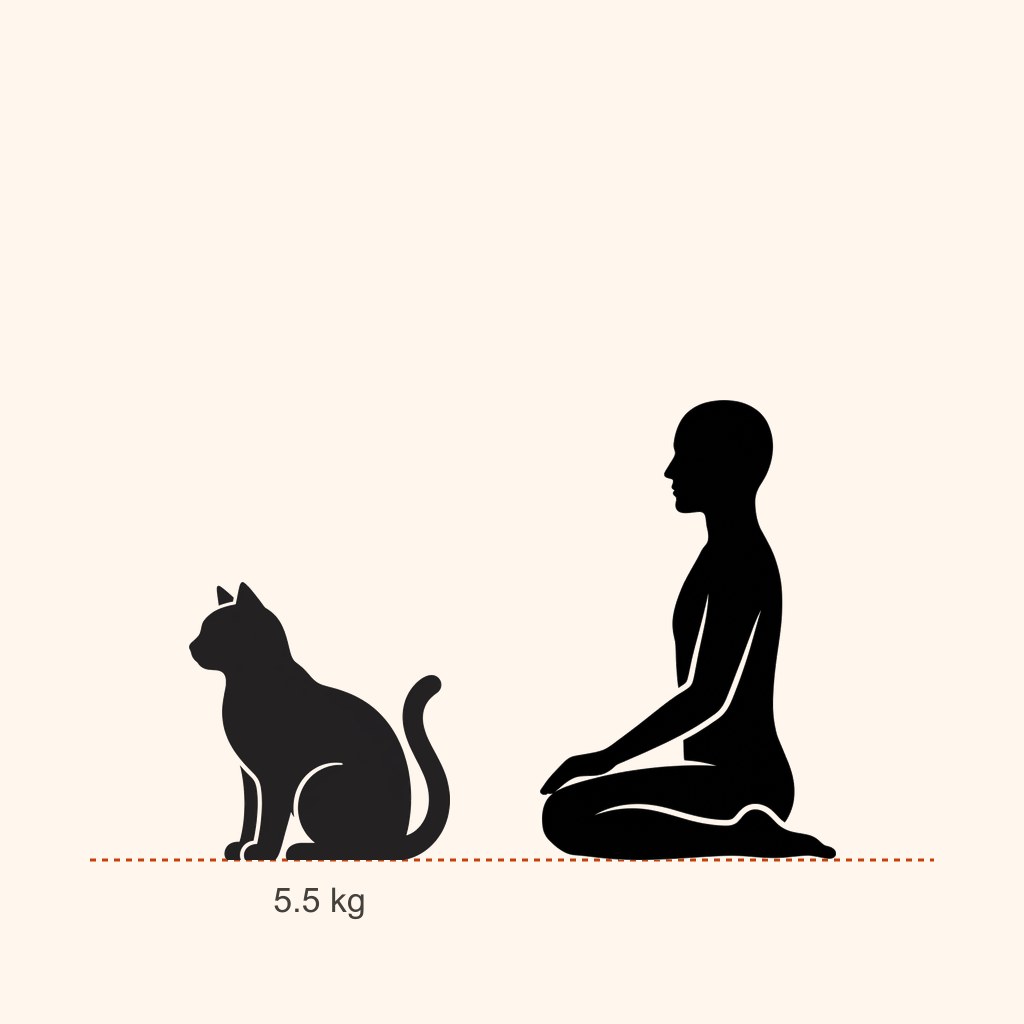
An adult Kurilian cat (5-7 kg / 11-15 lb for males, 4-5 kg / 8-11 lb for females) can be fed the standard amount for a large-bodied cat.
- Kitten (2-12 months): Kitten food, three to four meals a day; food quality during the growth period matters for this large-framed breed.
- Adult: High protein, balanced nutrition to support its muscular build.
- Senior (9+ years): Heart and joint health should be checked annually.
Given its love of water, fountain-type water bowls can attract this breed's interest and increase water intake.
Grooming and coat
The Kurilian comes in both short-haired and semi-long-haired varieties; both have a relatively easy-to-maintain, water-resistant coat.
- Brush short coats weekly, semi-long coats two to three times a week.
- Thanks to the water-resistant coat, matting is less of an issue than in other long-haired breeds.
- Nails every two to three weeks.
- Teeth brushed several times a week.
- Check ears regularly.
Living space and enrichment
- Safe interaction with water. If it shows interest, you can offer supervised water play (a shallow dish, a dripping tap).
- Prey-simulating play. Wand toys and moving prey-like toys satisfy its strong hunting instinct.
- Spacious, sturdy furnishings. As a large-bodied breed, its cat tree and furniture need to be sturdy enough to support it.
- Daily active play. Regular movement is essential to balance its energy and prevent obesity.
- Social but respectful approach. Given its independent streak, let it accept attention on its own terms.
History
The Kurilian Bobtail is a natural breed known for over 200 years in the Kuril Islands it's named for, as well as Sakhalin Island and the Kamchatka Peninsula. One theory holds it arose from natural crossbreeding between the ancestors of the Japanese Bobtail and Siberian-type cats brought to the region by sailors; unlike the Japanese Bobtail, however, this breed developed entirely without human intervention, shaped by the islands' harsh natural conditions. Locals long valued it as a skilled rodent hunter.
TICA officially recognises it as a natural cat breed and granted full championship status in 2012. Rarely taken outside the region during the Soviet era, the Kurilian began being introduced to other parts of Russia and then the West from the 1990s onward. Though still a relatively rare breed today, its love of water and sturdy build are drawing growing interest among curious cat lovers.
This guide is for information only and is not a substitute for veterinary advice. Prices are approximate and vary by region and time.
Adoption Prep Checklist
Housing
-
Cat bed
Cats want a safe space of their own to rest.
-
Cat climbing tree
Satisfies the natural scratching instinct and protects furniture.
Feeding
-
Dry/wet cat food
Quality cat food is needed for balanced nutrition.
-
Food and water bowl set
Needed for daily feeding and water access.
Grooming
-
Cat litter and litter box
Essential for the cat's toilet needs.
-
Short-hair cat brush
Regular brushing reduces hairball formation.
Activity
-
Interactive cat toy
Cats release energy through play.
-
Cat carrier
Needed for safe transport to vet visits.
Frequently Asked Questions
Does the Kurilian shed?
Shedding is low. Brushing once a week is usually enough, with a mild increase during seasonal changes.
Can the Kurilian live in an apartment?
Yes. It lives comfortably in an apartment as long as its daily needs are met. What matters is not floor area but consistent exercise and mental stimulation.
Is the Kurilian good with children?
Generally yes. It adapts well to families with children. Even so, interactions should be supervised and children taught to respect the animal’s boundaries.
Is the Kurilian suitable for first-time cat owners?
Yes. Its care and training are relatively forgiving, which makes it a sound choice for first-time owners.
How much exercise does the Kurilian need?
It is high-energy and needs vigorous daily activity. Mental stimulation matters as much as physical exercise; without enough to do, destructive behaviour follows.
Can the Kurilian be left alone during the day?
It tolerates being alone well. That makes it workable for someone employed full time, though it will still expect attention and activity on your return.
How long does the Kurilian live?
The Kurilian lives 15 - 20 years on average. Diet, regular veterinary check-ups and early screening for hereditary conditions all affect this directly.
Where does the Kurilian come from?
The Kurilian originates from Russia. The geography a breed was developed in, and the job it was bred for, explain much of its temperament and care needs today.