

LaPerm
The image on this page is AI-generated and does not depict a real animal.
- Species
- Cat
- Origin
- Thailand
- Size
- Medium
- Lifespan
- 10 - 15 years
- Temperament
- Affectionate Friendly Gentle Intelligent Playful Quiet
- Description
Gentle and affectionate but also active; also enjoys being a lap cat.
- Physical Traits
Curly/wavy ringlet coat, found in every color, a medium build.
- Care / Environment Info
Lives indoors. Sheds moderately. Very easy to care for, infrequent brushing needed. Quite energetic and playful. Moderately vocal/talkative. Its allergy-triggering potential is considered somewhat lower than other breeds (not fully hypoallergenic). Generally a very healthy breed.
LaPerm Owner's Guide
Last updated:
Is a LaPerm cat right for you?
The LaPerm takes its name from the tight, wavy "perm" of its coat. Despite its striking looks, the temperament is refreshingly simple: people-oriented, lap-loving, curious, and playful. CFA describes it as "extremely interactive and affectionate," and individuals who happily ride around on an owner's shoulder are common. Thanks to the natural wave, grooming is notably lighter than for other long or semi-long-haired breeds.
| Situation | Suitability | Note |
|---|---|---|
| Apartment | Very good | Adapts easily to indoor life |
| Family with young children | Good | Playful and tolerant; supervise rough play |
| First-time cat owner | Very good | Easy care, generally sound health |
| Alone 8+ hours a day | Moderate | Attached to people; can get bored during long solitude |
| Household with fur allergies | Moderate | Claimed to shed and trigger allergies less, but evidence is limited |
| Home that doesn't want to groom often | Very good | The curled coat needs far less brushing than straight hair |
| Hot, sunny environment | Moderate | Sparsely coated areas can be prone to sunburn |
The most realistic question: can you accept the LaPerm's coat as it is, without over-brushing it? In this breed, too much brushing can flatten the curl; the whole point of its grooming is "less intervention."
Before you adopt
The LaPerm's curly coat comes from a dominant gene mutation that alters coat structure and, per Wikipedia, is genetically unrelated to other "rex" breeds such as the Devon Rex, Cornish Rex, or Selkirk Rex — it is an independent mutation. A curly-coated mixed-breed cat can easily be sold as a "LaPerm"; what distinguishes a genuine one is pedigree paperwork and the coat's distinctive texture, often described as having a slight mohair-like "drag" to the touch.
Kittens can be born bald. The breed's best-known trait is that kittens sometimes arrive completely hairless or with very sparse fuzz, shed what little coat they have in the first weeks, and then grow the characteristic curly coat by around four months of age. This is confirmed in CFA and breeder sources as a normal developmental stage specific to this breed — it is not a cause for alarm, and if a listing mentions "born bald, then grew a coat," that is expected for a LaPerm, not a sign of illness.
Temperament
Descended from working farm cats, the LaPerm has a strong hunting instinct alongside being intensely people-oriented. It is curious, opening cupboards, climbing into bags, and inserting itself into whatever you're doing.
Despite loving a lap, it is not a sedentary cat; it is playful and intelligent, capable of learning simple tricks. Riding on an owner's shoulder is a commonly reported behavior in this breed.
Its voice is used gently; it is not an especially vocal breed. It generally gets on well with children and other pets.
Because of its strong attachment to people, it does not enjoy long stretches alone; if under-stimulated it can channel its curiosity into mischief.
Health issues and lifespan
Sources report no documented breed-specific inherited disease; CFA and Wikipedia describe the breed as generally healthy. Ongoing outcrossing in breeding programs preserves genetic diversity. Lifespan is usually reported around 12 to 15 years.
- Sunburn risk: The coat can thin out seasonally, particularly on the back and belly; thinly coated areas can burn with prolonged sun exposure. Provide shade for cats that go outdoors.
- General feline health risks: Tartar, obesity, and hypertrophic cardiomyopathy (HCM) — conditions seen across cats generally — warrant routine veterinary checks; no increased breed-specific risk has been reported.
- Allergen claim: Some sources suggest the LaPerm triggers fewer allergic reactions. This is based on individual observation rather than strong scientific evidence; anyone with a significant cat allergy should spend extended time with the cat before adopting to test their own reaction.
Feeding
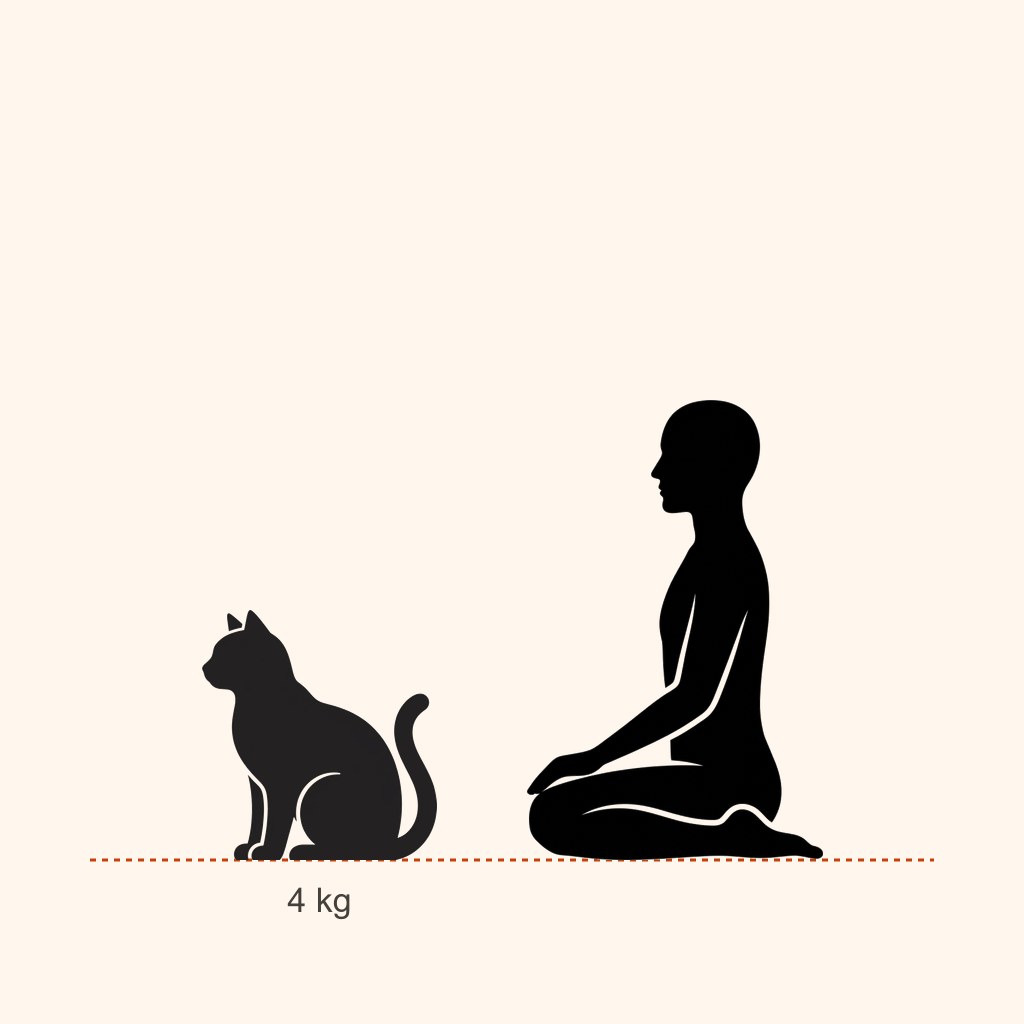
An adult LaPerm ranges roughly 2.5–5.5 kg; males are noticeably larger than females.
- Kitten (2–12 months): Kitten food, three to four meals a day. Bald or sparse coat at this stage is normal and unrelated to diet.
- Adult: A high-protein, balanced diet; this active, curious breed has moderate-to-high energy needs. Use measured meals rather than free-feeding.
- Senior (8+ years): Age-appropriate food alongside weight and dental monitoring.
Wet food and a fountain-type water bowl help support water intake.
Grooming and coat
This is the breed's easiest aspect and a particular draw for informed adopters.
- Don't over-brush. Frequent, firm brushing can flatten the natural curl; a gentle hand-fluff or a wide-toothed comb once a week is enough.
- The coat mats less than straight long hair, but knots can still form in the curled areas (behind the ears, under the neck); check these by hand.
- Bathing is usually unnecessary; if done, keep it infrequent and gentle.
- Nails every two to three weeks, teeth several times a week.
- Check the ears monthly.
Living space and enrichment
- Room to be curious. Open shelves, boxes, paper bags — this breed loves to explore.
- Daily interactive play. The hunting instinct is strong; wand toys and hunt-simulation play work well.
- A place to climb. A medium-height cat tree and a window perch for observation.
- Social contact. Set up a routine where it won't be alone for long; a second pet is generally welcomed by this breed.
- Shaded indoor spots. Protection from direct sun during sparsely coated phases.
Living as an indoor cat is recommended for both safety and coat health.
History
The LaPerm's story begins in 1982 on a farm in The Dalles, Oregon. A kitten born to Linda and Richard Koehl's farm cat Speedy arrived completely bald; within a few months it grew an unusual, curly coat and was named "Curly." Every LaPerm today traces its pedigree back to this single cat.
Over the following decade a free-breeding colony grew naturally around the farm before the Koehl family began a controlled breeding program. The curl was determined to come from a dominant gene mutation with no genetic relation to other rex breeds.
CFA accepted the breed for registration in 2000 and granted full championship status in 2008. TICA granted championship status in 2003; the GCCF gave full recognition in 2012, and FIFe in 2015. Today registries permit limited outcrossing to short- and longhaired domestic cats to preserve genetic diversity; CFA plans to phase this out after 2025.
This guide is for information only and is not a substitute for veterinary advice. Prices are approximate and vary by region and time.
Adoption Prep Checklist
Housing
-
Cat bed
Cats want a safe space of their own to rest.
-
Cat climbing tree
Satisfies the natural scratching instinct and protects furniture.
Feeding
-
Dry/wet cat food
Quality cat food is needed for balanced nutrition.
-
Food and water bowl set
Needed for daily feeding and water access.
Grooming
-
Cat litter and litter box
Essential for the cat's toilet needs.
-
Cat de-shedding brush
Regular brushing reduces hairball formation.
Activity
-
Interactive cat toy
Cats release energy through play.
-
Cat carrier
Needed for safe transport to vet visits.
Frequently Asked Questions
Does the LaPerm shed?
It sheds a moderate amount. Brushing two or three times a week noticeably reduces both loose hair and matting.
Can the LaPerm live in an apartment?
Yes. It lives comfortably in an apartment as long as its daily needs are met. What matters is not floor area but consistent exercise and mental stimulation.
Is the LaPerm good with children?
Generally yes. It adapts well to families with children. Even so, interactions should be supervised and children taught to respect the animal’s boundaries.
Is the LaPerm suitable for first-time cat owners?
Yes. Its care and training are relatively forgiving, which makes it a sound choice for first-time owners.
How much exercise does the LaPerm need?
It is high-energy and needs vigorous daily activity. Mental stimulation matters as much as physical exercise; without enough to do, destructive behaviour follows.
Can the LaPerm be left alone during the day?
It can be left alone for a few hours. Long, routine absences can bring on boredom-driven behaviour problems; enrichment and a predictable routine reduce that risk.
How long does the LaPerm live?
The LaPerm lives 10 - 15 years on average. Diet, regular veterinary check-ups and early screening for hereditary conditions all affect this directly.
Where does the LaPerm come from?
The LaPerm originates from Thailand. The geography a breed was developed in, and the job it was bred for, explain much of its temperament and care needs today.