

Nebelung
The image on this page is AI-generated and does not depict a real animal.
- Species
- Cat
- Origin
- United States
- Size
- Medium
- Lifespan
- 11 - 16 years
- Temperament
- Gentle Quiet Shy Playful
- Description
A somewhat reserved nature but loves to play, curious and observant.
- Physical Traits
Blue-grey medium-long coat, green eyes, a slender elegant body.
- Care / Environment Info
Lives indoors. Sheds moderately. Requires moderate grooming, brushing a few times a week recommended. Moderate energy. Very quiet. Generally a healthy breed.
Nebelung Owner's Guide
Last updated:
Is a Nebelung cat right for you?
The Nebelung, whose name comes from the German for "creature of the mist," is an elegant breed known for its semi-long silvery-blue coat and emerald green eyes. It can look like a semi-longhaired cousin of the Russian Blue, but registries treat it as an entirely separate breed. Calm, reserved, and deeply bonded to its owner, it suits a settled, patient household rather than a busy, noisy one.
| Situation | Suitability | Note |
|---|---|---|
| Apartment | Excellent | Quiet, well-suited to indoor life |
| Family with young children | Moderate | Good with calm children; upset by sudden movement and noise |
| First-time cat owner | Good | Easy care, but the settling-in period needs patience |
| Alone 8+ hours a day | Good | Independent; tolerates long solitude relatively well |
| Household with fur allergies | Moderate | Dense double coat; no guarantee against allergies |
| Home with frequent guests | Poor | Shy of strangers, may hide |
| Owner who can be patient during a move-in period | Required | Settling into a new environment takes time |
The most realistic question: do you have the patience for a settling-in process that can take weeks after bringing a new cat home? Trying to force a Nebelung into your lap delays trust; letting it approach on its own terms is essential.
Before you adopt
The Nebelung is sometimes called a "long-haired Russian Blue," but that's a misnomer; registries recognize it as a fully separate breed. TICA is its primary registry and granted full championship status in 1997; CFA has never recognized it as a separate championship breed, finding it too close to the Russian Blue. When getting a kitten, ask which registry it's recorded with and for its pedigree; this breed is extremely rare in most countries, and blue-gray mixed-breed cats can easily be sold as "Nebelung."
Kittens are born with yellowish eyes that can take months to turn emerald green; this is a normal developmental process, not a fault.
Temperament
The Nebelung is calm, gentle, and cautious. It does not open up immediately in a new setting and needs to be allowed to explore and build trust at its own pace. The GCCF describes it as reserved with strangers but deeply bonded to its family.
Its voice is soft and rarely insistent. It likes being near its owner but shows this quietly: staying in the same room, sitting beside you, watching you.
It's intelligent and can learn simple games like fetch, needing regular play for mental stimulation. It's routine-oriented; sudden changes to the household can cause stress.
It generally gets along with cat-friendly dogs and calm children but dislikes rough, chase-style play.
Health issues and lifespan
Sources vary slightly on lifespan: PetMD gives 11–18 years, while the GCCF gives 16–18 years; an expectation around 11–16 years is reasonable overall. As a relatively new breed with a small population, large-scale, long-term health data is limited; sources report no documented breed-specific inherited disease to date.
- Obesity: The most frequently mentioned risk. The combination of a calm temperament and a good appetite makes weight gain easy; excess weight predisposes to joint problems and diabetes.
- Dental disease: A general risk across cats; regular brushing and annual checks are recommended.
- Hypertrophic cardiomyopathy (HCM): The most common heart disease in cats; no increased breed-specific predisposition has been reported, but periodic auscultation is useful.
- Stress-related issues: Because of its cautious temperament, sudden changes (moving house, a new pet) can trigger urinary symptoms; frequent trips to the litter box with little urine, or urinating outside the box, warrant a vet visit.
Feeding
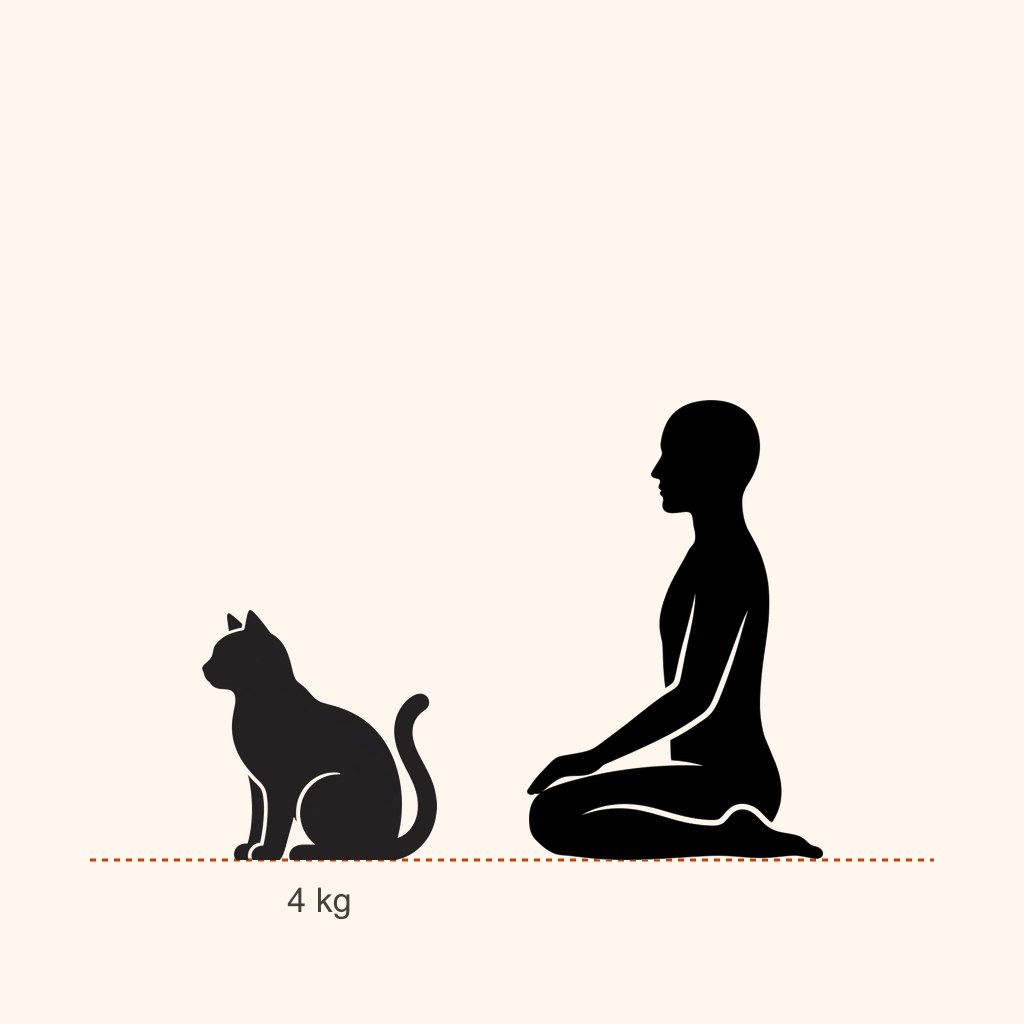
An adult Nebelung ranges roughly 3.5–6.5 kg; males are noticeably larger than females.
- Kitten (2–12 months): Kitten food, three to four meals a day.
- Adult: High-protein, low-carbohydrate food. Given the obesity risk, measure portions and avoid free-feeding.
- Senior (8+ years): Age-appropriate food alongside weight and heart/kidney monitoring.
Keep treats to no more than 10% of daily calories; wet food both increases water intake and makes portion control easier.
Grooming and coat
The semi-long, fine, double coat needs less upkeep than it looks.
- Weekly brushing with a metal comb removes dead hair and prevents matting.
- Sheds lightly, though shedding can increase during seasonal transitions — brush more often then.
- Bathing is usually unnecessary.
- Nails every two to three weeks, teeth several times a week.
- Check ears monthly.
Living space and enrichment
- A quiet retreat. A high, secure spot to withdraw to when guests arrive or things get noisy.
- Routine. Keep feeding times and household layout consistent; introduce changes gradually.
- Play twice a day. Wand toys and fetch provide both mental stimulation and weight control.
- Vertical space. A cat tree and window perches; this breed enjoys watching from above.
- Gradual introductions. Don't rush introductions to new people or animals.
It should live as an indoor cat; its cautious temperament makes outdoor life stressful.
History
The Nebelung's story begins in the 1980s in the United States. Cora Cobb's black shorthair female, Elsa, was mated with an unnamed blue, semi-longhaired male, producing two blue, semi-longhaired siblings: Siegfried (born 1984) and Brunhilde (born 1985). Cobb decided to deliberately breed the two siblings together to establish a new breed, and with guidance from TICA geneticist Dr. Solveig Pflueger, drafted a standard based on the Russian Blue but calling for semi-long hair, naming the breed Nebelung — "creature of the mist."
TICA granted new breed status in 1987 and full championship status in 1997. In the early 1990s, semi-longhaired kittens also began appearing naturally in Russian Blue populations in Russia, confirming that the recessive long-hair gene already existed in nature. Dutch breeder Letty van den Broeck imported a cat named Timofeus from Russia in 1993, and Cobb added a Moscow-born male, Winterday Georgin of Nebelheim, merging Russian and American lines; this combined lineage spread to Western Europe in the early 2000s. The Russian Blue remains a permitted outcross in most registries today to preserve genetic diversity. The GCCF recognized the breed in 2011; CFA still does not recognize the Nebelung as a separate championship breed, considering it too close to the Russian Blue.
This guide is for information only and is not a substitute for veterinary advice. Prices are approximate and vary by region and time.
Adoption Prep Checklist
Housing
-
Cat bed
Cats want a safe space of their own to rest.
-
Cat scratching post
Satisfies the natural scratching instinct and protects furniture.
Feeding
-
Dry/wet cat food
Quality cat food is needed for balanced nutrition.
-
Food and water bowl set
Needed for daily feeding and water access.
Grooming
-
Cat litter and litter box
Essential for the cat's toilet needs.
-
Cat de-shedding brush
Regular brushing reduces hairball formation.
Activity
-
Cat toy
Cats release energy through play.
-
Cat carrier
Needed for safe transport to vet visits.
Frequently Asked Questions
Does the Nebelung shed?
It sheds a moderate amount. Brushing two or three times a week noticeably reduces both loose hair and matting.
Can the Nebelung live in an apartment?
Yes. It lives comfortably in an apartment as long as its daily needs are met. What matters is not floor area but consistent exercise and mental stimulation.
Is the Nebelung good with children?
Caution is warranted. With proper socialisation and adult supervision it can live with children, but it is not a first choice for homes with young children.
Is the Nebelung suitable for first-time cat owners?
Partly. Someone with basic experience will manage well, but it would not be the first choice for a complete beginner.
How much exercise does the Nebelung need?
It needs a moderate amount of exercise. Daily activity plus some play time makes for a balanced routine.
Can the Nebelung be left alone during the day?
It tolerates being alone well. That makes it workable for someone employed full time, though it will still expect attention and activity on your return.
How long does the Nebelung live?
The Nebelung lives 11 - 16 years on average. Diet, regular veterinary check-ups and early screening for hereditary conditions all affect this directly.
Where does the Nebelung come from?
The Nebelung originates from United States. The geography a breed was developed in, and the job it was bred for, explain much of its temperament and care needs today.