

Singapura
The image on this page is AI-generated and does not depict a real animal.
- Species
- Cat
- Origin
- Singapore
- Size
- Small
- Lifespan
- 12 - 15 years
- Temperament
- Affectionate Curious Adaptable easygoing Intelligent Interactive Lively active Loyal
- Description
Cautious with new people but craves plenty of attention from its family; an active and curious small cat.
- Physical Traits
A very small body, short ticked (sepia agouti) coat, large eyes and large ears.
- Care / Environment Info
Lives indoors. Sheds moderately. Very easy to care for, infrequent brushing needed. Very high energy, needs plenty of play and stimulation. Very quiet. Generally a very healthy breed.
Singapura Owner's Guide
Last updated:
Is a Singapura cat right for you?
The Singapura is one of the world's smallest cat breeds, recognized by the Guinness Book of Records for its size, with large eyes and a ticked coat. Despite its tiny body, its energy and curiosity are outsized; it's said to keep a kitten-like liveliness for life. Its origin is traced to Singapore, but that origin story is contested, and it's worth adopting with that in mind.
| Situation | Suitability | Note |
|---|---|---|
| Apartment | Excellent | Small size and energy suit indoor living well |
| Family with young children | Moderate | Playful but small and delicate; sensitive to rough handling |
| First-time cat owner | Good | Easy care, but high social needs |
| Alone 8+ hours a day | Not suitable | Dislikes solitude, constantly seeks interaction |
| Household with fur allergies | Moderate-poor | Short coat; no guarantee against allergies |
| Owner wanting a breed with a broad gene pool | Caution | Founding population was small; care needed when choosing a breeder |
| Home wanting quiet | Moderate | Voice is soft but energy and activity levels are high |
The most realistic question: do you have time for a small but extremely energetic cat that constantly seeks attention? Despite its small body, the Singapura's demands differ a great deal from a calm breed like the Persian.
Before you adopt
The origin story is contested, and it's worth approaching it with that in mind. The popular narrative holds that the Singapura was developed from street cats living around Singapore's harbors and drains (the "drain cat"), and brought to the US in the 1970s by American breeders Hal and Tommy Meadow. However, research has revealed that these cats were actually shipped from the US to Singapore first and later re-imported; the CFA investigated and, finding no intentional wrongdoing, allowed the breed to keep its "natural breed" status. A 2007 DNA study also found very few genetic differences between the Singapura and the Burmese, suggesting the breed may stem more from a Burmese/Abyssinian-based breeding program than from a genuinely wild Singapore street population. Given this uncertainty, treat firm origin claims with some caution — sources don't fully agree.
Separately, Singapore's tourism board declared the breed the official mascot "Kucinta" (Malay for "loving cat") in 1991 and placed a statue of it by the Singapore River; local sources note that actual Singapore street cats don't much resemble the pedigreed breed.
Because the founding population was small, genetic diversity is limited. Always ask for the parents' pyruvate kinase deficiency test results (see below) when getting a kitten.
Temperament
The Singapura is highly social, curious, and energetic; sources describe it as having "kitten energy for life." It bonds strongly with its owner and dislikes being left alone.
It loves climbing to high places, observing, and exploring. It's outgoing and doesn't shy away from guests.
Its voice is soft and gently used. Given its playful nature, its small size should be kept in mind around young children, and rough handling should be avoided.
Health issues and lifespan
Sources give a lifespan range of 9 to 15 years, generally reported around 12 to 15 years.
- Pyruvate kinase (PK) deficiency: A particularly important, recessively inherited blood disorder in this breed. It disrupts energy production in red blood cells, causing intermittent hemolytic anemia; signs include lethargy, jaundice, loss of appetite, and abdominal swelling. One scientific study found carrier frequency as high as 41.4% in a sample of UK Singapuras — a risk that shouldn't be overlooked in this breed. A genetic test is available (returning Normal / Carrier / Affected results); asking for the parents' test results is essential when getting a kitten. Seek same-day veterinary attention if you notice symptoms.
- Uterine inertia (difficult birth): Reported in the breed's foundation cats; weak uterine contractions can make natural birth difficult and increase the need for cesarean delivery. This mainly concerns breeding females.
- Dental disease: A general risk across cats; the small jaw makes monitoring important.
- Obesity: Given its tiny body, excess weight represents a disproportionate burden; portion control matters.
- General predisposition to inherited disease: Some sources point to kidney and thyroid issues, but there isn't strong breed-specific research behind these claims; general health screening (blood, urine) is recommended in senior years.
Feeding
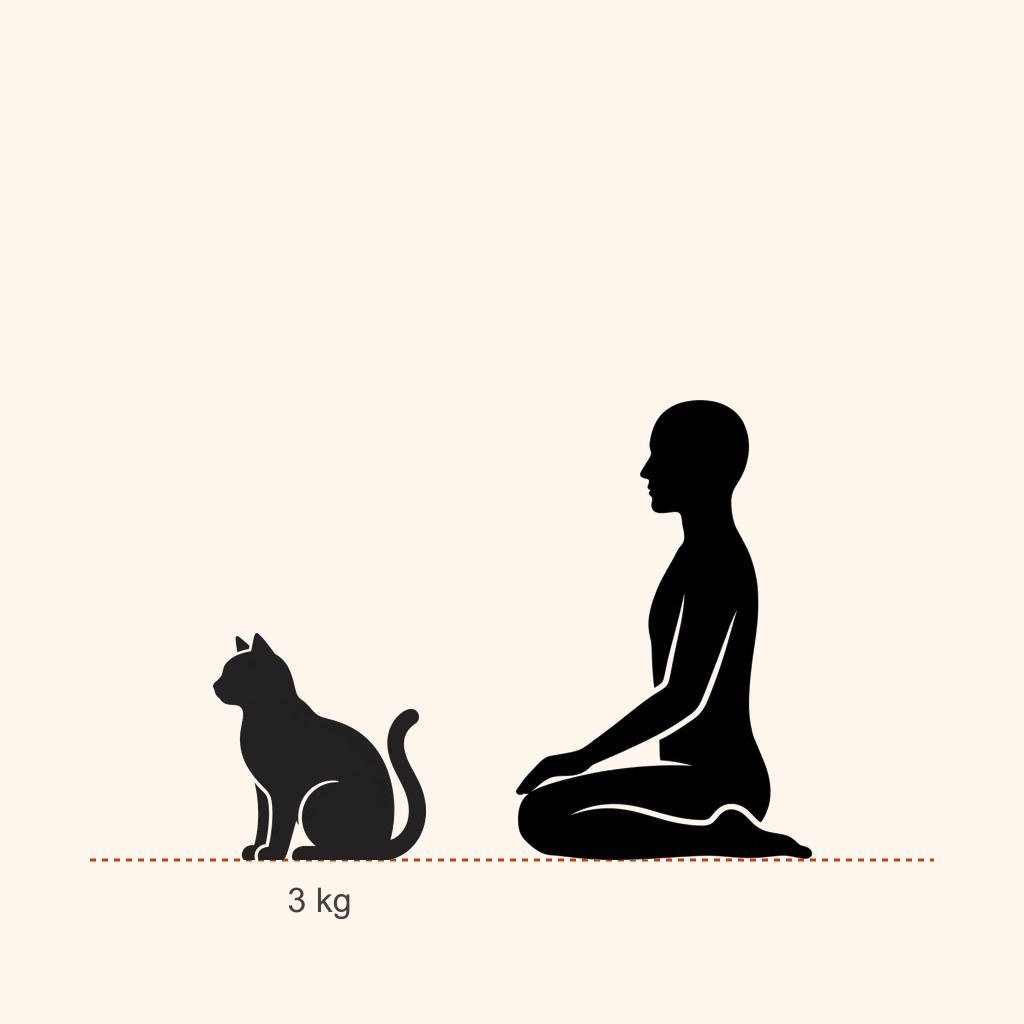
An adult Singapura ranges roughly 1.8–3.6 kg; females are noticeably smaller than males — one reason this is among the smallest cat breeds.
- Kitten (2–12 months): Kitten food, small frequent meals (three to four a day).
- Adult: High-protein, balanced food; three small meals a day suits its small stomach capacity better.
- Weight monitoring: Even a 200–300 gram gain is proportionally significant on such a small body; weigh regularly.
- Senior (8+ years): Age-appropriate food alongside general health screening.
Grooming and coat
The short, fine, ticked coat needs very little upkeep.
- Weekly brushing is enough.
- Sheds lightly; bathing is usually unnecessary.
- Brush teeth several times a week.
- Nails every two to three weeks; check ears monthly.
Living space and enrichment
- Vertical space. It loves climbing; a sturdy cat tree and window perches are essential.
- Vigorous daily play. Despite its small body, energy is high; at least two interactive sessions a day are needed.
- Social contact. Set up a routine so it isn't alone for long; a second cat is generally welcomed by this breed.
- Secure indoor living. Its small size leaves it vulnerable outdoors; it should live strictly indoors.
- Mental stimulation. Puzzle feeders and exploration boxes feed its curiosity.
History
The Singapura's history is a genuine point of dispute that even the registries themselves haven't fully resolved. American breeders Hal and Tommy Meadow claimed to have brought three "drain cats" from Singapore in the mid-1970s and developed the breed from them. TICA accepted the breed in 1979, CFA in 1982.
Later research, however, revealed that the Meadows' import documents listed the cats as Abyssinians, and that the couple had previously bred Abyssinian, Burmese, and Siamese cats; some sources suggest the foundation cats were actually sent from the US to Singapore first and later brought back. The CFA investigated and found no intentional fraud, allowing the breed to keep its natural-breed status. A 2007 genetic study found very few differences between the Singapura and Burmese, deepening the origin dispute further. As a result, whether the breed truly descends from Singapore's streets, or is instead the product of a Burmese- and Abyssinian-based breeding program, remains unresolved among sources.
In 1991, despite the contested origin, Singapore's Tourism Board declared the Singapura the country's official mascot under the name "Kucinta" and placed its statue by the Singapore River; today the breed is remembered both as a cat breed and as a national symbol.
This guide is for information only and is not a substitute for veterinary advice. Prices are approximate and vary by region and time.
Adoption Prep Checklist
Housing
-
Cat bed
Cats want a safe space of their own to rest.
-
Cat climbing tree
Satisfies the natural scratching instinct and protects furniture.
Feeding
-
Dry/wet cat food
Quality cat food is needed for balanced nutrition.
-
Food and water bowl set
Needed for daily feeding and water access.
Grooming
-
Cat litter and litter box
Essential for the cat's toilet needs.
-
Cat de-shedding brush
Regular brushing reduces hairball formation.
Activity
-
Interactive cat toy
Cats release energy through play.
-
Cat carrier
Needed for safe transport to vet visits.
Frequently Asked Questions
Does the Singapura shed?
It sheds a moderate amount. Brushing two or three times a week noticeably reduces both loose hair and matting.
Can the Singapura live in an apartment?
Yes. It lives comfortably in an apartment as long as its daily needs are met. What matters is not floor area but consistent exercise and mental stimulation.
Is the Singapura good with children?
Generally yes. It adapts well to families with children. Even so, interactions should be supervised and children taught to respect the animal’s boundaries.
Is the Singapura suitable for first-time cat owners?
Yes. Its care and training are relatively forgiving, which makes it a sound choice for first-time owners.
How much exercise does the Singapura need?
It is high-energy and needs vigorous daily activity. Mental stimulation matters as much as physical exercise; without enough to do, destructive behaviour follows.
Can the Singapura be left alone during the day?
It can be left alone for a few hours. Long, routine absences can bring on boredom-driven behaviour problems; enrichment and a predictable routine reduce that risk.
How long does the Singapura live?
The Singapura lives 12 - 15 years on average. Diet, regular veterinary check-ups and early screening for hereditary conditions all affect this directly.
Where does the Singapura come from?
The Singapura originates from Singapore. The geography a breed was developed in, and the job it was bred for, explain much of its temperament and care needs today.