

Turkish Angora
The image on this page is AI-generated and does not depict a real animal.
- Species
- Cat
- Origin
- Turkey
- Size
- Small
- Lifespan
- 15 - 18 years
- Temperament
- Affectionate Agile Intelligent Gentle Intelligent Playful Social
- Description
Intelligent and bonds easily with people; affectionate and playful, a family favorite.
- Physical Traits
Long, fine, silky single-layer coat, mostly pure white, almond eyes (sometimes 'odd-eyed'), a slender elegant body.
- Care / Environment Info
Lives indoors. Sheds little. Easy to care for, brushing once a week is enough. Very high energy, needs plenty of play and stimulation. Moderately vocal/talkative. Generally a healthy breed.
Turkish Angora Owner's Guide
Last updated:
Is a Turkish Angora right for you?
The Turkish Angora is Türkiye's oldest native cat breed and the first known long-haired cat line in the world. Elegant, athletic, and surprisingly sociable. Not a quiet cushion cat but a companion that joins in with the household and pokes its nose into everything.
| Situation | Suitability | Note |
|---|---|---|
| Apartment | Good | Happy if given vertical space and play |
| Family with young children | Excellent | Sociable and playful; enjoys attention |
| First-time cat owner | Excellent | Easy to care for, open in communication |
| Alone 8+ hours a day | Poor | Attached to people; becomes bored by solitude |
| Household with fur allergies | Moderate to poor | Long-haired but with little undercoat; sheds less than expected |
| Home wanting quiet | Moderate | Talkative; it holds a dialogue with you |
| Home with other cats or dogs | Good | Adapts, and may even take the lead |
The most appreciated thing about this breed is that, despite being long-haired, it is easy to groom. There is almost no undercoat layer, so the matting problem seen in the Persian does not arise here.
Before you adopt
The Turkish Angora is also protected. The breeding centre at Ankara Zoo works to conserve the pure line, and rehoming is subject to rules.
The same warning that applies to the Turkish Van applies here: not every white, long-haired cat is a Turkish Angora. A genuine Turkish Angora is fine-boned, long-bodied, triangular-headed, and single-coated with silky hair. The breed is also not only white; black, grey, tabby, and other colours are included in the standard. White is the best-known colour, not the only one.
Because of the deafness risk associated with white coats and blue eyes, ask whether BAER testing has been done.
Temperament
The Turkish Angora is intelligent, curious, and extremely sociable. It greets visitors, inspects every cupboard you open, and sits on the desk you are working at. It does not like being alone.
It is talkative. Its meow is high and insistent; it tries to communicate with you and usually manages to make itself understood.
It is athletic and loves to climb. It prefers to sit at the highest point in the house. Although not as passionate about water as the Turkish Van, individuals with an interest in water are common.
It can be possessive; it forms a special bond with one person and follows them. Mild jealousy is seen in some individuals.
It keeps its kitten energy for many years.
Health issues and lifespan
Average lifespan is 15 to 18 years, among the longest of any cat breed. Being a natural breed keeps its genetic burden low.
- Deafness: The combination of a white coat and blue eyes is associated with hereditary deafness. In individuals with a single blue eye the ear on that side may be affected. Deaf cats live normally but must be kept strictly indoors. It can be detected as a kitten with a BAER test.
- Hypertrophic cardiomyopathy (HCM): Reported in this breed; periodic cardiac checks are recommended.
- Ataxia: An inherited condition seen in some lines, appearing in kittens as a disorder of movement coordination. It is rare but is a known breed problem.
- Sun sensitivity: White and unpigmented ear tips can be damaged by sun.
- Dental and gum disease: A general risk in cats.
- Obesity: A lower risk than in other breeds because it is active; even so, portion adjustment is needed after neutering.
Feeding
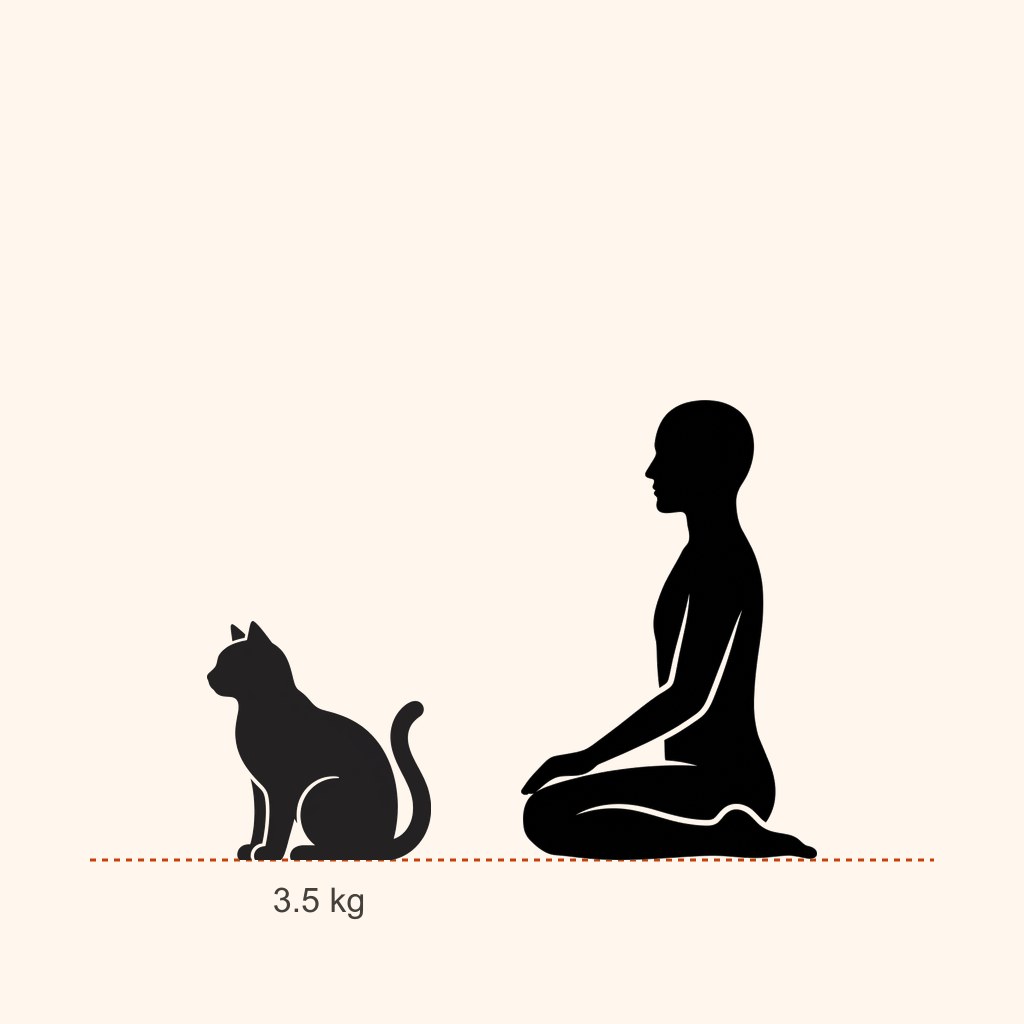
An adult Turkish Angora (2.5-5 kg) needs the energy equivalent of 45-70 g of dry food per day. It is a finely built breed, and overfeeding because it "looks thin" is a common mistake.
- Kitten (2-12 months): Kitten food, three to four meals a day.
- Adult: High protein, low carbohydrate.
- Senior (10+ years): Because this is a long-lived breed, monitoring in old age matters; kidney and thyroid values should be checked annually.
A fountain-type bowl and wet food help increase water intake.
Grooming and coat
One of the easiest to groom among long-haired breeds.
- Brushing once or twice a week is enough. Matting is rare because there is no undercoat.
- The winter coat is shed in spring; brushing frequency increases in that period.
- The tail is plumed and should not be forgotten during brushing.
- Bathing is generally unnecessary.
- Nails every two to three weeks.
- Teeth several times a week.
- Monthly ear checks.
The summer and winter appearance differ markedly; it is normal for the cat to look far shorter-coated in summer.
Living space and enrichment
- Vertical space. A cat tree, wall shelves, access to the top of cupboards. This breed lives at height.
- Active play twice a day. Wand toys, running. An intelligent and energetic cat becomes bored without play.
- Social contact. If it will be alone for long periods, a second animal should be considered.
- Food puzzles and trick training. This breed likes to learn; fetch, giving a paw, and coming when called can be taught.
- A safe window. A screen is essential.
- A scratching post. Vertical and tall; it should be able to stretch to full length.
It should live as an indoor cat.
History
The Turkish Angora developed naturally in central Anatolia and is accepted as the first known long-haired cat breed in the world. It was taken to Europe in the 16th and 17th centuries, attracting great interest among the aristocracy in France and England. The gene for long hair is thought to have passed into European cats through this line.
In the 19th century the rise of the Persian overshadowed the breed; moreover, Turkish Angoras were crossed intensively to "improve" the Persian line, and the pure line nearly disappeared in Europe.
What saved the breed was the conservation programme in Türkiye. From the middle of the 20th century, Ankara Zoo gathered pure Turkish Angoras and started a breeding and conservation programme. In the 1960s American breeders took cats from this programme and reintroduced the breed to the West; the CFA recognised it in the 1970s.
Today the breed's biggest problem is the use of its name for every white long-haired cat and the dilution of the pure line. If you are going to adopt a Turkish Angora, taking one from a registered line is a direct contribution to the breed's future.
This guide is for information only and is not a substitute for veterinary advice. Prices are approximate and vary by region and time.
Adoption Prep Checklist
Housing
-
Cat bed
Cats want a safe space of their own to rest.
-
Cat climbing tree
Satisfies the natural scratching instinct and protects furniture.
Feeding
-
Dry/wet cat food
Quality cat food is needed for balanced nutrition.
-
Food and water bowl set
Needed for daily feeding and water access.
Grooming
-
Cat litter and litter box
Essential for the cat's toilet needs.
-
Short-hair cat brush
Regular brushing reduces hairball formation.
Activity
-
Interactive cat toy
Cats release energy through play.
-
Cat carrier
Needed for safe transport to vet visits.
Frequently Asked Questions
Does the Turkish Angora shed?
Shedding is low. Brushing once a week is usually enough, with a mild increase during seasonal changes.
Can the Turkish Angora live in an apartment?
Yes. It lives comfortably in an apartment as long as its daily needs are met. What matters is not floor area but consistent exercise and mental stimulation.
Is the Turkish Angora good with children?
Generally yes. It adapts well to families with children. Even so, interactions should be supervised and children taught to respect the animal’s boundaries.
Is the Turkish Angora suitable for first-time cat owners?
Yes. Its care and training are relatively forgiving, which makes it a sound choice for first-time owners.
How much exercise does the Turkish Angora need?
It is high-energy and needs vigorous daily activity. Mental stimulation matters as much as physical exercise; without enough to do, destructive behaviour follows.
Can the Turkish Angora be left alone during the day?
It can be left alone for a few hours. Long, routine absences can bring on boredom-driven behaviour problems; enrichment and a predictable routine reduce that risk.
How long does the Turkish Angora live?
The Turkish Angora lives 15 - 18 years on average. Diet, regular veterinary check-ups and early screening for hereditary conditions all affect this directly.
Where does the Turkish Angora come from?
The Turkish Angora originates from Turkey. The geography a breed was developed in, and the job it was bred for, explain much of its temperament and care needs today.