

Burmese
The image on this page is AI-generated and does not depict a real animal.
- Species
- Cat
- Origin
- Myanmar (Burma)
- Size
- Medium
- Lifespan
- 10-17 years
- Temperament
- Curious Intelligent Gentle Social Interactive Playful Lively active
- Description
Loves being with people, playing, and physical closeness; a curious cat.
- Physical Traits
Short glossy coat, usually rich solid colors like dark brown (sable), a round head, golden eyes.
- Care / Environment Info
Lives indoors. Sheds moderately. Very easy to care for, infrequent brushing needed. Quite energetic and playful. Very talkative and can meow loudly. Its allergy-triggering potential is considered somewhat lower than other breeds (not fully hypoallergenic). Some breed-specific health monitoring is recommended.
Burmese Owner's Guide
Last updated:
Is a Burmese right for you?
The Burmese is known for its satin-glossy short coat, large golden eyes and a muscular body that is much heavier than it looks. Its temperament is the breed's true signature: CFA's "Velcro kitty", a companion that follows you into every corner of the house, wants attention and stays playful even in old age. A cat this attached to people cannot cope with long solitude. You also need to know that there are two types, American and European, and that each carries different genetic risks.
| Situation | Suitability | Note |
|---|---|---|
| Apartment | Perfect | Adapts very well indoors with enough attention and play |
| Family with young children | Perfect | CFA says it adapts well to families with children |
| First-time cat owner | Good | Easy care; attention needs and health monitoring require commitment |
| Alone 8+ hours a day | Not suitable | Cannot cope with long solitude; not recommended without a second cat |
| Household with fur allergies | Moderate to poor | Short, close-lying coat; no guarantee against allergies |
| Home with a dog | Good | CFA notes it usually tolerates dogs |
| Owner able to monitor weight and diabetes | Required | The breed is known to be predisposed to diabetes |
The most realistic question: is someone at home for most of the day, or are you considering a second cat to keep it company? If not, a Burmese will be unhappy; this breed lives to spend time with you.
Before you adopt
Know the American vs European difference. As described on Wikipedia, the American (Contemporary) type is stockier, with a broader head, round eyes and a distinctly shorter muzzle. The European (British) type is more slender, long-bodied and wedge-headed. Most registries do not treat them as separate breeds; some call the British type the "European Burmese". Because the two populations have been bred apart for a long time, their health profiles also differ:
- American (Contemporary) lines: Burmese head defect (BHD) and flat-chested kitten syndrome have been associated with these lines. Cats carrying one copy of the BHD variant are healthy but have shorter faces, a look that spread through selection. Kittens with two copies are born with a severe craniofacial defect incompatible with life. Always ask for the parents' BHD test results and avoid the most extreme short-faced type.
- Non-American lines (Europe, Australia and elsewhere): According to a scientific study, hypokalaemia, diabetes and orofacial pain syndrome are associated with these populations; hypokalaemia has never been documented in US Burmese. Ask for the parents' hypokalaemia (BHK) genetic test results.
- Both types: A genetic test exists for GM2 gangliosidosis; a breeder who also runs it is a good sign. CFA additionally advises asking about diabetes history in the breeding lines.
Be cautious with adverts that cannot show papers and test results.
Temperament
The Burmese is intensely people-oriented. CFA describes it as curious, clever and friendly, with playfulness lasting into old age. It follows you from room to room, settles on your lap and sits in the middle of whatever you are doing.
A vet quoted by PetMD calls the breed extremely loving, people-focused and dog-like; it is vocal and does not tolerate long periods alone. Wikipedia also mentions its dog-like attachment and persistent vocalisation.
It usually gets on with children and cat-friendly dogs. It is social and confident and often approaches visitors with curiosity.
Its intelligence means it can learn fetch and simple tricks. A bored Burmese shows it with mischief and insistent meowing.
Health issues and lifespan
PetMD gives a lifespan of 10 to 17 years; sources generally cite around 15 years or more. According to Wikipedia, the Burmese has one of the lowest levels of genetic diversity among breeds, which makes inherited problems more significant.
- Diabetes mellitus: PetMD notes a suspected genetic basis and a notable prevalence in the breed. Increased thirst and urination, appetite changes and weight loss are the main signs. See a vet without waiting days; early diagnosis and weight control improve the outlook.
- Hypokalaemia (hypokalaemic polymyopathy): Recurrent muscle weakness from low blood potassium. The head and neck bending downward, a stiff gait and muscle tremors are typical. Signs usually start in kittens of 2 to 6 months, sometimes not until 2 years. See a vet the same day; potassium supplementation controls it, and some cats need lifelong treatment.
- Feline orofacial pain syndrome (FOPS): Episodic, usually one-sided pain in the mouth and face. Exaggerated mouth movements and pawing at the mouth are typical; in severe cases the cat injures its tongue and lips and stops eating. Eating, drinking and grooming can trigger episodes, and links to teething and dental problems have been reported. It can become chronic. See a vet promptly if you notice this behaviour; an oral and dental exam is essential.
- Burmese head defect (BHD): Seen in newborn kittens; relevant to breeding rather than to your adult cat. Carrier status is linked with a shorter face.
- GM2 gangliosidosis: A rare, progressive nervous system disease that starts with head tremors and incoordination. Preventable with genetic testing.
- Obesity: Especially important in this breed because it raises diabetes risk.
Blood glucose and weight should be checked at annual visits; after age 7 to 8, blood and urine tests at least once a year are recommended.
Feeding
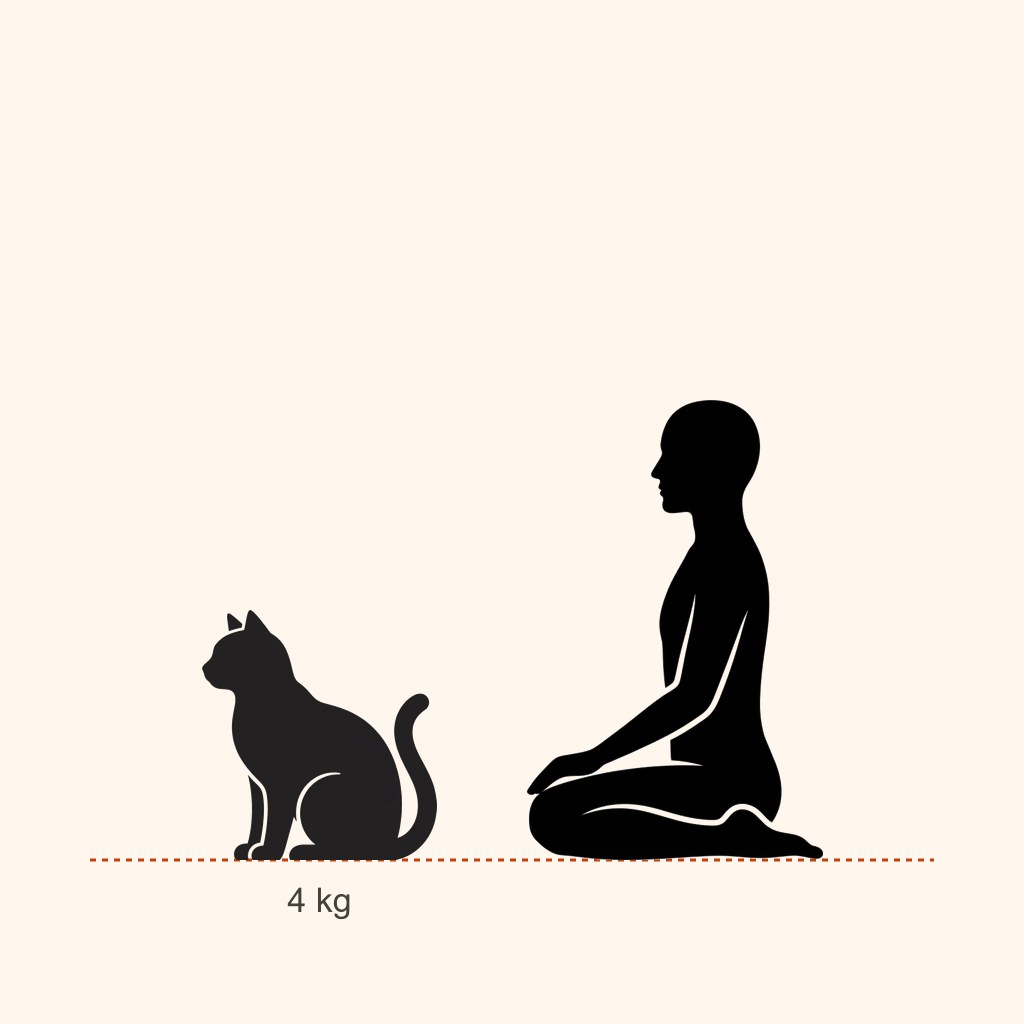
According to PetMD, adult Burmese weigh 3.5 to 7 kg; CFA says males may reach or exceed 5.5 kg while females are smaller. It is compact but heavy, so track weight with scales, not your eyes.
- Kitten (2-12 months): Kitten food, 3 to 4 meals a day.
- Adult: High-protein, low-carbohydrate food; PetMD suggests two meals a day. Avoid free feeding.
- After neutering: Lower portions and weigh monthly.
- Senior (8+ years): A diet set with your vet based on glucose and kidney monitoring.
Given the diabetes predisposition, keeping an ideal weight is the most important feeding goal in this breed. Wet food increases water intake and is generally lower in carbohydrate. Keep treats limited.
Grooming and coat
The Burmese's short, fine, close-lying coat needs very little care.
- Brush once a week: Enough according to PetMD. A rubber brush or chamois cloth boosts shine.
- Bathing: Usually unnecessary.
- Tooth brushing: Several times a week; oral health matters even more in a breed at risk of FOPS.
- Nails: Every 2 to 3 weeks.
- Ears and eyes: Check weekly.
Living space and enrichment
- A companion. If nobody is home during the day, a second cat is a need, not a luxury, for a Burmese.
- Daily interactive play. At least two 15-minute sessions; it also helps weight control.
- Climbing and lookout. A sturdy cat tree and a window shelf.
- Brain games. Puzzle feeders, fetch and clicker training.
- Safe home. Nets on windows and balconies; this trusting breed should live indoors.
In hot summers offer a cool room and plenty of water, and schedule play for cooler hours.
History
Almost all modern Burmese trace back to one cat: Wong Mau. According to CFA and Wikipedia, this brown female was brought from Burma (now Myanmar) to the United States in 1930 and bred with Siamese cats. Lines producing a solid dark brown (sable) colour were selected to build the breed.
CFA began registering early Burmese in 1936 and granted championship status in 1959. Over time dilute colours such as champagne, platinum and blue appeared and were accepted.
Burmese taken from the United States to Britain from 1949 developed in a different direction; the GCCF recognised the breed in 1952, and many European countries based their standard on the British model. In the United States the stockier, shorter-faced "Contemporary" type came to dominate, while Europe favoured a slimmer, longer-faced type. This split also explains the two types' different health risks today: the short-faced type is linked with the head defect variant, while European and Australian populations are associated with hypokalaemia, diabetes and orofacial pain syndrome.
This guide is for information only and is not a substitute for veterinary advice. Prices are approximate and vary by region and time.
Adoption Prep Checklist
Housing
-
Cat bed
Cats want a safe space of their own to rest.
-
Cat climbing tree
Satisfies the natural scratching instinct and protects furniture.
Feeding
-
Dry/wet cat food
Quality cat food is needed for balanced nutrition.
-
Food and water bowl set
Needed for daily feeding and water access.
Grooming
-
Cat litter and litter box
Essential for the cat's toilet needs.
-
Short-hair cat brush
Regular brushing reduces hairball formation.
Activity
-
Interactive cat toy
Cats release energy through play.
-
Cat carrier
Needed for safe transport to vet visits.
Frequently Asked Questions
Does the Burmese shed?
Shedding is low. Brushing once a week is usually enough, with a mild increase during seasonal changes.
Can the Burmese live in an apartment?
Yes. It lives comfortably in an apartment as long as its daily needs are met. What matters is not floor area but consistent exercise and mental stimulation.
Is the Burmese good with children?
Generally yes. It adapts well to families with children. Even so, interactions should be supervised and children taught to respect the animal’s boundaries.
Is the Burmese suitable for first-time cat owners?
Yes. Its care and training are relatively forgiving, which makes it a sound choice for first-time owners.
How much exercise does the Burmese need?
It is high-energy and needs vigorous daily activity. Mental stimulation matters as much as physical exercise; without enough to do, destructive behaviour follows.
Can the Burmese be left alone during the day?
It can be left alone for a few hours. Long, routine absences can bring on boredom-driven behaviour problems; enrichment and a predictable routine reduce that risk.
How long does the Burmese live?
The Burmese lives 10-17 years on average. Diet, regular veterinary check-ups and early screening for hereditary conditions all affect this directly.
Where does the Burmese come from?
The Burmese originates from Myanmar (Burma). The geography a breed was developed in, and the job it was bred for, explain much of its temperament and care needs today.