

European Burmese
The image on this page is AI-generated and does not depict a real animal.
- Species
- Cat
- Origin
- Myanmar (Burma)
- Size
- Medium
- Lifespan
- 10 - 15 years
- Temperament
- Sweet-natured Affectionate Loyal
- Description
Very affectionate, intelligent and loyal; a social cat that engages with every member of its family.
- Physical Traits
Short glossy coat, a wide color range, a round head shape.
- Care / Environment Info
Lives indoors. Sheds moderately. Very easy to care for, infrequent brushing needed. Quite energetic and playful. Quite talkative and vocal. Regular veterinary checkups and breed-specific health monitoring are important.
European Burmese Owner's Guide
Last updated:
Is a European Burmese right for you?
The European Burmese is known for its wedge-shaped head, almond eyes, and short satin-glossy coat. It shares its origin with the American (Contemporary) Burmese, but decades of separate breeding gave it a different look and a different health profile: a slimmer build, a longer body, and a less rounded head. On the temperament side the two types are very similar; both are intensely people-oriented, curious, playful cats.
| Situation | Suitability | Note |
|---|---|---|
| Apartment | Excellent | Adapts very well indoors given enough attention and play |
| Family with young children | Excellent | Social and patient; usually gets on well with kids |
| First-time cat owner | Good | Easy to care for, but needs attention and weight monitoring |
| Alone 8+ hours a day | Not suitable | Does not tolerate long solitude; a second cat is advisable |
| Household with fur allergies | Moderate-poor | Short, close-lying coat that still sheds; no guarantee against allergies |
| Household with dogs | Good | Its social nature makes it easy to introduce to dogs |
| Owner who can track weight and blood sugar | Required | Diabetes predisposition is well documented in this type too |
The most realistic question: will someone usually be home during the day, or are you considering a second cat as company? If the answer is no, think twice before getting one; this type lives to be near you, and it shows its distress clearly when left alone too long.
Before you adopt
This breed page covers a line developed separately from the American (Contemporary) Burmese: the European Burmese is slimmer, wedge-headed, and carries its own health profile. Based on the GCCF-derived standard, it is recognised in six solid colours (brown, blue, chocolate, lilac, red, cream) plus four tortoiseshell patterns (brown tortie, chocolate tortie, blue-cream, lilac-cream) — ten colours and patterns in total, a wider palette than American registries recognise.
When choosing a kitten, ask the breeder for genetic test results for hypokalemia (BHK) and GM2 gangliosidosis, and ask whether diabetes or feline orofacial pain syndrome (FOPS) appear in the parent lines. This type is rare in Türkiye; be cautious of listings that cannot show documentation or test results.
Temperament
The European Burmese is intensely attached to people. It follows you from room to room, settles on your lap, and sits right in the middle of whatever you're doing. According to VCA, this breed readily learns games of fetch and keeps its kitten-like energy well into adulthood.
It is intelligent and can learn simple commands; left alone and bored, it shows its frustration through persistent meowing and mischief. It generally gets along easily with children, cat-friendly dogs, and guests; curiosity and sociability stand out far more than shyness.
It is not shy about using its voice; when it wants something, it makes that clear. It does not handle prolonged solitude well, so a second cat is a sensible option in households with long working hours.
Health issues and lifespan
Average lifespan is around 10 to 15 years. The European Burmese's health burden follows a different pattern from the American line; Burmese head defect (BHD), linked to the short-muzzled American type, is specific to those lines and does not occur in this type.
- Hypokalemia (hypokalemic polymyopathy): Recurrent muscle weakness from low blood potassium. Downward flexion of the head and neck, a stiff gait, and muscle tremor are typical. It usually begins in kittens aged 2-6 months. It has been linked to a variant in the WNK4 gene, first described in Burmese cats. See a vet the same day if you notice signs; it is managed with potassium supplementation.
- Diabetes mellitus: Notably more common in this type than in cats generally. Increased thirst and urination, appetite changes, and weight loss are the main signs. Early diagnosis and weight control directly improve the outlook.
- Feline orofacial pain syndrome (FOPS): Episodic, usually one-sided pain in the mouth and face. Exaggerated mouth movements, pawing at the mouth, and sometimes self-injury to the tongue or lips are typical. Eating, drinking, and grooming can trigger episodes; a link to dental problems has been reported. See a vet promptly if you notice this behaviour.
- GM2 gangliosidosis: A rare, progressive nervous system disease starting with head tremor and loss of coordination. Preventable with genetic testing.
- Obesity: Particularly important in this type because it raises diabetes risk.
Annual checkups should include weight tracking and, where possible, blood glucose monitoring; regular blood and urine testing is advisable after age 7-8.
Feeding
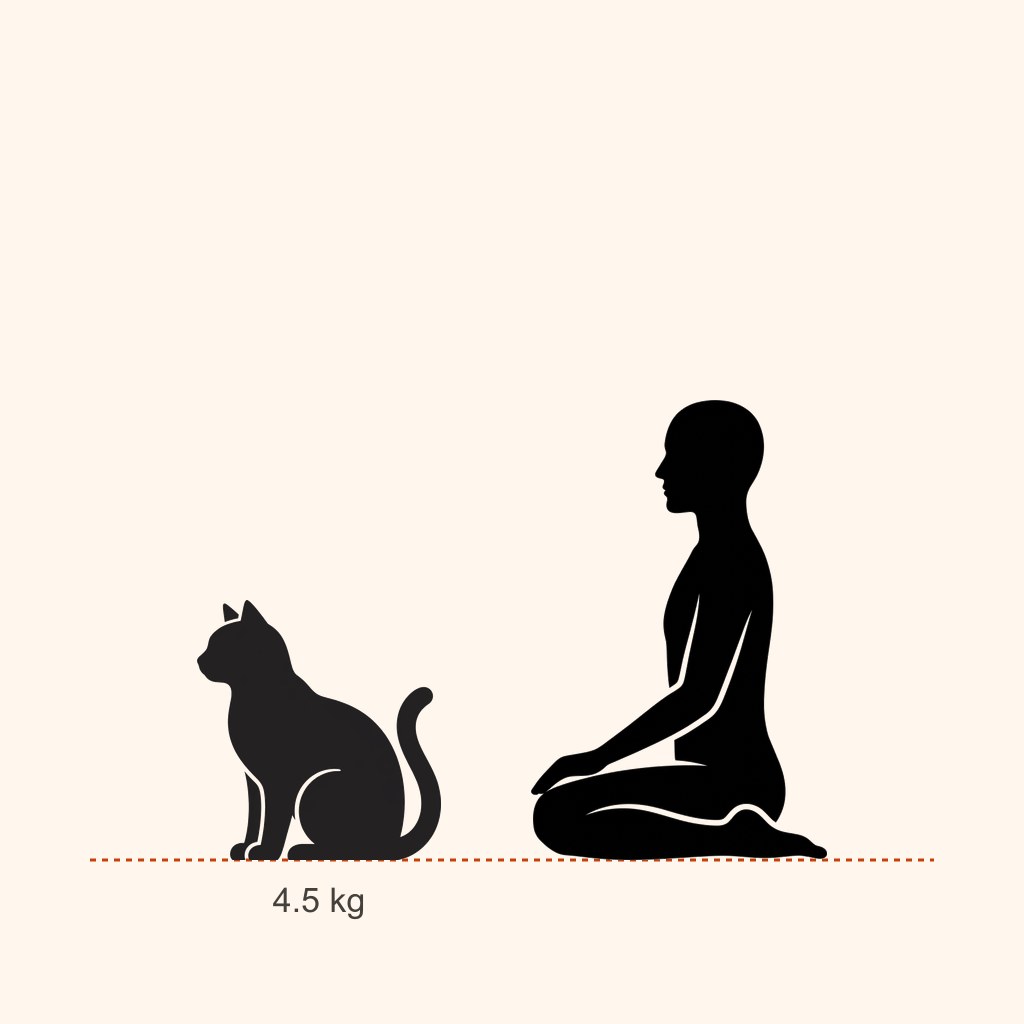
An adult European Burmese averages around 4-5 kg; it is a compact but heavier-than-it-looks cat, so track weight on a scale rather than by eye.
- Kitten (2-12 months): Kitten food, three to four meals a day.
- Adult: High protein, low carbohydrate food; two measured meals a day are sufficient. Avoid free-feeding.
- After spaying/neutering: Reduce the portion and weigh monthly.
- Senior (8+ years): A weight-controlled diet set with your vet, given the diabetes predisposition.
Diabetes risk makes weight management the single most important feeding issue for this type; keeping treats limited and weighing regularly matters more than the specific brand. Wet food both increases water intake and typically carries a lower carbohydrate content.
Grooming and coat
The European Burmese's short, fine, close-lying coat needs very little care.
- Brushing once a week is enough; a rubber brush or chamois cloth brings out the shine.
- Bathing is generally unnecessary.
- Tooth brushing a few times a week; oral health matters even more in a type prone to FOPS.
- Nails every two to three weeks.
- Ears and eyes checked weekly.
Living space and enrichment
- A companion. If no one is home during the day, a second cat is a need rather than a luxury for this type.
- Daily interactive play. At least two 15-minute sessions a day; this also helps with weight control.
- Climbing and vantage points. A sturdy cat tree, a window perch.
- Mental games. Puzzle feeders, fetch, clicker training.
- A secure home. Netting on windows and balconies; a type this trusting of people should live indoors.
During Türkiye's hot summer months, offer a cool room and plenty of water, and play during the cooler parts of the day.
History
The modern Burmese traces back to Wong Mau, a brown female cat brought from Burma (present-day Myanmar) to the United States in 1930 and bred with Siamese cats. This early line is the common ancestor of both the American and European Burmese.
From 1949 onward, Burmese cats taken from the US to Britain developed in a different direction. The GCCF recognised the breed in 1952 and, over time, restricted registration of cats imported from the US in order to preserve the traditional type. This separate development produced what is now known as the European Burmese — a slimmer, wedge-headed type — and many European countries base their standard on this British model. The colour range expanded over the years to include blue, chocolate, lilac, and other shades.
This guide is for information only and is not a substitute for veterinary advice. Prices are approximate and vary by region and time.
Sources
- cfa.org/wp-content/uploads/2024/03/european-burmese-standard.pdf
- en.wikipedia.org/wiki/Burmese_cat
- www.petmd.com/cat/breeds/burmese
- journals.plos.org/plosone/article?id=10.1371%2Fjournal.pone.0053173
- www.vin.com/apputil/content/defaultadv1.aspx?id=5947826&pid=11387
- vcahospitals.com/know-your-pet/cat-breeds/burmese
Adoption Prep Checklist
Housing
-
Cat bed
Cats want a safe space of their own to rest.
-
Cat climbing tree
Satisfies the natural scratching instinct and protects furniture.
Feeding
-
Dry/wet cat food
Quality cat food is needed for balanced nutrition.
-
Food and water bowl set
Needed for daily feeding and water access.
Grooming
-
Cat litter and litter box
Essential for the cat's toilet needs.
-
Cat de-shedding brush
Regular brushing reduces hairball formation.
Activity
-
Interactive cat toy
Cats release energy through play.
-
Cat carrier
Needed for safe transport to vet visits.
Frequently Asked Questions
Does the European Burmese shed?
It sheds a moderate amount. Brushing two or three times a week noticeably reduces both loose hair and matting.
Can the European Burmese live in an apartment?
Yes. It lives comfortably in an apartment as long as its daily needs are met. What matters is not floor area but consistent exercise and mental stimulation.
Is the European Burmese good with children?
Generally yes. It adapts well to families with children. Even so, interactions should be supervised and children taught to respect the animal’s boundaries.
Is the European Burmese suitable for first-time cat owners?
Yes. Its care and training are relatively forgiving, which makes it a sound choice for first-time owners.
How much exercise does the European Burmese need?
It is high-energy and needs vigorous daily activity. Mental stimulation matters as much as physical exercise; without enough to do, destructive behaviour follows.
Can the European Burmese be left alone during the day?
It can be left alone for a few hours. Long, routine absences can bring on boredom-driven behaviour problems; enrichment and a predictable routine reduce that risk.
How long does the European Burmese live?
The European Burmese lives 10 - 15 years on average. Diet, regular veterinary check-ups and early screening for hereditary conditions all affect this directly.
Where does the European Burmese come from?
The European Burmese originates from Myanmar (Burma). The geography a breed was developed in, and the job it was bred for, explain much of its temperament and care needs today.