

Pixie-bob
The image on this page is AI-generated and does not depict a real animal.
- Species
- Cat
- Origin
- United States
- Size
- Large
- Lifespan
- 13 - 16 years
- Temperament
- Affectionate Social Intelligent Loyal
- Description
Affectionate and loves being part of the family; its patient nature makes it good with children.
- Physical Traits
Short bobtail tail, a spotted coat resembling a bobcat, often polydactyl (six-toed) paws.
- Care / Environment Info
Lives indoors. Sheds moderately. Very easy to care for, infrequent brushing needed. Quite energetic and playful. Very quiet. Generally a healthy breed.
Pixie-bob Owner's Guide
Last updated:
Is a Pixie-bob cat right for you?
The Pixie-bob, with its short tail, large bones, and spotted, wild-looking coat, resembles a bobcat — but genetic testing has confirmed it is entirely a domestic cat. The breed's legendary "wildcat hybrid" origin story is popular but has been scientifically debunked. Despite its rugged looks, its temperament is gentle, dog-like in its loyalty, and thoroughly easygoing.
| Situation | Suitability | Note |
|---|---|---|
| Apartment | Good | Large-bodied but moderate energy; needs enrichment |
| Family with young children | Excellent | Calm, tolerant, and playful |
| First-time cat owner | Very good | Easy care, trouble-free temperament |
| Alone 8+ hours a day | Moderate | Bonded to its owner but not overly clingy |
| Household with fur allergies | Moderate-poor | Short or semi-long double coat; no guarantee against allergies |
| Home with dogs | Very good | Widely reported to get along well with dogs |
| Owner seeking an "exotic/wildcat" pet | Wrong expectation | Fully domestic in genetics and in behavior |
The most realistic question: do you want this breed for its looks, or its temperament? The Pixie-bob's bobcat-like appearance comes from selective breeding, not any "wild blood"; behaviorally, it is a calm domestic cat.
Before you adopt
The wildcat legend has been debunked by sourced testing. The breed's founder, Carol Ann Brewer, claimed in 1980s Washington state to have encountered a spotted, short-tailed cat reportedly the offspring of a mating with a bobcat, and developed the breed from that claim. However, subsequent genetic testing — including analysis reportedly carried out by the UC Davis Veterinary Genetics Laboratory, per Wikipedia — found no bobcat genetic markers in Pixie-bobs, confirming the breed is entirely domestic cat (Felis catus). Today it is also considered genetically independent from other short-tailed breeds such as the Manx and Japanese Bobtail. Although the legend still circulates in marketing, it has no scientific basis; if a kitten is advertised as "part-wild" or a "bobcat hybrid," that claim is inaccurate.
Polydactyly (extra toes) is common in this breed and is a recognized standard feature rather than a fault; up to seven toes per paw is permitted. Cats with extra toes need more frequent nail checks.
Temperament
Despite its rugged appearance, the Pixie-bob is remarkably gentle and dog-like in behavior. Intelligent, social, and loyal, it follows you around, climbs into your lap, and can learn to walk on a leash.
Instead of meowing, it communicates with chirps, chatters, and growl-like sounds — a signature trait of the breed. Some individuals are receptive enough to learn to recognize simple words.
It generally gets along well with children, dogs, and other cats. Its temperament is calm and undemanding; it enjoys a lap but isn't clingy.
Health issues and lifespan
Lifespan is generally reported at 13 to 16 years. Because the breeding program drew on a broad outcross pool, the breed has good genetic diversity and is relatively resistant to problems linked to inbreeding.
- Hypertrophic cardiomyopathy (HCM): The most common heart disease in cats; sources note that a significant share of cases in this breed may be hereditary. Lethargy, labored or rapid breathing, or sudden hind-leg paralysis are emergencies.
- Cryptorchidism: Undescended testicles in male kittens; relevant mainly for breeding, correctable surgically.
- Dystocia and cystic endometrial hyperplasia: Reported in a small percentage of cases; these mainly concern breeding females rather than the average pet.
- Blocked tear ducts: Reported in some individuals; shows as constant eye watering, usually managed with daily wiping.
- Dental disease and obesity: General risks across cats; given the breed's large frame, weight monitoring is especially important.
Feeding
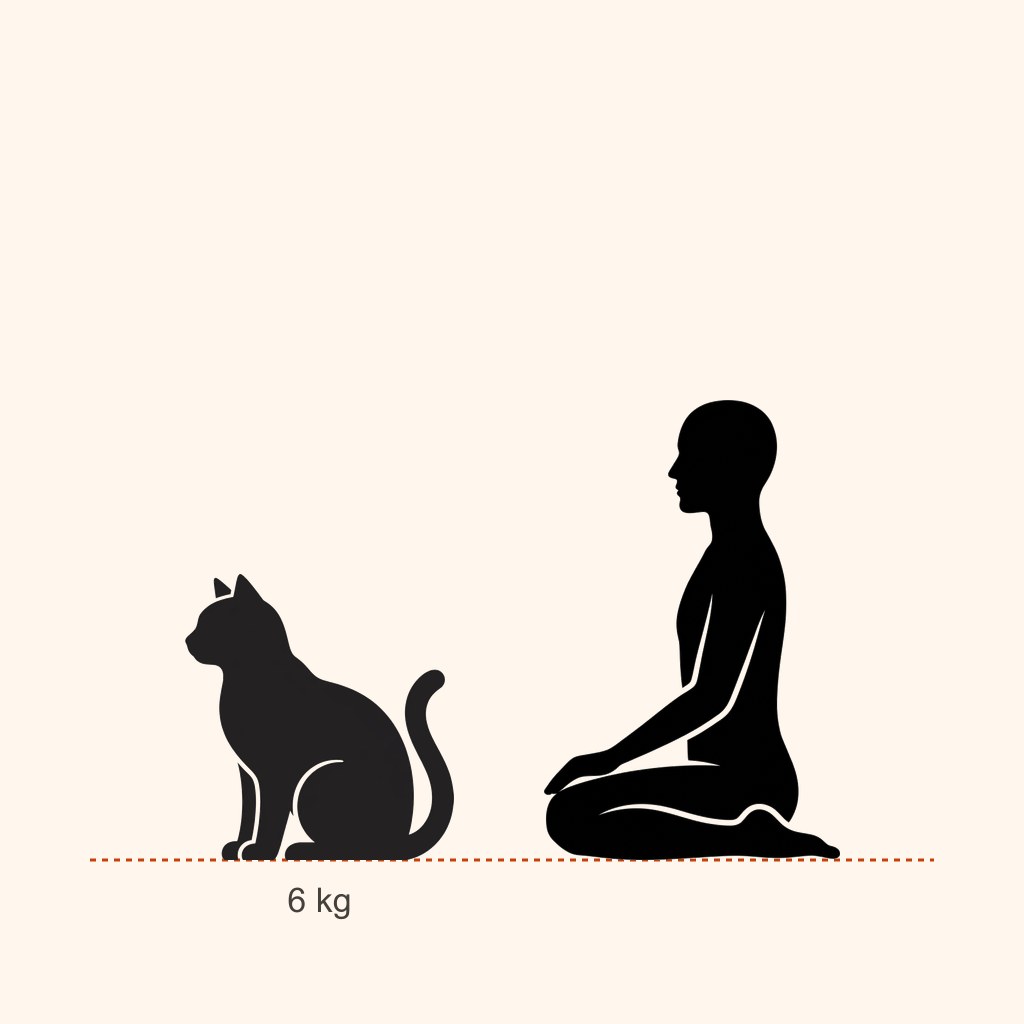
Sources vary on weight: PetMD gives a range of 4–7.7 kg, while some sources cite a lower upper limit; overall consensus is a large-boned, muscular breed that matures slowly, reaching full growth as late as four years of age.
- Kitten (2–12 months): Kitten food, three to four meals a day; this breed grows slowly, with skeletal development continuing to around age four.
- Adult: High-protein, balanced food; two measured meals a day are recommended.
- Weight monitoring: The large frame can mask weight gain; check ribs by hand regularly.
- Senior (8+ years): Age-appropriate food alongside heart and joint monitoring.
Grooming and coat
Both short- and semi-longhaired varieties exist, both needing moderate care.
- Weekly brushing for shorthairs, two to three times a week for semi-longhairs.
- Sheds moderately; more during seasonal transitions.
- Bathing is usually unnecessary.
- Nails: Polydactyl individuals need more frequent, careful checks due to extra toes.
- Brush teeth several times a week; check ears monthly.
Living space and enrichment
- Sturdy, spacious features. Being a large breed, it needs a robust cat tree and generous resting areas.
- Moderate daily play. Fetch games and short leash walks are well received by this breed.
- Mental stimulation. Simple command training and puzzle feeders suit its intelligence.
- Litter box. A wide, low-sided box accommodates its large paws.
- Social environment. Adapts comfortably to households with dogs or other cats; doesn't do well as a fully solitary pet.
Despite its "wild" appearance, its behavior is entirely that of a domestic cat; an enclosed outdoor space (a "catio") is a better option than letting it roam free outside.
History
The Pixie-bob's story begins in 1985 near Mount Baker in Washington state, USA. Breeder Carol Ann Brewer acquired a spotted tabby male with a short tail and polydactyl paws. In 1986 she added a large male cat named "Keba," found by a neighbor and reportedly the offspring of a mating with a bobcat, to her breeding program. Offspring from Keba mating with a neighbor's black spotted tabby female included a female kitten named "Pixie," who became the foundation cat of Brewer's breeding program and gave the breed its name.
TICA accepted the breed into its "Exhibition" category in 1993, promoted it to "New Breed" status in 1996, and granted full championship status in 1998. Genetic testing conducted over the following years did not confirm the claimed bobcat ancestry; the Pixie-bob was found to be entirely of domestic cat genetics. Despite this, the "wildcat hybrid" legend continues to live on in the breed's marketing and popular culture today.
This guide is for information only and is not a substitute for veterinary advice. Prices are approximate and vary by region and time.
Adoption Prep Checklist
Housing
-
Cat bed
Cats want a safe space of their own to rest.
-
Cat climbing tree
Satisfies the natural scratching instinct and protects furniture.
Feeding
-
Dry/wet cat food
Quality cat food is needed for balanced nutrition.
-
Food and water bowl set
Needed for daily feeding and water access.
Grooming
-
Cat litter and litter box
Essential for the cat's toilet needs.
-
Cat de-shedding brush
Regular brushing reduces hairball formation.
Activity
-
Interactive cat toy
Cats release energy through play.
-
Cat carrier
Needed for safe transport to vet visits.
Frequently Asked Questions
Does the Pixie-bob shed?
It sheds a moderate amount. Brushing two or three times a week noticeably reduces both loose hair and matting.
Can the Pixie-bob live in an apartment?
Yes. It lives comfortably in an apartment as long as its daily needs are met. What matters is not floor area but consistent exercise and mental stimulation.
Is the Pixie-bob good with children?
Generally yes. It adapts well to families with children. Even so, interactions should be supervised and children taught to respect the animal’s boundaries.
Is the Pixie-bob suitable for first-time cat owners?
Yes. Its care and training are relatively forgiving, which makes it a sound choice for first-time owners.
How much exercise does the Pixie-bob need?
It is high-energy and needs vigorous daily activity. Mental stimulation matters as much as physical exercise; without enough to do, destructive behaviour follows.
Can the Pixie-bob be left alone during the day?
It can be left alone for a few hours. Long, routine absences can bring on boredom-driven behaviour problems; enrichment and a predictable routine reduce that risk.
How long does the Pixie-bob live?
The Pixie-bob lives 13 - 16 years on average. Diet, regular veterinary check-ups and early screening for hereditary conditions all affect this directly.
Where does the Pixie-bob come from?
The Pixie-bob originates from United States. The geography a breed was developed in, and the job it was bred for, explain much of its temperament and care needs today.