

Siamese
The image on this page is AI-generated and does not depict a real animal.
- Species
- Cat
- Origin
- Thailand
- Size
- Large
- Lifespan
- 12 - 15 years
- Temperament
- Active Agile Intelligent Social Loving Energetic
- Description
Very devoted to its person, talkative and expressive; doesn't like being left alone for long.
- Physical Traits
Short coat, a distinct color-point pattern, deep blue almond eyes, a slender wedge-shaped body.
- Care / Environment Info
Lives indoors. Sheds little. Very easy to care for, infrequent brushing needed. Very high energy, needs plenty of play and stimulation. Very talkative and can meow loudly. Its allergy-triggering potential is considered somewhat lower than other breeds (not fully hypoallergenic). Generally a very healthy breed.
Siamese Owner's Guide
Last updated:
Is a Siamese right for you?
The Siamese is one of the most recognisable breeds, with its blue eyes and coloured points. Its character is equally distinctive: talkative, social, demanding. This cat is not a quiet housemate but a partner in constant communication.
| Situation | Suitability | Note |
|---|---|---|
| Apartment | Excellent | It wants attention rather than space |
| Family with young children | Excellent | Social and playful |
| First-time cat owner | Good | Easy to care for; be prepared for its voice and its demands |
| Alone 8+ hours a day | Very poor | One of the most dependent breeds; becomes depressed in solitude |
| Household with fur allergies | Moderate to good | Very short coat with no undercoat; one of the lightest shedders |
| Home needing quiet | Not suitable | One of the most vocal breeds in the cat world |
| Home with another cat | Excellent | Sociable; a second cat is a very good idea in this breed |
The only question when choosing a Siamese: are you ready for a cat that talks constantly, follows you, and asks for attention? This breed's voice is insistent and loud.
Before you adopt
When buying a kitten, ask the breeder about PRA and amyloidosis; the parents should also have had cardiac checks.
Type difference: there is a visual difference between the modern show type (extremely slender, with a long head) and the traditional type (rounder, known as "applehead"). The health profile of the traditional type is generally easier.
Siamese cats appear in breed rescues, often surrendered because of the noise or the demand for attention. Adopting an adult means the temperament is already known.
Temperament
The Siamese is social, intelligent, and extremely communicative. Its voice is distinctive in the cat world: loud, low, and insistent. It calls you, waits for an answer, and carries on talking.
Its dependence on people is very high. It follows you from room to room, climbs into your lap, and gets under the duvet. Left alone it becomes genuinely unhappy; a second cat is usually the right decision in this breed.
It is intelligent and eager to learn. It plays fetch, walks on a harness, learns tricks, and opens doors.
It is active and loves to climb. Its need for height and play is real.
It can be jealous; some individuals dislike sharing attention.
Kittens are born white; the coloured points on the face, ears, paws, and tail appear over weeks. This is caused by a temperature-sensitive pigment gene; the cooler areas of the body darken. For this reason the cat generally darkens with age and in cool environments.
Health issues and lifespan
Average lifespan is 12 to 15 years, longer in some individuals.
- Amyloidosis: A known inherited disease in this breed; abnormal protein accumulation affects the liver and kidneys. It emerges in young to middle age with lethargy, loss of appetite, jaundice, or kidney failure.
- Progressive retinal atrophy (PRA): Reported in this breed; a genetic test exists.
- Asthma and respiratory problems: Feline asthma is seen more often in the Siamese and related breeds. Cough-like spasms, wheezing, open-mouthed breathing. Dust, cigarette smoke, and aerosols are triggers.
- Dental and gum disease: Early-onset gingivitis is common in this breed.
- Crossed eyes and tail kinks: Features seen in traditional Siamese that come from the breed's genetic background. They do not seriously affect vision but are not wanted in the show standard.
- Hypertrophic cardiomyopathy (HCM): Periodic cardiac checks are recommended.
- Pica (eating non-food items): Eating wool, fabric, and plastic has been reported more often in this breed than in others. It carries a risk of intestinal blockage; dangerous items should be put away.
Feeding
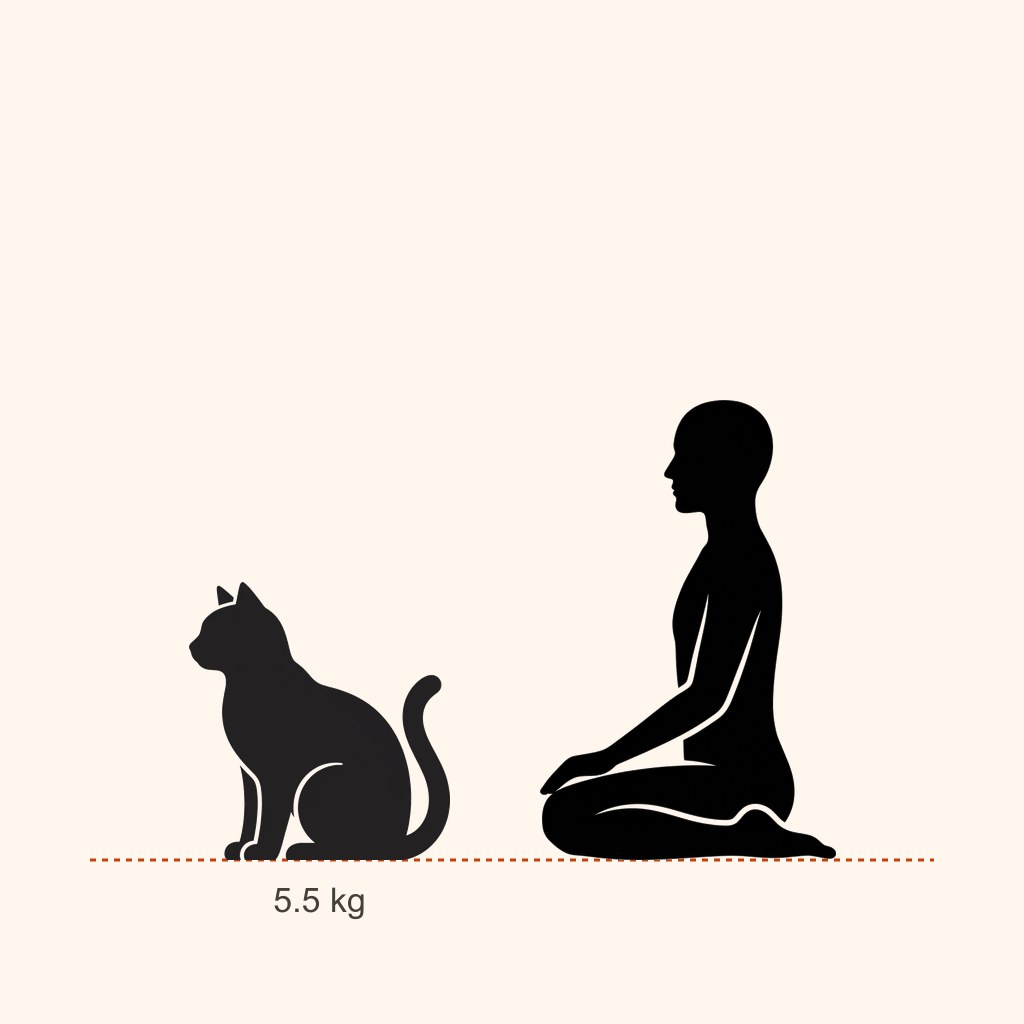
An adult Siamese (3-5 kg) needs the energy equivalent of 50-70 g of dry food per day. It is a finely built breed, and looking "thin" is normal.
- Kitten (2-12 months): Kitten food, three to four meals a day.
- Adult: High protein, low carbohydrate.
- Senior (9+ years): Annual monitoring of kidney and liver values; this matters because of the amyloidosis risk.
Being an active breed, its energy requirement is good for its size. Food puzzles both tire the mind and slow eating.
Grooming and coat
One of the easiest breeds to groom.
- A very short coat with no undercoat; a rubber mitt once a week is enough.
- It sheds little, which may make it more suitable than other breeds for people with mild allergies.
- Bathing is not needed.
- Nails every two to three weeks.
- Teeth several times a week; dental disease starts early in this breed.
- Monthly ear checks; the large ears collect dust.
- It may feel the cold in winter; there is no undercoat and body fat is low. Provide a warm bed and a blanket.
Living space and enrichment
In this breed the need is for interaction rather than space.
- Social contact. Active attention several times a day. This is the most important item for this breed.
- A second cat. If it will be alone for long periods this should be seriously considered; the Siamese is one of the breeds most inclined to form friendships.
- Vertical space. A cat tree, shelves, an observation point.
- Active play twice a day. Wand toys, fetch.
- Mental work. Trick training, food puzzles, harness training. This breed likes to learn.
- Pica control. Wool, string, plastic bags, and anything else swallowable should be removed.
- A warm corner. A heated bed or a sunny window; this breed seeks warmth.
History
The Siamese takes its name from Siam, the old name of present-day Thailand, and is one of the country's oldest cat breeds. In Thailand it is known as "Wichien Maat". Cats of this type are depicted in the manuscript "Tamra Maew" (the Cat Book Poems) dating from the Ayutthaya period.
It is said to have been considered sacred in Siamese palaces and temples, to have belonged to the nobility, and to have been forbidden from leaving the country.
The breed reached the West at the end of the 19th century. In 1884 the British consul in Bangkok took a pair of Siamese cats to England; these cats were shown at the Crystal Palace cat show in 1885 and attracted great interest. It reached America in the same period; in 1878 a Siamese cat was sent from Bangkok as a gift to the wife of President Rutherford B. Hayes.
Through the 20th century the breed was developed in show standards toward an ever more slender and elongated type. Breeders who preserved the traditional, rounder type maintained a separate line, recognised in some federations under the name "Thai".
The Siamese also lies at the root of many modern breeds, including the Balinese, Oriental, Himalayan, and Tonkinese.
This guide is for information only and is not a substitute for veterinary advice. Prices are approximate and vary by region and time.
Adoption Prep Checklist
Housing
-
Cat bed
Cats want a safe space of their own to rest.
-
Cat climbing tree
Satisfies the natural scratching instinct and protects furniture.
Feeding
-
Dry/wet cat food
Quality cat food is needed for balanced nutrition.
-
Food and water bowl set
Needed for daily feeding and water access.
Grooming
-
Cat litter and litter box
Essential for the cat's toilet needs.
-
Short-hair cat brush
Regular brushing reduces hairball formation.
Activity
-
Interactive cat toy
Cats release energy through play.
-
Cat carrier
Needed for safe transport to vet visits.
Frequently Asked Questions
Does the Siamese shed?
Shedding is low. Brushing once a week is usually enough, with a mild increase during seasonal changes.
Can the Siamese live in an apartment?
Yes. It lives comfortably in an apartment as long as its daily needs are met. What matters is not floor area but consistent exercise and mental stimulation.
Is the Siamese good with children?
Generally yes. It adapts well to families with children. Even so, interactions should be supervised and children taught to respect the animal’s boundaries.
Is the Siamese suitable for first-time cat owners?
Yes. Its care and training are relatively forgiving, which makes it a sound choice for first-time owners.
How much exercise does the Siamese need?
It is high-energy and needs vigorous daily activity. Mental stimulation matters as much as physical exercise; without enough to do, destructive behaviour follows.
Can the Siamese be left alone during the day?
It is not suited to long periods alone. It is prone to separation anxiety; a household where someone is usually home, or where a companion animal is present, fits it much better.
How long does the Siamese live?
The Siamese lives 12 - 15 years on average. Diet, regular veterinary check-ups and early screening for hereditary conditions all affect this directly.
Where does the Siamese come from?
The Siamese originates from Thailand. The geography a breed was developed in, and the job it was bred for, explain much of its temperament and care needs today.