

Airedale Terrier
The image on this page is AI-generated and does not depict a real animal.
- Species
- Dog
- Origin
- England
- Size
- Large
- Lifespan
- 12-14 years
- Temperament
- Intelligent brave loyal independent
- Description
The largest of the terrier breeds; a versatile and courageous working/hunting dog.
- Physical Traits
Wiry, coarse coat (black-and-tan), a long head shape, a muscular medium-to-large body.
- Care / Environment Info
A house with a garden is preferred. Its wiry coat sheds little but requires regular clipping/stripping. High exercise needs.
Airedale Terrier Owner's Guide
Last updated:
Is an Airedale Terrier right for you?
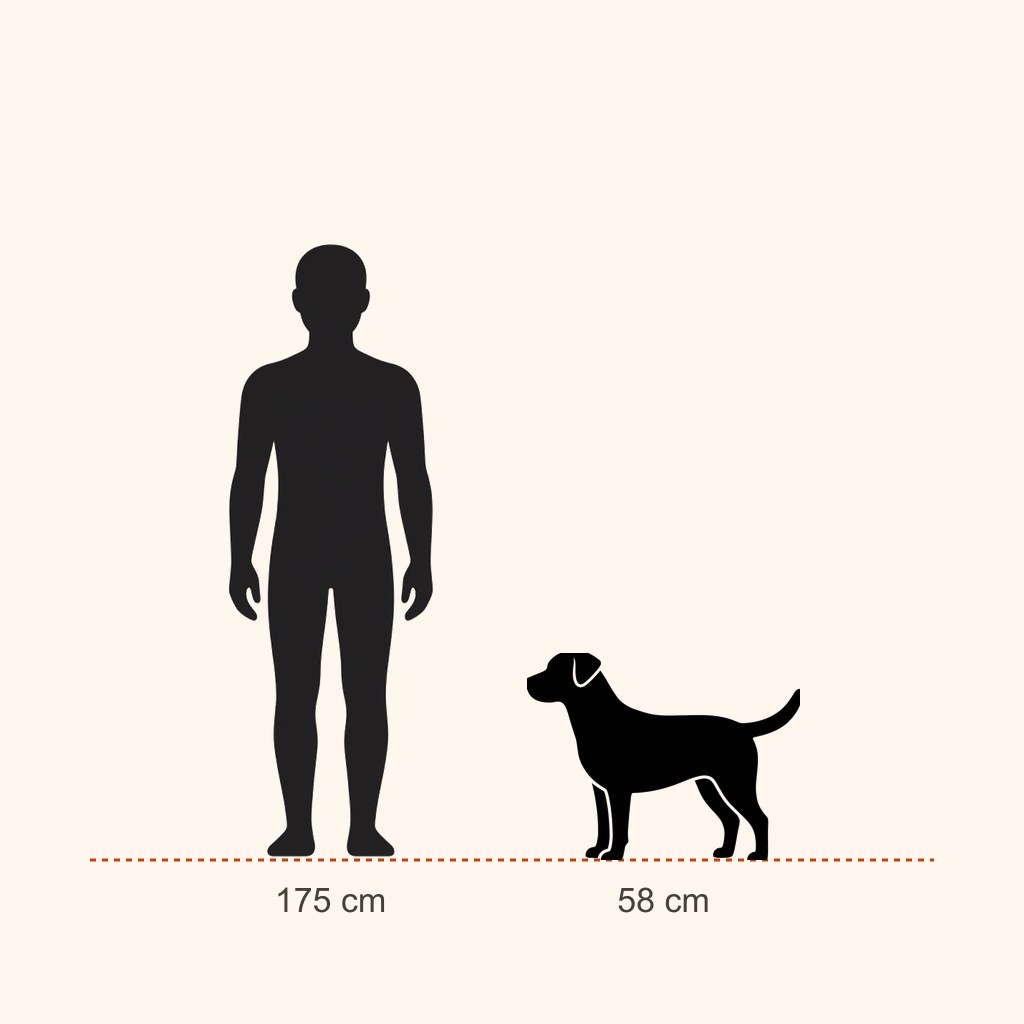
Known as the "King of Terriers," the Airedale is the largest member of the terrier group. It stands roughly 55-61 cm at the shoulder and weighs about 25-29 kg for males and 20-23 kg for females, putting it much closer to a medium-large breed than to the small terriers most people picture. Combine that size with an intelligent, independent character, a hard wiry double coat, and a strong prey/chase drive, and this is not a breed that suits every household.
| Situation | Suitability | Note |
|---|---|---|
| Apartment | Caution | Its size and energy need space; without daily walks and mental work it becomes restless |
| Family with young children | Caution | Loyal and playful, but can be boisterous during play; supervise with small children |
| First-time dog owner | Caution | Intelligent but stubborn; needs consistent, patient training and thinks for itself |
| House with a garden | Good | Requires a tall, secure fence — the prey drive makes escaping or jumping a real risk |
| Home with cats or small pets | Poor | Strong prey/chase instinct; needs early, careful socialisation with small furry animals |
| Household with fur allergies | Moderate | Sheds very little but needs regular hand-stripping; not truly hypoallergenic |
| Left alone for long hours | Poor | Becomes destructive when bored; needs daily exercise and occupation |
| Active, sporty owner | Excellent | Well suited to running, tracking, and dog sports as well as obedience work |
The biggest thing that sets the Airedale apart from other terriers is its size: unlike small-to-medium terriers such as the Bull Terrier or West Highland White, the Airedale is a large, muscular dog, which changes both its space requirements and its training needs.
Before you adopt
Look for a breeder who lets you meet the parents and who screens breeding lines for hip and elbow dysplasia. Breed clubs such as the Airedale Terrier Club of America recommend hip (OFA/PennHip), eye, thyroid, and cardiac screening in breeding stock — ask a responsible breeder for these results.
Airedales are less common than many popular breeds, so they show up only rarely in shelters and rehoming networks; mixed-breed wire-coated dogs are sometimes marketed as "Airedales," so compare coat type and size carefully.
A puppy should have stayed with its mother for at least eight weeks and been exposed to different people and environments early on — this matters a great deal for a balanced adult temperament in this breed.
Temperament
The Airedale is intelligent, bold, and loyal, but that intelligence does not equal obedience. It is an independent thinker: it understands a command but does not always decide to act on it right away. That is why it can rank lower on obedience lists despite being highly capable of learning.
It is devoted and protective of its family, while reserved and watchful — not aggressive — toward strangers. A well-socialised Airedale enjoys playing with children, but because it is strong and energetic it can accidentally knock over a small child during play.
How it gets on with other dogs depends heavily on individual socialisation; it does well with animals it has grown up with, but its hunting origins give it a strong urge to chase unfamiliar small animals such as cats, rabbits, or rodents.
Its temperament is steady: the Airedale is not easily spooked and approaches new situations with curiosity tempered by caution. Left unguided, that steadiness can slide into stubbornness.
Health issues and lifespan
Average lifespan is around 11 to 14 years. It is generally considered a sturdy breed, but several inherited and structural issues are documented.
- Hip and elbow dysplasia: A joint development disorder common in medium-large dogs. Signs include limping, a "bunny hop" gait, and difficulty rising; pain management and weight control may be needed as the dog ages.
- Gastric dilatation-volvulus (bloat): A serious emergency reported in this deep-chested, square-built breed. A distended abdomen, unproductive retching, restlessness, and rapid breathing call for an immediate emergency vet visit — it can be fatal within hours.
- Hypothyroidism: Shows up as weight gain, lethargy, recurring skin and ear infections, and hair loss; diagnosed with a blood test.
- Von Willebrand disease (a bleeding disorder): An inherited clotting problem that can cause excessive bleeding after surgery or injury. Choosing lines that are screened for it is advisable.
- Eye problems: Corneal dystrophy, which can appear as early as 4-12 months, and progressive retinal atrophy (PRA) in older dogs have both been reported; cloudiness or vision loss warrants an eye exam.
- Skin problems: Folliculitis and skin irritation, which occur more often in wire-coated breeds when grooming is neglected, show up as redness, itching, and odour.
Some sources also note a risk of certain cancers, such as lymphoma, in older Airedales; sudden weight loss, swelling, or loss of appetite should not be ignored.
Feeding
An adult Airedale (20-29 kg) can be fed roughly 300-400 g of quality dry food per day; the exact amount depends on age, activity level, and the food's calorie density.
- Puppy (2-12 months): Medium-to-large-breed puppy food, three meals a day; avoid overfeeding during the rapid growth phase to protect hip and elbow development.
- Adult: Two meals a day of balanced food with 22-26% protein. To reduce bloat risk, avoid heavy exercise right before or after meals and consider a slow-feeder bowl.
- Senior (8+ years): Reduce calories and consider joint support such as glucosamine and chondroitin.
Keep an eye on hydration and appetite during hot weather, and consider shifting mealtimes to cooler parts of the day.
Grooming and coat
The Airedale's hard, wiry double coat sheds very little on its own, but that does not mean it is low-maintenance.
- Brush two to three times a week to remove dead hair and dirt.
- Have the coat professionally hand-stripped every few months to keep its texture and colour; clipping with scissors softens the coat and dulls its colour over time.
- Check ears weekly — the folded ear shape can trap moisture.
- Trim nails monthly and brush teeth several times a week.
- Bathe only occasionally; the coat's natural protective oils mean brushing is usually enough between baths.
Training and exercise
Plan on at least 60-90 minutes of walking, running, or active play daily; an Airedale is not satisfied by a walk alone without mental engagement.
- Early socialisation (8-16 weeks): Exposure to different people, places, and animals is key to a balanced adult temperament.
- Consistent, reward-based training: Harsh methods do not work with this stubborn breed; keep sessions short, fun, and rewarding.
- Leash and recall training: Given the strong prey drive, letting it off-lead outside a secure, fenced area is risky.
- Mental stimulation: Tracking, obedience work, and pulling sports channel its energy productively.
- Managing the chase instinct: Controlled introductions to small animals or bicycles, and an early "leave it" cue, help prevent problems.
History
The Airedale Terrier took shape in 19th-century England, in the Aire Valley of Yorkshire. It was developed by crossing the Otterhound with the now-extinct Old English Black and Tan Terrier, originally to hunt otters, rats, and other small game in the region.
Its size and versatility soon led to roles beyond hunting, including guarding, police work, and messenger duty during World War I — service that cemented its reputation as the "King of Terriers." Brought to North America in the 1880s, the breed became one of the country's most popular by the 1920s.
Today the Airedale is known as a loyal, versatile family dog that still carries the independent intelligence and energy of its hunting past.
This guide is for information only and is not a substitute for veterinary advice. Prices are approximate and vary by region and time.
Adoption Prep Checklist
Housing
-
Large-breed dog bed
A comfortable bed supports joint health.
Feeding
-
Large-breed dog food
Food matched to breed size gives the right nutritional balance.
-
Food and water bowl set
Needed for daily feeding and water access.
Grooming
-
Short-hair dog brush
Regular brushing reduces shedding and matting.
-
Dog nail clippers
Regular nail care matters for healthy walking.
-
Dog shampoo
Use a dog-specific shampoo for skin and coat health.
Walking & Activity
-
Running/exercise dog harness
Needed for safe walks.
-
Interactive dog puzzle toy
Mental and physical stimulation reduces behavior problems.
Frequently Asked Questions
Does the Airedale Terrier shed?
Shedding is low. Brushing once a week is usually enough, with a mild increase during seasonal changes.
Can the Airedale Terrier live in an apartment?
Possible but not ideal. A house with outdoor space is preferable; in an apartment you will need to increase daily exercise substantially.
Is the Airedale Terrier good with children?
Generally yes. It adapts well to families with children. Even so, interactions should be supervised and children taught to respect the animal’s boundaries.
Is the Airedale Terrier suitable for first-time dog owners?
Partly. Someone with basic experience will manage well, but it would not be the first choice for a complete beginner.
How much exercise does the Airedale Terrier need?
It is high-energy and needs vigorous daily activity. Mental stimulation matters as much as physical exercise; without enough to do, destructive behaviour follows.
Can the Airedale Terrier be left alone during the day?
It can be left alone for a few hours. Long, routine absences can bring on boredom-driven behaviour problems; enrichment and a predictable routine reduce that risk.
How long does the Airedale Terrier live?
The Airedale Terrier lives 12-14 years on average. Diet, regular veterinary check-ups and early screening for hereditary conditions all affect this directly.
Where does the Airedale Terrier come from?
The Airedale Terrier originates from England. The geography a breed was developed in, and the job it was bred for, explain much of its temperament and care needs today.