

Alaskan Klee Kai
The image on this page is AI-generated and does not depict a real animal.
- Species
- Dog
- Origin
- United States (Alaska)
- Size
- Medium
- Lifespan
- 12-15 years
- Temperament
- Energetic intelligent aloof with strangers loyal
- Description
Looking like a miniaturized version of a Husky, this relatively new American breed.
- Physical Traits
Thick double coat (Husky-like colors), upright ears, a small-to-medium compact body.
- Care / Environment Info
Suitable for apartment living. Its double coat sheds seasonally, requiring regular brushing. Moderate-to-high exercise needs.
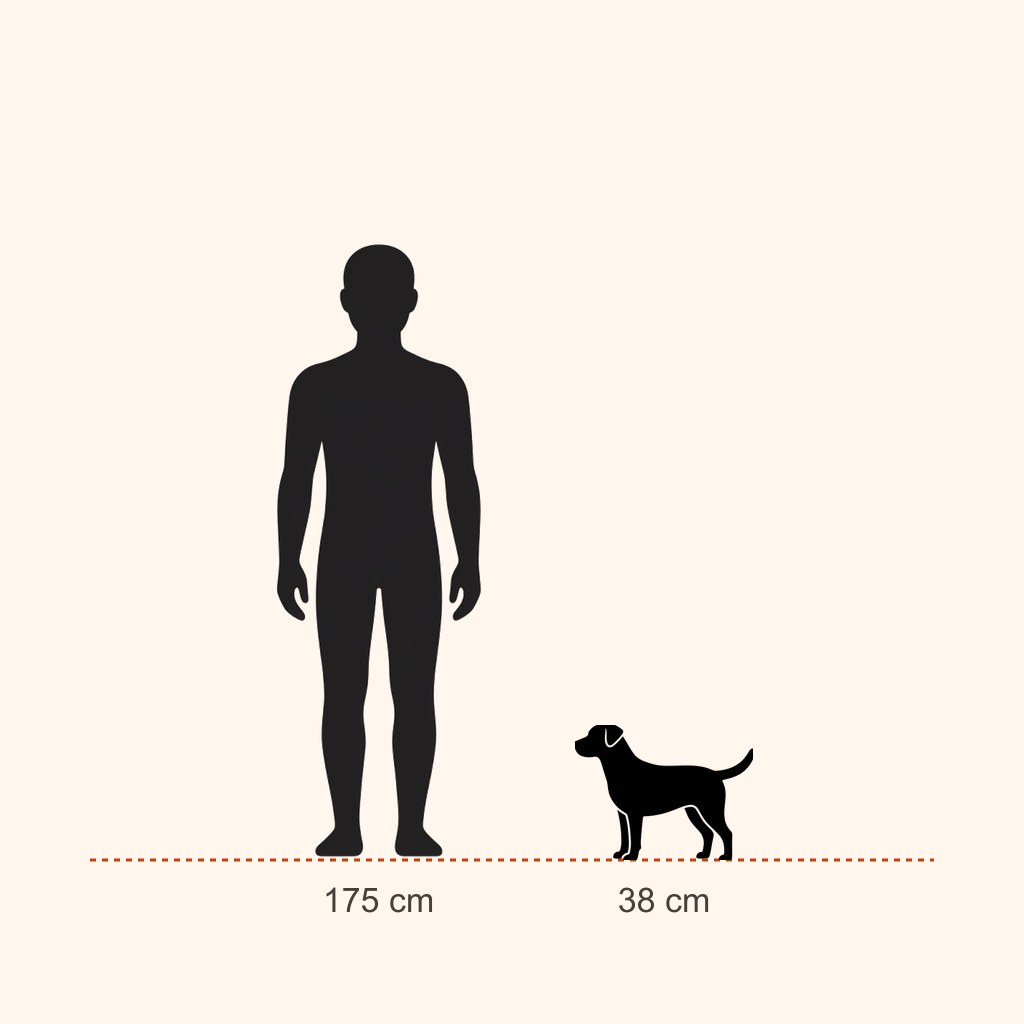
Alaskan Klee Kai Owner's Guide
Last updated:
Is an Alaskan Klee Kai right for you?
At first glance the Alaskan Klee Kai looks like a miniature Husky, but it is actually a separate and fairly young breed. It was developed in Alaska in the 1970s to keep the Husky/Malamute look while being a small companion dog suited to indoor family life. The AKC's own breed profile describes it as "alert, energetic, and curious, yet reserved with unfamiliar people and situations" — and that last part matters: this is not the outgoing, everyone's-best-friend dog many people picture.
| Situation | Suitability | Note |
|---|---|---|
| Apartment | Good | Small to medium build; adapts well with daily exercise and mental stimulation |
| Alone 8+ hours a day | Poor | A companion breed that bonds tightly to its family; may not handle long solitude well |
| First-time dog owner | Moderate | Intelligent but can be stubborn; needs early, patient socialisation |
| Family with young children | Moderate | Small size plus a reserved temperament; uncontrolled handling can stress the dog |
| Household that hosts guests often | Poor | Aloof with strangers; some individuals never fully warm up |
| Looking for a healthy, well-bred puppy | Moderate | A rare, trendy breed; finding a health-tested, reputable line can take time |
| Hot, humid climate | Moderate | Carries a double coat; needs shade and a cool environment |
| Active owner who enjoys mental games | Good | Energetic and clever; can excel at agility |
Before you adopt
The Alaskan Klee Kai is still a rare breed, and its popularity on social media has brought along inexperienced or poorly planned breeding. The Alaskan Klee Kai Association of America (AKKAOA) recommends screening breeding stock for patellar evaluation, thyroid testing, and Factor VII clotting testing; walk away from a source that cannot document these.
The breed comes in three size varieties — toy, miniature, and standard — with weight increasing along with height. Clarify with the breeder which size variety you want, since daily care and feeding needs scale with size.
Be realistic about temperament: this breed is naturally aloof with strangers. Some modern lines are bred for a friendlier disposition, but if you expect an instantly social, everybody-loves-it dog, you may be disappointed.
Temperament
The Alaskan Klee Kai is energetic, curious, and highly intelligent, and it forms a deep bond with its family — often a single-family dog at heart. Its intelligence can show up as stubbornness, and despite its small bone structure it is sturdy enough to do well in agility and other performance sports.
Reserve with strangers is the breed's defining trait. AKC material on the breed notes that many individuals take years to fully warm up to people outside the family, and that anyone hoping for a very outgoing, social dog may want to look elsewhere. Early and consistent socialisation can soften this wariness, though it may never disappear completely.
This is also a vocal breed: it produces a "woo-woo" sound when happy and something close to a scream when startled or distressed. That vocal range is part of the breed's natural communication and cannot be trained away entirely.
Take care in homes with young children: the combination of small size and a reserved temperament means rough or uncontrolled handling can genuinely stress the dog. Teach children gentle interaction and supervise closely.
Health issues and lifespan
Sources give an average lifespan of roughly 12 to 16 years; PetMD lists 13 to 16 years. The breed is generally considered healthy, but because it is young and relatively rare, long-term data on how common certain genetic conditions are across the population is still limited.
- Patellar luxation: A dislocating kneecap common in small breeds; mild cases are monitored, more severe ones may need surgery.
- Autoimmune thyroiditis: An inherited condition where the immune system attacks the thyroid gland, showing as weight gain, lethargy, recurring infections, and coat changes.
- Heart murmurs and congenital heart issues: Part of the health screening AKKAOA tracks; usually picked up on a routine veterinary exam.
- Factor VII deficiency: An inherited clotting-factor disorder affecting the blood's ability to clot. It is a double-recessive trait; a DNA test exists and responsible breeding has greatly reduced its prevalence.
- Liver shunt (portosystemic shunt): Reported occasionally; blood bypasses the liver so toxins are not properly filtered, and some cases require surgical correction.
- Eye disorders: Juvenile cataracts have been reported. Progressive retinal atrophy (PRA), which starts with night blindness, is a general risk in Husky-type northern breeds; it is not well documented specifically in the Alaskan Klee Kai, but routine eye exams are still worthwhile.
Feeding
Because the breed comes in three size varieties, the right amount depends heavily on the individual dog's size.
- Toy (roughly 3-5 kg / 6-11 lb): 60-90 g of quality dry food per day, split into two meals.
- Miniature (roughly 5-8 kg / 11-18 lb): 90-140 g per day.
- Standard (roughly 8-11 kg / 18-24 lb): 140-190 g per day.
- Puppy (2-12 months): Small/medium-breed puppy food, three meals a day; avoid rapid weight gain.
- Senior (8+ years): Reduce calories; joint support can help.
These ranges should be adjusted for activity level, and very active dogs may need more. Measure meals rather than guessing — in a small breed, portion mistakes show up quickly as weight change.
Grooming and coat
The coat is a dense double layer, with a soft undercoat and coarser guard hairs.
- Brush once or twice a week in the normal season.
- Twice a year the dog "blows" its undercoat heavily; daily brushing is needed during that period.
- Bathe only a few times a year — frequent bathing strips natural oils.
- Never shave the coat. The double layer insulates against both cold and heat.
- Small breeds are more prone to dental problems, so brush teeth several times a week.
- Check ears weekly and trim nails monthly.
Training and exercise
Daily needs are roughly an hour of play and exercise; a bored Klee Kai can develop behaviour problems. Mental stimulation matters as much as physical activity.
Priorities:
- Early socialisation (8-16 weeks). The single most important task for this breed — early, positive, repeated exposure is the only real way to soften its natural wariness of strangers.
- Reward-based training. Smart but sensitive; harsh methods damage trust and increase wariness.
- Managing vocalisation. The "woo-woo" and scream-like sounds can't be eliminated; reducing boredom and over-arousal helps most.
- Alone-time conditioning. Because of its strong attachment to family, start with short absences and build up gradually.
- Mental games. Scent work, food puzzles, and agility suit this clever breed well.
The breed is still hard to find in Turkey; be patient with the search, and favour sources that are honest about temperament rather than only showing cute puppy photos.
History
The Alaskan Klee Kai was developed in Alaska between the 1970s and 1988 by Linda Spurlin. The goal was a companion-sized dog that kept the Husky/Malamute look but suited indoor family life. It is based primarily on the Alaskan Husky, with a small amount of Siberian Husky, a somewhat larger contribution from the American Eskimo Dog, and some Schipperke. The name comes from an Athabaskan phrase meaning "little dog"; the breed was originally called simply "Klee Kai," with "Alaskan" added in 1995.
It is a common misconception that the Alaskan Klee Kai is just a scaled-down Alaskan Malamute. They are separate breeds: the Malamute is a centuries-old working breed selected for heavy freight hauling, while the Klee Kai was deliberately built from scratch in the 1970s using several breeds, purely as a companion. The strong pulling and working drive that defines the Malamute is absent in the Klee Kai — the size difference reflects a difference in purpose, not a simple miniaturisation.
The breed was accepted into the AKC Foundation Stock Service in October 2020, and the Alaskan Klee Kai Club of America (AKKCOA) was approved as its AKC national parent club in 2022. Since June 2025 it has been eligible to compete in the AKC Miscellaneous Class — an important step toward full AKC recognition, though not the final one. It is also recognised by the United Kennel Club (UKC) and several international clubs. The Alaskan Klee Kai remains a very rare breed in Turkey.
This guide is for information only and is not a substitute for veterinary advice. Prices are approximate and vary by region and time.
Sources
- www.akc.org/dog-breeds/alaskan-klee-kai/
- www.akc.org/canine-partners/husky-lite-meet-alaskan-klee-kai/
- www.akkaoa.org/health-and-medical
- www.petmd.com/dog/breeds/alaskan-klee-kai
- www.msdvetmanual.com/dog-owners/eye-disorders-of-dogs/disorders-of-the-retina-choroid-and-optic-disk-ocular-fundus-in-dogs
- en.wikipedia.org/wiki/Alaskan_Klee_Kai
Adoption Prep Checklist
Housing
-
Medium-breed dog bed
A comfortable bed supports joint health.
Feeding
-
Medium-breed dog food
Food matched to breed size gives the right nutritional balance.
-
Food and water bowl set
Needed for daily feeding and water access.
Grooming
-
De-shedding brush
Regular brushing reduces shedding and matting.
-
Dog nail clippers
Regular nail care matters for healthy walking.
-
Dog shampoo
Use a dog-specific shampoo for skin and coat health.
Walking & Activity
-
Running/exercise dog harness
Needed for safe walks.
-
Interactive dog puzzle toy
Mental and physical stimulation reduces behavior problems.
Frequently Asked Questions
Does the Alaskan Klee Kai shed?
It sheds a moderate amount. Brushing two or three times a week noticeably reduces both loose hair and matting.
Can the Alaskan Klee Kai live in an apartment?
Yes. It lives comfortably in an apartment as long as its daily needs are met. What matters is not floor area but consistent exercise and mental stimulation.
Is the Alaskan Klee Kai good with children?
Caution is warranted. With proper socialisation and adult supervision it can live with children, but it is not a first choice for homes with young children.
Is the Alaskan Klee Kai suitable for first-time dog owners?
Partly. Someone with basic experience will manage well, but it would not be the first choice for a complete beginner.
How much exercise does the Alaskan Klee Kai need?
It is high-energy and needs vigorous daily activity. Mental stimulation matters as much as physical exercise; without enough to do, destructive behaviour follows.
Can the Alaskan Klee Kai be left alone during the day?
It can be left alone for a few hours. Long, routine absences can bring on boredom-driven behaviour problems; enrichment and a predictable routine reduce that risk.
How long does the Alaskan Klee Kai live?
The Alaskan Klee Kai lives 12-15 years on average. Diet, regular veterinary check-ups and early screening for hereditary conditions all affect this directly.
Where does the Alaskan Klee Kai come from?
The Alaskan Klee Kai originates from United States (Alaska). The geography a breed was developed in, and the job it was bred for, explain much of its temperament and care needs today.