

Black Russian Terrier
The image on this page is AI-generated and does not depict a real animal.
- Species
- Dog
- Origin
- Russia
- Size
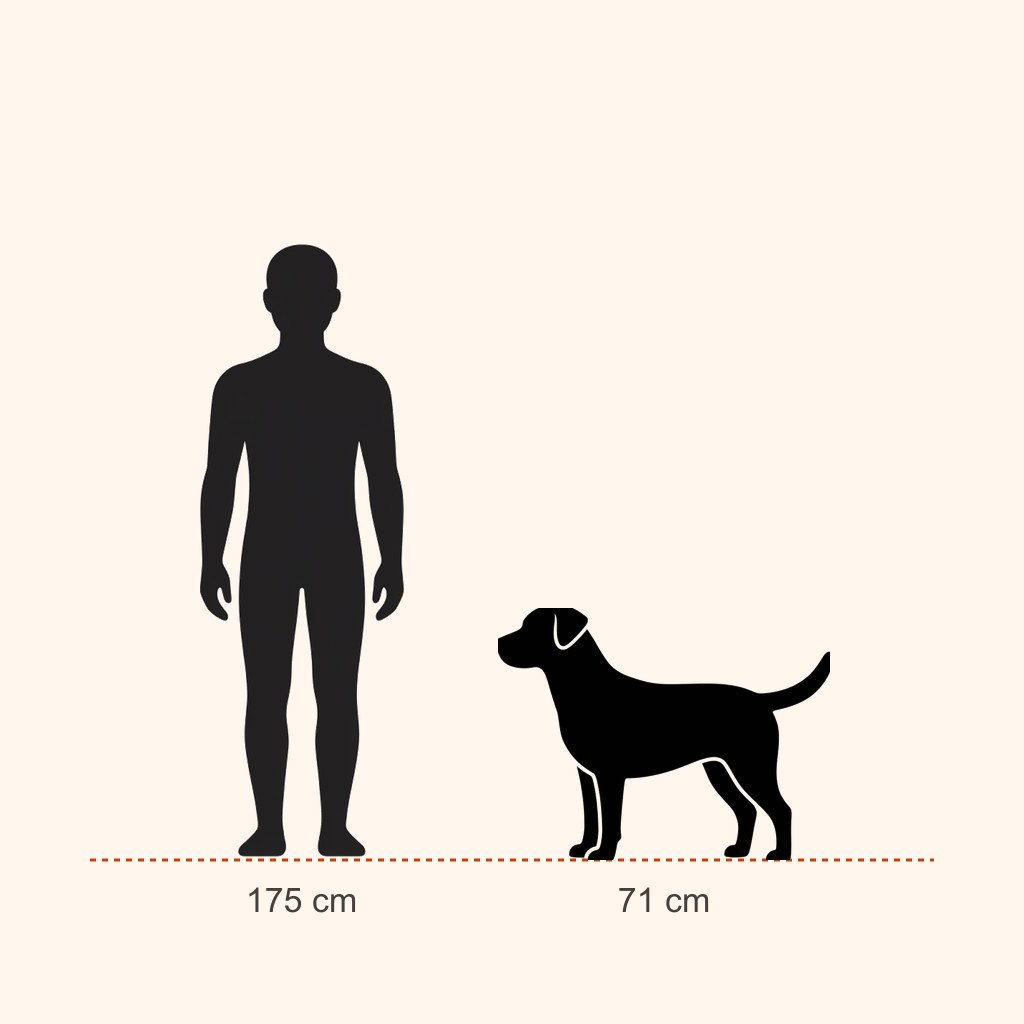
- Very Large
- Lifespan
- 10-12 years
- Temperament
- Strong brave loyal protective
- Description
Developed for the Soviet army, a strong and protective working/guard dog.
- Physical Traits
Wiry black coat, a large muscular body, a thick brow and beard.
- Care / Environment Info
A house with a garden is preferred. Its wiry coat requires regular clipping. High exercise and early socialization needs.
Black Russian Terrier Owner's Guide
Last updated:
Is a Black Russian Terrier right for you?
Despite the name, the Black Russian Terrier (BRT) is not a terrier at all but a giant-sized guard and working dog, classified in the Working group. It was purpose-built for the Soviet military: powerful, resolute, and naturally reserved toward strangers.
| Situation | Suitability | Note |
|---|---|---|
| Apartment | Poor | Not enough space for a 100-130 lb giant breed |
| Family with young children | Moderate | Devoted and patient with family, but size requires supervision |
| First-time dog owner | Poor | Powerful, headstrong breed; needs an experienced, consistent owner |
| House with a yard | Good | Space and a secure fence are needed |
| Household with fur allergies | Poor | Thick double coat sheds regularly and needs upkeep |
| Left alone for long periods | Poor | Bonds tightly to its family; struggles with boarding and long absences |
| Experienced, active guard-dog owner | Excellent | Excels in obedience, agility, and protection sports |
Be realistic about this breed: a BRT is less a family pet and more a working guard dog that needs a job. Some municipalities and insurers require extra permits or liability coverage for large guard breeds; check your local rules before adopting.
Before you adopt
The BRT is not on Turkey's list of banned/dangerous breeds under Law No. 5199 (Pit Bull Terrier, Dogo Argentino, Fila Brasileiro, Tosa, American Staffordshire Terrier, American Bully) — and generally isn't on most countries' banned-breed lists — but as a giant guard breed, check local rules on liability, housing, and fencing requirements before bringing one home.
Ask the breeder for hip and elbow dysplasia certification, plus the breed-specific genetic tests (JLPP, hyperuricosuria). The breed is still relatively rare, so finding a reputable breeder can take time.
If you encounter a BRT through a shelter or rehoming listing, it's often an adult that developed behavior issues from lack of a job; with patience and a structured routine, these dogs can turn around quickly in the right hands.
Temperament
The Black Russian Terrier is calm, confident, and intelligent. It bonds deeply with its family and is affectionate at home, while being naturally reserved and watchful with strangers.
It has a strong work ethic and does well in obedience, agility, and protection sports. Left without a job, it can develop destructive behavior — mental work is a necessity for this breed, not a luxury.
It doesn't like being separated from its family and can struggle with boarding or long absences, a trait tied to being bred to bond tightly with one family or territory.
Its attitude toward other dogs varies by individual; with early, consistent socialisation it can live comfortably with other dogs in the household, though tension with dominant same-sex dogs shouldn't be ruled out.
Health issues and lifespan
Sources generally put average lifespan at 10 to 12 years; a 2024 UK study found an average of 10.9 years.
- Hip and elbow dysplasia: Common in giant breeds; signs include limping, difficulty rising, and stiffness after exercise. Ask for breeder certification.
- Bloat (gastric dilatation-volvulus): A serious emergency in this deep-chested breed. A swollen abdomen, unproductive retching, and restlessness call for immediate veterinary care; avoid strenuous activity right before and after meals.
- Juvenile laryngeal paralysis and polyneuropathy (JLPP): A breed-specific inherited nerve-muscle disorder causing voice changes, altered breathing sounds, and gait abnormalities at a young age. A genetic test exists.
- Hyperuricosuria (HUU): Excess uric acid in the urine leading to bladder stones; signs include frequent urination, straining, or blood in the urine. Managed with prescription diet and medication; a genetic test exists.
- Progressive retinal atrophy (PRA): An untreatable eye disease that leads to vision loss.
Feeding
An adult Black Russian Terrier (99-130 lb / 45-60 kg) eats about 500-700 g of quality dry food per day, adjusted for activity level.
- Puppy (2-24 months): Giant-breed puppy food. Growth is prolonged in this breed; rapid weight gain and excess calcium can damage joint development.
- Adult: Moderate-to-high-protein food, split into two meals. Given the bloat risk, favor divided meals over one large feeding.
- Senior (7+ years): Reduce calories and add joint support.
A slow-feeder bowl can help reduce bloat risk, especially for fast eaters.
Grooming and coat
Thick, coarse, slightly wavy double coat in black; it sheds less than expected but needs regular upkeep.
- Brush 2-3 times a week to prevent matting.
- The beard, eyebrows, and feet need regular trimming; most owners use professional grooming.
- Bathe as needed; the thick coat must be dried thoroughly, since staying damp can cause skin problems.
- Check ears regularly.
- Trim nails monthly.
Training and exercise
Daily need is at least 1 to 1.5 hours; two walks plus plenty of play or work time is recommended. Fetch, frisbee, hiking, and swimming are favorites.
Priorities:
- Early, thorough socialisation (8-16 weeks). Critical in this breed given its natural guarding instinct.
- Consistent, respectful leadership. The BRT is smart and powerful; harsh methods erode trust.
- Give it a job. Structured activity like obedience, agility, or protection sport prevents boredom.
- Leash and boundary training. Being able to control a dog this size is a genuine safety matter.
- Visitor protocol. Teach a clear routine for guests to manage its reserved attitude toward strangers.
History
The Black Russian Terrier was developed in the late 1940s and 1950s at the Soviet Union's Red Star (Krasnaya Zvezda) kennel as a military and guard dog. The Soviet state ran a large-scale breeding program to create it, combining dozens of breeds — including Rottweilers, Giant Schnauzers, Airedale Terriers, and Newfoundlands — many sourced from animals brought back from postwar Germany.
The goal was a cold-hardy, powerful, trainable military sentry dog. Over time the breed moved into civilian life and is now recognized in protection work, obedience, and the show ring. It is recognized by the FCI and remains a relatively rare breed worldwide.
This guide is for information only and is not a substitute for veterinary advice. Prices are approximate and vary by region and time.
Adoption Prep Checklist
Housing
-
Large-breed dog bed
A comfortable bed supports joint health.
Feeding
-
Large-breed dog food
Food matched to breed size gives the right nutritional balance.
-
Food and water bowl set
Needed for daily feeding and water access.
Grooming
-
Short-hair dog brush
Regular brushing reduces shedding and matting.
-
Dog nail clippers
Regular nail care matters for healthy walking.
-
Dog shampoo
Use a dog-specific shampoo for skin and coat health.
Walking & Activity
-
Running/exercise dog harness
Needed for safe walks.
-
Interactive dog puzzle toy
Mental and physical stimulation reduces behavior problems.
Frequently Asked Questions
Does the Black Russian Terrier shed?
Shedding is low. Brushing once a week is usually enough, with a mild increase during seasonal changes.
Can the Black Russian Terrier live in an apartment?
Possible but not ideal. A house with outdoor space is preferable; in an apartment you will need to increase daily exercise substantially.
Is the Black Russian Terrier good with children?
Caution is warranted. With proper socialisation and adult supervision it can live with children, but it is not a first choice for homes with young children.
Is the Black Russian Terrier suitable for first-time dog owners?
No — it suits experienced owners. Its character, energy or care requirements would be demanding for a first-time owner.
How much exercise does the Black Russian Terrier need?
It is high-energy and needs vigorous daily activity. Mental stimulation matters as much as physical exercise; without enough to do, destructive behaviour follows.
Can the Black Russian Terrier be left alone during the day?
It can be left alone for a few hours. Long, routine absences can bring on boredom-driven behaviour problems; enrichment and a predictable routine reduce that risk.
How long does the Black Russian Terrier live?
The Black Russian Terrier lives 10-12 years on average. Diet, regular veterinary check-ups and early screening for hereditary conditions all affect this directly.
Where does the Black Russian Terrier come from?
The Black Russian Terrier originates from Russia. The geography a breed was developed in, and the job it was bred for, explain much of its temperament and care needs today.