

Boerboel
The image on this page is AI-generated and does not depict a real animal.
- Species
- Dog
- Origin
- South Africa
- Size
- Large
- Lifespan
- 10-12 years
- Temperament
- Brave loyal protective confident
- Description
Bred for farm and family protection, a very strong and confident mastiff-type breed.
- Physical Traits
Short dense coat (various colors), a very large muscular body, a broad head.
- Care / Environment Info
A house with a garden is preferred, requires plenty of space. Its short coat sheds little, easy to maintain. High exercise and early socialization needs.
Boerboel Owner's Guide
Last updated:
Is a Boerboel right for you?
The Boerboel is a giant-sized guardian breed shaped to protect remote South African farms from leopards, hyenas, and even the occasional lion. It's confident, intelligent, and eager to learn, but also has a dominant streak. This is a guard dog wearing a family-dog costume — never underestimate it.
| Situation | Suitability | Note |
|---|---|---|
| Apartment | Poor | Not enough space for a dog that can reach 150-200 lb |
| Family with young children | Moderate | Affectionate and calm with family, but its size demands serious supervision |
| First-time dog owner | Poor | A dominant, powerful breed; needs an experienced, consistent handler |
| House with a yard | Good | A very secure, tall fence is essential |
| Household with fur allergies | Poor | Short coat, but a moderate, regular shedder |
| Close-neighbour setting | Moderate | Its natural reserve toward strangers can become a problem if poorly managed |
| Experienced, active guard-dog owner | Excellent | Thrives with structured training and a job |
Be realistic about the Boerboel: in some countries (Denmark, since 2010, for example) it's on the list of dangerous or restricted breeds and may be subject to rules like mandatory muzzling or leashing. Check current local law wherever you live or plan to travel with the dog.
Before you adopt
The Boerboel is not on Turkey's list of banned/dangerous breeds under Law No. 5199 (Pit Bull Terrier, Dogo Argentino, Fila Brasileiro, Tosa, American Staffordshire Terrier, American Bully). Still, as a giant guard breed, some countries and insurers impose extra rules on breeds like this — check current legislation wherever you live or plan to relocate or travel with the dog.
Ask the breeder for hip and elbow dysplasia certification, a heart exam (DCM screening), and an eyelid evaluation. Because breed standardization is relatively recent (since the 1980s), line quality varies significantly between breeders.
Breeders of this breed are very scarce in Turkey; most dogs available are imported puppies. Sort out practical matters — building management, neighbours, a secure yard fence — before adopting.
Temperament
The Boerboel is affectionate and calm with its family, and patient with children — a trait sources emphasize repeatedly. But given its guarding heritage, it's naturally reserved and watchful with strangers.
It's intelligent and eager to learn, but has a dominant streak that makes it demanding for inexperienced owners. Without clear boundaries and consistent leadership, it starts setting its own rules.
Its territorial instinct is strong; guarding its home, yard, and family is innate and needs to be channeled through training rather than suppressed.
It can show tension toward other dogs, especially dominant same-sex individuals. Early, ongoing socialisation reduces this risk but doesn't eliminate it entirely; multi-dog households need careful management.
Health issues and lifespan
Sources generally put average lifespan at 9 to 11 years.
- Hip and elbow dysplasia: A common inherited joint condition in giant breeds; signs include limping, difficulty rising, and stiffness after exercise. Can be screened with X-rays.
- Bloat (gastric dilatation-volvulus): A serious emergency in this deep-chested breed. A swollen abdomen, unproductive retching, drooling, and abdominal pain call for immediate veterinary care; some breeders recommend preventive gastropexy surgery.
- Dilated cardiomyopathy (DCM): Weakening of the heart muscle, reducing its pumping ability. Early detection with medication can extend lifespan and quality of life.
- Entropion/ectropion: Eyelids rolling inward or outward; signs include tearing, irritation, and recurring infection, usually requiring surgery.
Feeding
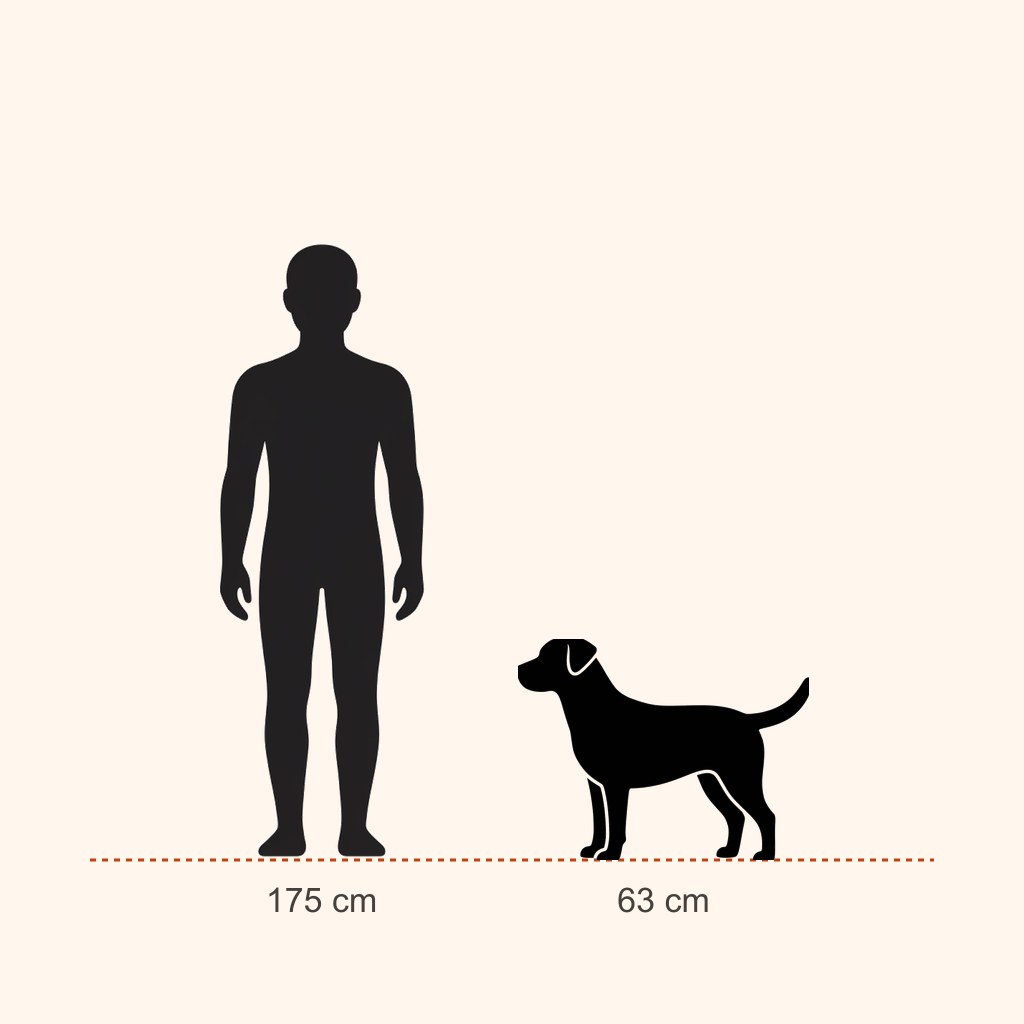
An adult Boerboel (130-200 lb / 60-90 kg) eats roughly 700 g to 1 kg (about 2.5 quarts) of quality dry food per day, adjusted for activity level.
- Puppy (2-24 months): Giant-breed puppy food. Growth is prolonged in this breed; rapid weight gain and excess calcium can permanently damage joint development.
- Adult: Split into 2-3 meals; one large feeding isn't recommended given the bloat risk. Don't use elevated food bowls.
- Senior (6+ years): Reduce calories and add joint support.
Avoid strenuous exercise right before and after meals.
Grooming and coat
Short, dense coat that sheds moderately.
- Weekly brushing manages shedding well.
- Monthly bathing is generally enough.
- It drools heavily; wipe its face regularly.
- Clean ears regularly with vet-approved products.
- Clean around the eyes regularly to prevent tear staining.
- Trim nails monthly.
Training and exercise
Daily need: long walks (always on leash) plus play in a securely fenced yard. Consistent physical and mental stimulation is essential; without it, destructive behavior can develop.
Priorities:
- Early, thorough socialisation (8-16 weeks). Critical in this breed given its natural guarding instinct.
- Consistent, respectful leadership. Its dominant streak calls for clear but not harsh boundaries.
- Leash and boundary training. Being able to control a dog this size is a genuine safety matter; always walk on leash.
- Give it a job. Obedience training or structured activity reduces boredom and dominance testing.
- Visitor protocol. Teach a clear routine for guests to manage its reserved attitude toward strangers.
History
A common story about the Boerboel's origins holds that Dutch official Jan van Riebeeck brought a mastiff-type dog called a "Bullenbijter" (bull-biter) with him when he arrived at the Cape in 1652. Current research suggests this story may be more legend than fact, since period records don't mention such a dog.
More reliably, the Boerboel emerged as various mastiff- and bulldog-type dogs brought by Dutch, French, and British settlers to the Cape in the 1600s and 1700s interbred over generations with local African dogs (Africanis), forming a landrace — a regional working type shaped by function rather than a breed someone deliberately designed.
In 1928, the diamond mining company De Beers brought Bullmastiffs to South Africa to guard its mines, contributing further to local bloodlines. The breed wasn't formally standardized and registered until the 1980s, once breeder associations were established.
The name comes from the Afrikaans "boer" (farmer) and "boel," a shortening of "boelhond" (bulldog); together they mean "farmer's dog," summing up the breed's functional origin.
This guide is for information only and is not a substitute for veterinary advice. Prices are approximate and vary by region and time.
Adoption Prep Checklist
Housing
-
Large-breed dog bed
A comfortable bed supports joint health.
Feeding
-
Large-breed dog food
Food matched to breed size gives the right nutritional balance.
-
Food and water bowl set
Needed for daily feeding and water access.
Grooming
-
Short-hair dog brush
Regular brushing reduces shedding and matting.
-
Dog nail clippers
Regular nail care matters for healthy walking.
-
Dog shampoo
Use a dog-specific shampoo for skin and coat health.
Walking & Activity
-
Running/exercise dog harness
Needed for safe walks.
-
Interactive dog puzzle toy
Mental and physical stimulation reduces behavior problems.
Frequently Asked Questions
Does the Boerboel shed?
Shedding is low. Brushing once a week is usually enough, with a mild increase during seasonal changes.
Can the Boerboel live in an apartment?
Not recommended. It needs a large garden or open space. Kept in confined quarters, restlessness and behavioural problems are the expected outcome.
Is the Boerboel good with children?
Caution is warranted. With proper socialisation and adult supervision it can live with children, but it is not a first choice for homes with young children.
Is the Boerboel suitable for first-time dog owners?
No — it suits experienced owners. Its character, energy or care requirements would be demanding for a first-time owner.
How much exercise does the Boerboel need?
It is high-energy and needs vigorous daily activity. Mental stimulation matters as much as physical exercise; without enough to do, destructive behaviour follows.
Can the Boerboel be left alone during the day?
It tolerates being alone well. That makes it workable for someone employed full time, though it will still expect attention and activity on your return.
How long does the Boerboel live?
The Boerboel lives 10-12 years on average. Diet, regular veterinary check-ups and early screening for hereditary conditions all affect this directly.
Where does the Boerboel come from?
The Boerboel originates from South Africa. The geography a breed was developed in, and the job it was bred for, explain much of its temperament and care needs today.