

Bouvier des Flandres
The image on this page is AI-generated and does not depict a real animal.
- Species
- Dog
- Origin
- Belgium
- Size
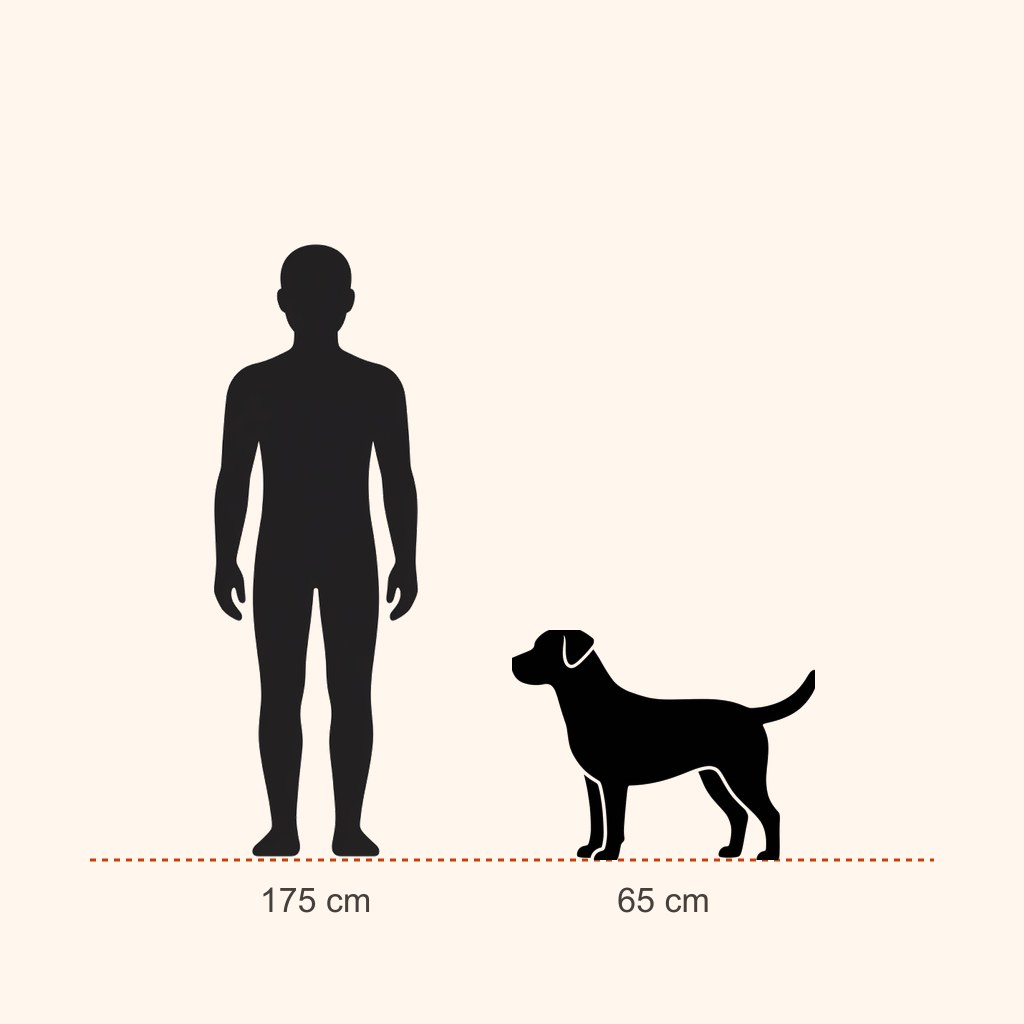
- Large
- Lifespan
- 10-14 years
- Temperament
- Loyal protective calm brave
- Description
Originally used versatilely in farm work, a strong and protective Belgian herding dog.
- Physical Traits
Lush, wiry coat, a thick brow and beard, a large muscular body.
- Care / Environment Info
A house with a garden is preferred. Its lush wiry coat requires regular brushing and clipping. Moderate-to-high exercise needs.
Bouvier des Flandres Owner's Guide
Last updated:
Is a Bouvier des Flandres right for you?
The Bouvier des Flandres is a large, heavily-coated herding dog developed in Belgium and northern France to drive cattle, guard farms, and even pull carts. It carries a calm, serious air, but that calm does not mean low energy — this is a breed that isn't happy without a job to do.
| Situation | Suitability | Note |
|---|---|---|
| Apartment | Poor | Not the right setting for a 35-45 kg dog with high exercise needs |
| Family with young children | Good | Patient and protective with its family; supervision needed due to its size |
| Household with cats or small pets | Caution | Strong herding drive; may try to chase small animals |
| First-time dog owner | Poor | A strong, independent-minded breed that needs an experienced, confident owner |
| House with a yard | Excellent | Space to move and a job to do are ideal for this breed |
| Household with fur allergies | Poor | Double coat sheds regularly and needs frequent grooming |
| Home wanting protection and watchfulness | Excellent | A naturally calm but firm protective instinct |
Under the Bouvier's thick coat and beard lies a serious work ethic; getting one purely for looks can lead to disappointment.
Before you adopt
Look for puppies from parents evaluated for hip and elbow dysplasia and screened by eye exam (for glaucoma and cataracts). A heart screening should also be requested, as inherited heart and muscular conditions have been reported in the breed.
The Bouvier des Flandres is uncommon in many countries. When talking to a breeder, clarify their position on ear cropping and tail docking; where done for purely cosmetic reasons this is against regulations in a number of countries, including Turkey, and a Bouvier with natural ears and a natural tail is entirely normal.
Temperament
The Bouvier des Flandres is loyal, calm, and watchful. It bonds deeply with its family and makes a good guardian; it shows natural wariness toward strangers without being aggressive.
Its herding background keeps a strong drive to herd and direct alive; it may try to "herd" children or other pets. This behaviour should be noticed early and redirected.
It is intelligent and eager to learn, but also has an independent streak; it grows bored quickly with repetitive, monotonous training. It needs firm but not harsh leadership — heavy-handed methods cause this breed to lose trust.
Health issues and lifespan
Sources generally put the average lifespan at 10 to 12 years, typical for a large breed.
- Hip and elbow dysplasia: A common joint issue in this breed; limping, difficulty rising, and stiffness after exercise are signs.
- Gastric dilatation-volvulus (bloat/GDV): An emergency seen in deep-chested breeds; a distended abdomen, retching, and restlessness call for immediate veterinary care.
- Glaucoma: An inherited condition involving increased eye pressure that can appear at a young age (around 2-3 years); redness and pain in the eye can be signs, and it leads to blindness if untreated.
- Laryngeal paralysis: Loss of function in the throat muscles; changes in breathing sounds, reduced exercise tolerance, and difficulty in heat are signs.
- Hypothyroidism: Presents with weight gain, lethargy, and a decline in coat quality.
- Inherited heart and muscular conditions: Reported in some lines; ask the breeder about family history.
Feeding
An adult Bouvier des Flandres (27-40 kg) eats about 350-500 g of quality dry food per day, depending on activity level.
- Puppy (2-18 months): Large-breed puppy food; controlled, slow growth matters for healthy joint development.
- Adult: Two meals a day are recommended; one large meal increases bloat risk.
- Senior (7+ years): Calories reduced; joint support can help.
Avoiding strenuous exercise before and after meals is an important precaution for this deep-chested breed.
Grooming and coat
Rough-textured, harsh, dense double coat with distinctive eyebrows and beard.
- Brush 1-2 times a week, consistently, to prevent matting.
- Check and clean the beard after every meal; trapped food and water can cause odour.
- Professional trimming/shaping is recommended every 6-8 weeks.
- Check ears weekly.
- Trim nails monthly.
- Provide regular dental care.
Training and exercise
Daily requirement: at least 60-90 minutes; walking, running, and mental tasks should be combined. This breed needs a job, not just physical activity.
Priorities:
- Socialisation (8-16 weeks). Early exposure to different people, dogs, and environments prevents natural wariness from becoming excessive shyness.
- Redirecting herding behaviour. A tendency to nip at the heels of children or other animals should be noticed early and redirected into an alternative activity like fetch or tracking.
- Obedience and working training. This breed enjoys having a job; structured activities like obedience, tracking, or carting sports are recommended.
- Leash discipline. Consistent, early training is essential to control a 35-45 kg dog.
- Firm leadership. An approach that sets clear but not harsh limits; this breed wants respect, not fear.
History
The Bouvier des Flandres took shape as a versatile farm dog in the Flanders region of what is now Belgium and northern France. The French word "bouvier" means "cowherd"; besides driving cattle, the breed was used for guarding the farmhouse, pulling carts, and even turning butter churns.
World War I was devastating for the breed. As Flanders became a battleground, Bouviers served as messenger dogs and pulled ammunition carts and litters for the wounded; by the war's end only six active breeders remained. Belgium's Club National Belge du Bouvier des Flandres adopted the first official standard in 1922, starting the effort to rebuild the breed.
World War II threatened the breed again; some accounts say German soldiers shot Bouviers on sight. Determined breeders such as Edmée Bowles of Antwerp smuggled surviving dogs to America; their bloodlines became the foundation of today's breed. Despite this turbulent history, the Bouvier des Flandres has largely retained its identity as both a herding dog and a guardian.
This guide is for information only and is not a substitute for veterinary advice. Prices are approximate and vary by region and time.
Adoption Prep Checklist
Housing
-
Large-breed dog bed
A comfortable bed supports joint health.
Feeding
-
Large-breed dog food
Food matched to breed size gives the right nutritional balance.
-
Food and water bowl set
Needed for daily feeding and water access.
Grooming
-
De-shedding brush
Regular brushing reduces shedding and matting.
-
Dog nail clippers
Regular nail care matters for healthy walking.
-
Dog shampoo
Use a dog-specific shampoo for skin and coat health.
Walking & Activity
-
Running/exercise dog harness
Needed for safe walks.
-
Interactive dog puzzle toy
Mental and physical stimulation reduces behavior problems.
Frequently Asked Questions
Does the Bouvier des Flandres shed?
It sheds a moderate amount. Brushing two or three times a week noticeably reduces both loose hair and matting.
Can the Bouvier des Flandres live in an apartment?
Possible but not ideal. A house with outdoor space is preferable; in an apartment you will need to increase daily exercise substantially.
Is the Bouvier des Flandres good with children?
Generally yes. It adapts well to families with children. Even so, interactions should be supervised and children taught to respect the animal’s boundaries.
Is the Bouvier des Flandres suitable for first-time dog owners?
Partly. Someone with basic experience will manage well, but it would not be the first choice for a complete beginner.
How much exercise does the Bouvier des Flandres need?
It is high-energy and needs vigorous daily activity. Mental stimulation matters as much as physical exercise; without enough to do, destructive behaviour follows.
Can the Bouvier des Flandres be left alone during the day?
It can be left alone for a few hours. Long, routine absences can bring on boredom-driven behaviour problems; enrichment and a predictable routine reduce that risk.
How long does the Bouvier des Flandres live?
The Bouvier des Flandres lives 10-14 years on average. Diet, regular veterinary check-ups and early screening for hereditary conditions all affect this directly.
Where does the Bouvier des Flandres come from?
The Bouvier des Flandres originates from Belgium. The geography a breed was developed in, and the job it was bred for, explain much of its temperament and care needs today.