

Boxer
The image on this page is AI-generated and does not depict a real animal.
- Species
- Dog
- Origin
- Germany
- Size
- Large
- Lifespan
- 10-12 years
- Temperament
- Energetic playful loyal protective
- Description
Energetic and playful, gets along well with children, an athletic working dog.
- Physical Traits
Short smooth coat (fawn/brindle), a square strong jaw, a muscular athletic body.
- Care / Environment Info
Can live in an apartment with adequate exercise, a house with a garden also suits it. Its short coat sheds little-to-moderately, easy to maintain. High exercise needs. Its flat facial structure makes it somewhat sensitive to heat.
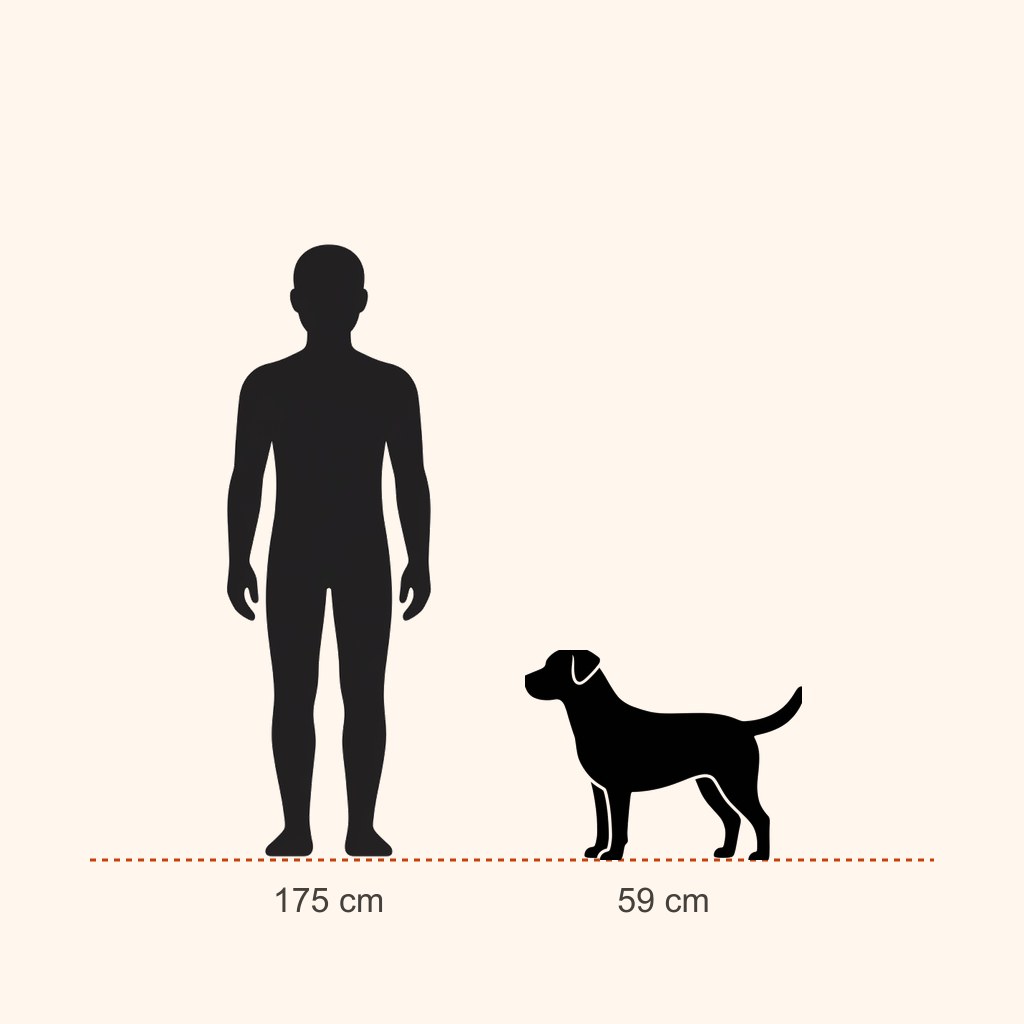
Boxer Owner's Guide
Last updated:
Is a Boxer right for you?
The Boxer is a family dog known for its energy and love of children. It is called an "eternal puppy"; it does not mature until three years of age and keeps its playfulness even in old age. A good choice if you want a lively home, a poor one if you want a quiet one.
| Situation | Suitability | Note |
|---|---|---|
| Apartment | Moderate | High energy; 1.5 hours of exercise must be provided |
| Family with young children | Excellent | Devoted to children; its exuberance can knock a small child over |
| First-time dog owner | Moderate | Affectionate but energetic and prone to jumping; needs consistency |
| Alone 8+ hours a day | Poor | Attached to people; becomes destructive when bored |
| Household with fur allergies | Moderate | Short coat, moderate shedding |
| Very hot or very cold climate | Poor | The short muzzle struggles in heat, the short coat in cold |
| House with a garden | Excellent | Space to run is ideal for this breed |
The hard fact to know before adopting a Boxer: the cancer rate is higher in this breed than in others and the average lifespan is 10 to 12 years.
Before you adopt
Ask the breeder for cardiac screening (particularly Holter monitoring for arrhythmogenic right ventricular cardiomyopathy), hip certification, and degenerative myelopathy genetic test results.
Ear cropping and tail docking: cosmetic cropping is prohibited by law in many countries, including Türkiye. A Boxer with natural ears and tail is normal.
Temperament
The Boxer is cheerful, exuberant, and affectionate. It is devoted to its family, and the relationship it builds with children is the breed's best-known quality.
It jumps. Greeting people with excitement is strong in this breed, and a 30 kg dog jumping up can be a problem; it must be corrected in puppyhood.
It plays using its front paws, which is one explanation for the name. It pushes and prods with its paws as if boxing.
It is reserved with strangers but not aggressive; it makes a good alarm dog. It has a protective instinct toward its family.
It matures slowly. A three-year-old Boxer still behaves like a puppy, and this is the trait owners are least prepared for.
It is intelligent but bored by repetitive training; short, entertaining sessions are needed.
Health issues and lifespan
Average lifespan is 10 to 12 years.
- Cancer: First among causes of death in this breed. Mast cell tumours (appearing as lumps in the skin), lymphoma, and brain tumours occur. A new lump in the skin should be taken to a vet without delay; "wait and see" is not the right approach in this breed.
- Boxer cardiomyopathy (ARVC): A breed-specific cardiac rhythm disorder. It can present as fainting, sudden weakness, or sudden death. It is detected by 24-hour Holter monitoring, and a genetic test also exists.
- Subaortic stenosis (SAS): Congenital cardiac narrowing; the heart should be auscultated at the puppy examination.
- Degenerative myelopathy (DM): Progressive hind-limb weakness in old age. It is painless but progresses to paralysis; a genetic test exists.
- Bloat and gastric torsion: An emergency in this deep-chested breed.
- Brachycephalic features: The muzzle is short; heat intolerance and noisy breathing occur. It is not as severe as in the Pug or Bulldog but requires attention.
- Hypothyroidism: Weight gain, lethargy, coat problems.
- Boxer colitis: A breed-specific chronic large-bowel inflammation beginning at a young age, causing bloody and mucous diarrhoea.
Feeding
An adult Boxer (25-32 kg) consumes 350-450 g of quality dry food per day.
- Puppy (2-18 months): Large-breed puppy food, three meals a day. This breed grows for a long time.
- Adult: 24-28% protein. It is a breed with high muscle mass.
- Senior (8+ years): Calorie adjustment, joint and cardiac support.
Two meals a day; an hour of calm around feeding reduces the risk of gastric torsion.
Sensitive digestion is common in this breed; food changes should be spread over 7 to 10 days.
Grooming and coat
One of the easiest breeds to groom.
- A rubber brush or mitt once a week.
- Bathe every 8 to 12 weeks.
- Facial skin folds must not stay damp and should be wiped.
- The short coat offers little protection from cold; a coat may be needed in winter.
- Individuals with white or largely white areas need sun protection; the risk of skin cancer rises in those regions.
- Nails every three to four weeks, teeth several times a week.
- Drooling is normal in this breed.
Training and exercise
Daily requirement: 1.5 hours of active exercise. Running, play, fetch. Long runs and jumping must be limited during puppyhood to protect the joints.
Priorities:
- Jump control. The most critical house rule in this breed. Prevent it from leaping at you in excitement while it is a puppy; once it weighs 30 kg it is too late.
- Socialisation (8-16 weeks).
- Impulse control. Waiting at doors, approaching guests calmly.
- Leash discipline.
- Short, entertaining sessions. Long repetition bores this breed and pushes it toward clowning.
- Heat awareness. Exercise should move to cool hours in summer.
Work with rewards; the Boxer shuts down and becomes stubborn under harsh methods.
History
The Boxer was developed at the end of the 19th century in Germany from the now-extinct hunting dog known as the Bullenbeisser ("bull biter"). The Bullenbeisser was used in wild boar and deer hunting to hold the quarry until the hunter arrived; the set-back muzzle allowed it to breathe while holding on.
As large hunting grounds declined in the 19th century the breed lost its function and was crossed with the English Bulldog to create the modern Boxer. The first breed standard was written in 1904.
In both world wars it served in the German army as a messenger, pack, and guard dog. Soldiers returning after the war took the breed to America and Britain, where it became very popular in 1950s America.
The origin of the name is disputed; the most common explanation is that the dog moves as if boxing with its front paws while playing. The Boxer also entered history as one of the first official guide dog breeds.
This guide is for information only and is not a substitute for veterinary advice. Prices are approximate and vary by region and time.
Adoption Prep Checklist
Housing
-
Large-breed dog bed
A comfortable bed supports joint health.
Feeding
-
Large-breed dog food
Food matched to breed size gives the right nutritional balance.
-
Food and water bowl set
Needed for daily feeding and water access.
Grooming
-
De-shedding brush
Regular brushing reduces shedding and matting.
-
Dog nail clippers
Regular nail care matters for healthy walking.
-
Dog shampoo
Use a dog-specific shampoo for skin and coat health.
Walking & Activity
-
Running/exercise dog harness
Needed for safe walks.
-
Interactive dog puzzle toy
Mental and physical stimulation reduces behavior problems.
Training
-
Training treats / beginner training guide
Basic obedience training is recommended for first-time dog owners.
Frequently Asked Questions
Does the Boxer shed?
It sheds a moderate amount. Brushing two or three times a week noticeably reduces both loose hair and matting.
Can the Boxer live in an apartment?
Yes. It lives comfortably in an apartment as long as its daily needs are met. What matters is not floor area but consistent exercise and mental stimulation.
Is the Boxer good with children?
Generally yes. It adapts well to families with children. Even so, interactions should be supervised and children taught to respect the animal’s boundaries.
Is the Boxer suitable for first-time dog owners?
Yes. Its care and training are relatively forgiving, which makes it a sound choice for first-time owners.
How much exercise does the Boxer need?
It is high-energy and needs vigorous daily activity. Mental stimulation matters as much as physical exercise; without enough to do, destructive behaviour follows.
Can the Boxer be left alone during the day?
It can be left alone for a few hours. Long, routine absences can bring on boredom-driven behaviour problems; enrichment and a predictable routine reduce that risk.
How long does the Boxer live?
The Boxer lives 10-12 years on average. Diet, regular veterinary check-ups and early screening for hereditary conditions all affect this directly.
Where does the Boxer come from?
The Boxer originates from Germany. The geography a breed was developed in, and the job it was bred for, explain much of its temperament and care needs today.