

Dogo Argentino
The image on this page is AI-generated and does not depict a real animal.
- Species
- Dog
- Origin
- Argentina
- Size
- Large
- Lifespan
- 10-12 years
- Temperament
- Brave loyal confident protective
- Description
Developed for hunting large game, a strong, pure white Argentine breed.
- Physical Traits
Short dense pure white coat, a large muscular body, a broad head.
- Care / Environment Info
A house with a garden is preferred. Its short coat sheds little, easy to maintain. High exercise and early socialization needs. May be subject to BSL restrictions in some countries/cities.
Dogo Argentino Owner's Guide
Last updated:
Is a Dogo Argentino right for you?
The Dogo Argentino is a white, athletic and very powerful dog developed in Argentina to track and hold big game such as wild boar and puma as part of a pack. It is deeply devoted to its family, but the first thing to know is legal: this breed is banned or restricted in a number of countries. In Turkey, for example, it is officially classed as a dangerous animal and acquiring a new one is not permitted. Check the law where you live before anything else.
| Situation | Suitability | Note |
|---|---|---|
| Where the breed is restricted | Not legal | Check national and local rules before considering one |
| Apartment | Unsuitable | High energy, strength and prey drive do not fit a small space |
| First-time dog owner | Unsuitable | Needs an experienced, consistent handler |
| Family with young children | Caution | Gentle with family, but its power and speed need constant supervision |
| Home with cats or small pets | Poor | Bred for hunting; the chase instinct is strong |
| Hot climate, garden without shade | Poor | White coat and pink skin burn easily |
| Active, experienced adult | Moderate | Given daily hard exercise and deliberate socialisation |
Before you adopt
Legal status. Many countries and municipalities list the Dogo Argentino among restricted or prohibited breeds. As one example, under Turkey's Animal Protection Law No. 5199 a 2021 ministerial circular placed the Dogo on the dangerous-animals list alongside the American Pit Bull Terrier, Fila Brasileiro, Japanese Tosa, American Staffordshire Terrier and American Bully. Breeding, selling, acquiring, importing and advertising these breeds is prohibited there; dogs owned before the cut-off had to be neutered, microchipped and registered, and must be walked muzzled and leashed. A 2022 court challenge to remove the breed from the list was dismissed on procedural grounds.
Be wary of dogs sold as "Dogo crosses" in places with restrictions: this can expose both you and the dog to legal risk. Rules change, so confirm the current position with your local authority.
Where the breed is legal: the puppy should have a BAER hearing test for both ears, and you should see hip evaluations and meet calm, stable parents. Both aggression and excessive shyness are disqualifying faults in the FCI standard.
Temperament
The FCI standard describes the Dogo as brave, silent on the trail, agile and strong, and states clearly that aggression towards people is not acceptable. A well-bred, well-socialised Dogo is affectionate and physically close with its family.
Its original job, though, was catching and holding large animals. That means a high pain threshold, determination and difficulty stopping once engaged. It may be aloof with strangers and have limited tolerance for other dogs, especially of the same sex. Prey drive is a real risk for cats and small animals.
It is intelligent and learns quickly, but was selected to work independently and may question commands. An under-exercised Dogo quickly turns to digging, chewing and escaping.
Health issues and lifespan
Sources usually give a lifespan of 9 to 15 years, longer than the giant molossers.
- Congenital deafness: The breed's defining inherited problem, linked to the pigment genes behind the white coat. Sources report deafness in one or both ears in up to a quarter of dogs. Not responding to calls or not waking to sounds are signs; a BAER test confirms it.
- Sunburn and skin disease: The pink skin under the thin white coat burns, particularly on the nose, ears and belly, raising the long-term risk of skin cancer. Crusting sores that do not heal need a vet. Allergic skin disease is also common.
- Hip dysplasia: Hind-limb lameness, difficulty rising, avoiding stairs. Controlled growth in puppyhood reduces risk.
- Hypothyroidism: Weight gain, lethargy, hair loss and skin infections. Diagnosed by blood test and managed with daily medication.
- Gastric dilatation-volvulus (bloat): Occurs in this deep-chested breed. A swollen belly, unproductive retching, restlessness and drooling are an emergency; it can kill within hours.
- Laryngeal paralysis: Noisy breathing, voice change and tiring quickly on exercise, often with age; dangerous in heat.
Feeding
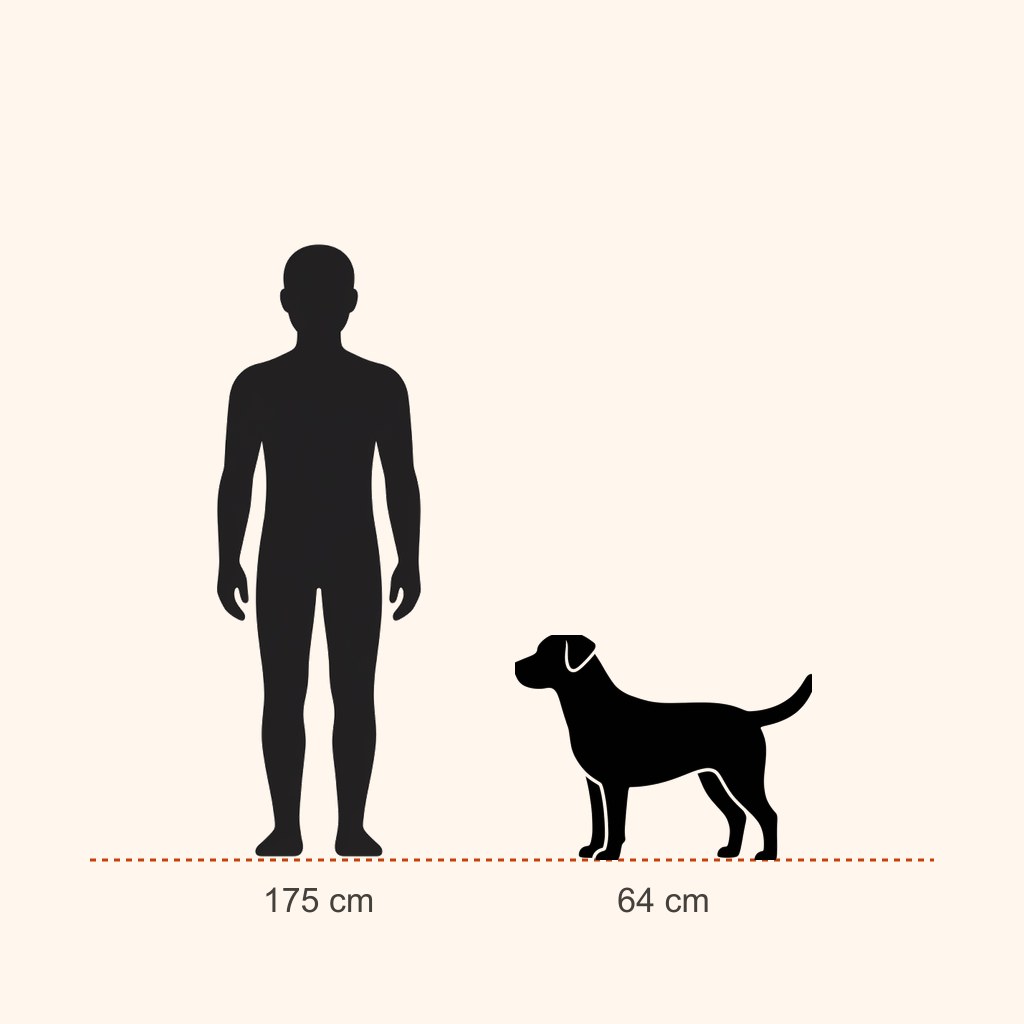
An adult Dogo (about 40-45 kg under the FCI standard) typically eats roughly 450-650 g of quality dry food per day, depending on activity and the food's energy density. Use the pack guide as a starting point and aim for ribs that are easy to feel but not visible.
- Puppy (2-15 months): Large-breed puppy food, three meals a day. Extra calcium and rapid weight gain damage developing joints.
- Adult: Two meals a day, with good-quality animal protein.
- Senior (8+ years): Reduce calories; discuss joint support with your vet.
To reduce bloat risk, avoid one large daily meal, use a slow-feeder bowl for fast eaters, and avoid hard exercise for about an hour before and after meals. Plan any diet change for allergic dogs with your vet.
Grooming and coat
- Short, smooth, harsh coat; a weekly rubber brush is enough. Shedding is moderate.
- Bathe when needed with a shampoo suitable for sensitive skin.
- Sun protection: Keep the dog out of midday summer sun and provide shade. A pet-safe sunscreen recommended by your vet can protect the pink nose and ears.
- Check ears weekly and trim nails every three to four weeks.
- Regular tooth care; periodontal disease is reported in the breed.
- A deaf dog needs a secure garden and training with hand signals.
Training and exercise
Daily requirement: at least an hour of vigorous activity plus mental work. Long walks, controlled running, scent games and obedience suit it. Uncontrolled off-lead running is risky because of prey drive.
Priorities:
- Early and ongoing socialisation. Positive experiences with people, sounds and places between 8 and 16 weeks, continued for life.
- Controlled introductions to other dogs. Dog parks are often a poor fit.
- Lead and muzzle training. Legally required in some countries; make the muzzle a positive object with gradual, rewarded steps.
- Impulse control. "Leave it", "wait" and a reliable recall.
- Professional help. A reward-based trainer experienced with powerful breeds.
Harsh, punitive methods can increase defensive behaviour. Calm, firm, consistent handling is needed.
History
The Dogo Argentino was created in the province of Córdoba, Argentina, by the physician Antonio Nores Martínez (1907-1956). According to the FCI standard, its foundation was the Old Fighting Dog of Córdoba, crossed with the English Bulldog, Great Dane, Pyrenean Mastiff, Bull Terrier, Boxer, Pointer, Dogue de Bordeaux and Irish Wolfhound.
The aim was a pack hunting dog able to track and face wild boar, peccary and puma, yet never aggressive towards people. The breed was presented at the Hunters' Club in Buenos Aires in 1947 and recognised by the Argentine Kennel Federation in 1964. FCI recognition followed in 1973, thanks to the founder's brother, Agustín Nores Martínez.
It is still used for hunting in Argentina, while in many other countries its strength has led to legal restrictions.
This guide is for information only and is not a substitute for veterinary advice. Prices are approximate and vary by region and time.
Sources
- www.tarimorman.gov.tr/DKMP/Haber/209/Tehlike-Arz-Eden-Hayvanlara-Iliskin-Genelge
- www.trthaber.com/haber/gundem/danistaydan-dogo-argentino-karari-682578.html
- www.yucebaghukuk.com/2026/01/04/2026-yili-yasakli-kopek-irklari-hukuki-sorumluluklar-ve-guncel-cezalar-2026/
- www.fci.be/Nomenclature/Standards/292g02-en.pdf
- www.petmd.com/dog/breeds/dogo-argentino
- www.chewy.com/education/dog-breeds/dogo-argentino
Adoption Prep Checklist
Housing
-
Large-breed dog bed
A comfortable bed supports joint health.
Feeding
-
Large-breed dog food
Food matched to breed size gives the right nutritional balance.
-
Food and water bowl set
Needed for daily feeding and water access.
Grooming
-
Short-hair dog brush
Regular brushing reduces shedding and matting.
-
Dog nail clippers
Regular nail care matters for healthy walking.
-
Dog shampoo
Use a dog-specific shampoo for skin and coat health.
Walking & Activity
-
Running/exercise dog harness
Needed for safe walks.
-
Interactive dog puzzle toy
Mental and physical stimulation reduces behavior problems.
Frequently Asked Questions
Does the Dogo Argentino shed?
Shedding is low. Brushing once a week is usually enough, with a mild increase during seasonal changes.
Can the Dogo Argentino live in an apartment?
Possible but not ideal. A house with outdoor space is preferable; in an apartment you will need to increase daily exercise substantially.
Is the Dogo Argentino good with children?
Not recommended for homes with young children. Its temperament or physical characteristics make living alongside children risky.
Is the Dogo Argentino suitable for first-time dog owners?
No — it suits experienced owners. Its character, energy or care requirements would be demanding for a first-time owner.
How much exercise does the Dogo Argentino need?
It is high-energy and needs vigorous daily activity. Mental stimulation matters as much as physical exercise; without enough to do, destructive behaviour follows.
Can the Dogo Argentino be left alone during the day?
It can be left alone for a few hours. Long, routine absences can bring on boredom-driven behaviour problems; enrichment and a predictable routine reduce that risk.
How long does the Dogo Argentino live?
The Dogo Argentino lives 10-12 years on average. Diet, regular veterinary check-ups and early screening for hereditary conditions all affect this directly.
Where does the Dogo Argentino come from?
The Dogo Argentino originates from Argentina. The geography a breed was developed in, and the job it was bred for, explain much of its temperament and care needs today.