

German Shepherd Dog
The image on this page is AI-generated and does not depict a real animal.
- Species
- Dog
- Origin
- Germany
- Size
- Large
- Lifespan
- 9-13 years
- Temperament
- Intelligent brave loyal obedient confident
- Description
A versatile working dog; successful in protection, service and family dog roles, extremely trainable.
- Physical Traits
Medium-to-long, dense black-and-tan/brown coat, upright triangular ears, a muscular long body and a characteristic slightly sloping back line.
- Care / Environment Info
A house with a garden is preferred. Its double coat sheds heavily, requiring weekly brushing. Doesn't produce odor if properly cared for. High exercise and mental stimulation needs; its protective instinct means it may bark at strangers, early socialization is important.
German Shepherd Dog Owner's Guide
Last updated:
Is a German Shepherd right for you?
The German Shepherd is one of the best-known working breeds in the world. Intelligent, loyal, eager to learn. But placing this breed in the wrong home harms both dog and owner: the German Shepherd is a dog that needs a job, not an ornament.
| Situation | Suitability | Note |
|---|---|---|
| Apartment | Poor to moderate | Possible, but two hours of exercise and mental work daily are essential |
| Family with young children | Good | Bonded to the family; without early socialisation the protective instinct becomes a problem |
| First-time dog owner | Moderate | Easy to train, but mistakes in guidance are costly |
| Alone 8+ hours a day | Poor | A bored German Shepherd barks, digs, and develops anxiety |
| Household with fur allergies | Very poor | Sheds heavily all year; the breed's best-known trait |
| House with a garden | Excellent | The environment best suited to the breed |
For this breed the measure is not square metres but time. If you cannot give two hours a day to walking, training, and play, choose another breed.
Before you adopt
Ask for hip and elbow x-ray certification (HD/ED). Dysplasia is common in this breed, and the risk is markedly higher in puppies from uncertified lines.
Avoid individuals with an extremely sloped back; this is the damage that show fashion has done to the breed. A straighter topline and normal hock angulation are healthier.
Ask which line the puppy comes from. Working lines are leaner, more durable, and have a much higher drive; they are too much for an ordinary family. Show lines are heavier and calmer. Most dogs sold are mixed, so ask the breeder directly.
German Shepherds and their mixes are very common in shelters. Adopting an adult lets you know the temperament in advance, which is a genuine advantage with a breed this powerful.
Temperament
The German Shepherd bonds strongly with its family and tries to protect that bond. It is wary of strangers; this is not a fault but the definition of the breed, though socialisation determines the difference between "wary" and "aggressive".
Its intelligence is both the breed's greatest strength and its greatest demand. The learning speed is extraordinary; in return, a German Shepherd left without work will invent a job, and the job it chooses is rarely one you will like.
Health issues and lifespan
Average lifespan is 9 to 13 years. The health profile requires attention.
- Hip and elbow dysplasia: The best-known problem in the breed. Limping, difficulty rising, weakness in the hind legs. Parental certification and weight control reduce the risk.
- Degenerative myelopathy (DM): Progressive nerve damage in the spinal cord; usually begins after age eight with hind-limb weakness. It is painless but progresses to paralysis. A genetic test exists.
- Gastric torsion (bloat): An emergency in deep-chested breeds. Distended abdomen, retching without vomiting, restlessness, drooling. Requires an immediate vet.
- Exocrine pancreatic insufficiency (EPI): Failure to produce digestive enzymes. Weight loss despite eating a lot, soft pale stools. Manageable with enzyme supplementation.
- Allergies and skin problems: Itching, redness, ear infections. May be dietary or environmental.
- Hemangiosarcoma: An aggressive tumour of the spleen and heart; in older dogs it presents with sudden weakness and pallor.
Feeding
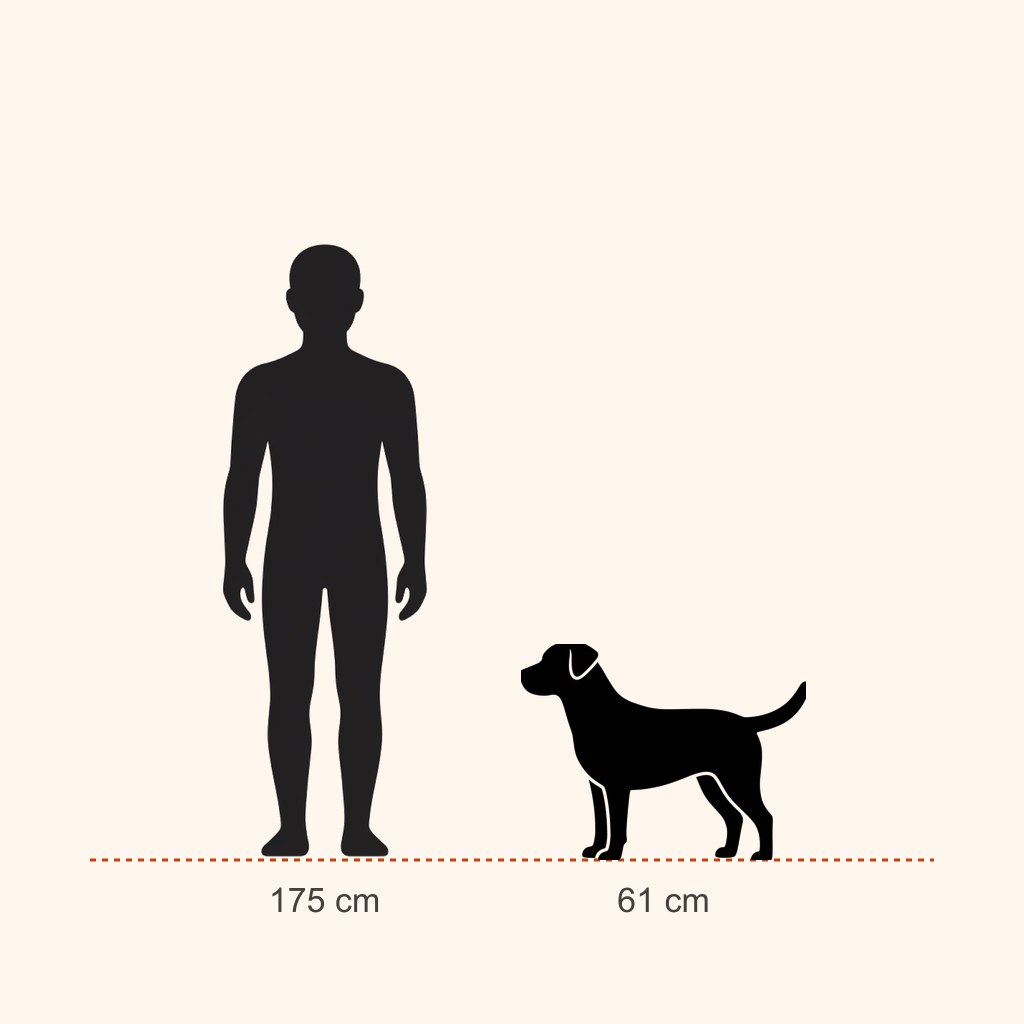
An adult German Shepherd (25-40 kg) consumes 400-500 g of quality dry food per day. Activity level changes the amount substantially in this breed; a working dog and an apartment dog do not have the same requirement.
- Puppy (2-18 months): Large-breed puppy food. This breed grows until 18 months; switching to adult food early harms joint development.
- Adult: 22-26% protein. Single-protein formulas work well for individuals with sensitive digestion.
- Senior (7+ years): Reduced-calorie food with joint support.
Two meals a day and an hour of calm after eating reduce the risk of gastric torsion. Sensitive digestion is common in this breed; food changes should be spread over 7 to 10 days.
Grooming and coat
The German Shepherd sheds all year round, and heavily in spring and autumn. There is no such thing as a German Shepherd that does not shed.
- Brush two to three times a week, daily during shedding season.
- A deshedding rake is needed to remove the undercoat; a normal brush only smooths the surface.
- Bathe every 8 to 12 weeks. Frequent washing dries the skin and causes itching.
- Nails every three to four weeks, teeth several times a week, weekly ear checks.
In long-coated individuals the brushing frequency increases while the amount of shedding stays similar.
Training and exercise
Daily requirement: 1.5 to 2 hours of physical exercise plus 20 to 30 minutes of mental work. Mental tiredness matters as much as physical here; scent games, tracking work, and command repetition genuinely burn energy.
Priorities:
- Socialisation (8-16 weeks). The most critical item. Different people, children, dogs, sounds, surfaces. Neglecting this period produces timidity or excessive guarding in adulthood.
- Basic obedience. Sit, stay, come, down. Consistency is essential; a behaviour allowed one day cannot be forbidden the next.
- Leash discipline. A 35 kg dog pulling on the lead is dangerous.
- Impulse control. Not rushing the doorbell, not jumping on guests.
- Advanced work. Obedience sport, tracking, agility. For this breed these are a need, not a hobby.
Punishment-based methods break trust in this breed and increase defensive behaviour. Work with rewards, and with a professional trainer if needed.
History
The breed was standardised at the end of the 19th century by the German cavalry officer Max von Stephanitz. The goal was function, not aesthetics: a working dog that could herd, endure, and be trained. The first registration was made in 1899. As the need for herding declined, the breed moved into police and military service; it was used as a messenger and search dog in both world wars. Today it is the most widespread breed in police, customs, and search-and-rescue units worldwide. The extremely sloped back introduced by show standards over the last half century remains a health issue debated within the breed clubs.
This guide is for information only and is not a substitute for veterinary advice. Prices are approximate and vary by region and time.
Adoption Prep Checklist
Housing
-
Large-breed dog bed
A comfortable bed supports joint health.
Feeding
-
Large-breed dog food
Food matched to breed size gives the right nutritional balance.
-
Food and water bowl set
Needed for daily feeding and water access.
Grooming
-
De-shedding brush
Regular brushing reduces shedding and matting.
-
Dog nail clippers
Regular nail care matters for healthy walking.
-
Dog shampoo
Use a dog-specific shampoo for skin and coat health.
Walking & Activity
-
Running/exercise dog harness
Needed for safe walks.
-
Interactive dog puzzle toy
Mental and physical stimulation reduces behavior problems.
Frequently Asked Questions
Does the German Shepherd Dog shed?
It sheds heavily, especially at seasonal changes. Expect near-daily brushing and regular cleaning at home; it is not a good choice for anyone sensitive to pet hair.
Can the German Shepherd Dog live in an apartment?
Possible but not ideal. A house with outdoor space is preferable; in an apartment you will need to increase daily exercise substantially.
Is the German Shepherd Dog good with children?
Generally yes. It adapts well to families with children. Even so, interactions should be supervised and children taught to respect the animal’s boundaries.
Is the German Shepherd Dog suitable for first-time dog owners?
Partly. Someone with basic experience will manage well, but it would not be the first choice for a complete beginner.
How much exercise does the German Shepherd Dog need?
It is high-energy and needs vigorous daily activity. Mental stimulation matters as much as physical exercise; without enough to do, destructive behaviour follows.
Can the German Shepherd Dog be left alone during the day?
It can be left alone for a few hours. Long, routine absences can bring on boredom-driven behaviour problems; enrichment and a predictable routine reduce that risk.
How long does the German Shepherd Dog live?
The German Shepherd Dog lives 9-13 years on average. Diet, regular veterinary check-ups and early screening for hereditary conditions all affect this directly.
Where does the German Shepherd Dog come from?
The German Shepherd Dog originates from Germany. The geography a breed was developed in, and the job it was bred for, explain much of its temperament and care needs today.