

German Shorthaired Pointer
The image on this page is AI-generated and does not depict a real animal.
- Species
- Dog
- Origin
- Germany
- Size
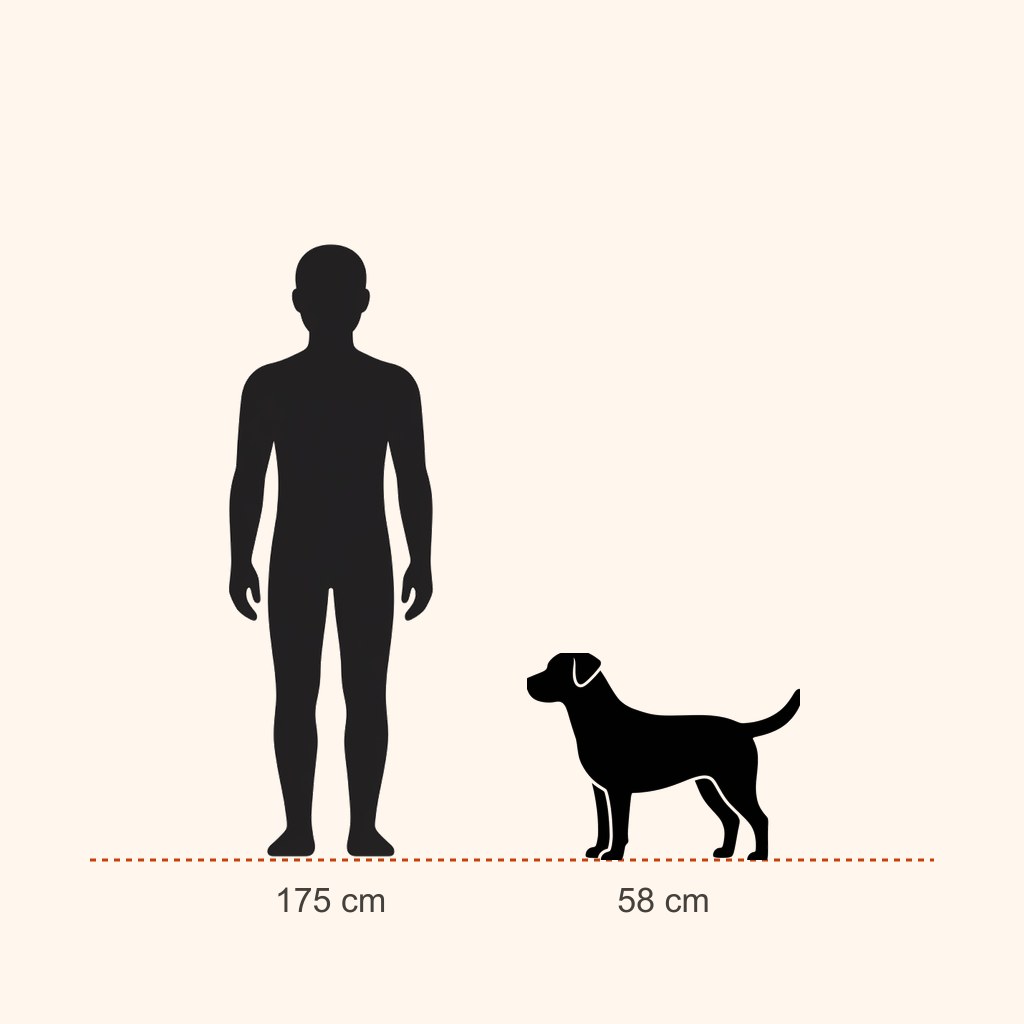
- Large
- Lifespan
- 12-14 years
- Temperament
- Friendly intelligent hard-working energetic
- Description
A versatile hunting dog; has an energetic, intelligent and family-devoted temperament.
- Physical Traits
Short dense coat (brown speckled/solid), drooping ears, a muscular athletic body.
- Care / Environment Info
A house with a garden, active household preferred. Its short coat sheds little-to-moderately, easy to maintain. Very high exercise needs.
German Shorthaired Pointer Owner's Guide
Last updated:
Is a German Shorthaired Pointer right for you?
The German Shorthaired Pointer (often simply "GSP", or "Kurzhaar" among hunters) was developed in Germany as a versatile gundog: it finds and points birds, and retrieves shot game from land and water. It is short-coated, athletic, affectionate and deeply attached to its family. It is also one of the most demanding breeds to live with: a GSP that does not get to run becomes restless, noisy and destructive at home.
| Situation | Suitability | Note |
|---|---|---|
| Apartment | Poor | Possible only if you can provide well over 2 hours of vigorous exercise every day |
| Runners, hikers, hunting families | Excellent | The closest match to what the breed was made for |
| Family with young children | Moderate | Gentle with children but boisterous; easily knocks a toddler over |
| First-time dog owner | Poor | Trainable, but managing its energy takes experience |
| Alone 8+ hours a day | Not suitable | A bored GSP will damage doors, sofas and gardens |
| Home with cats, birds or poultry | Poor | Very strong prey drive, especially towards birds |
| Household with fur allergies | Poor | Short coat but constant shedding; the stiff hairs stick in fabric |
"We have a garden, it can run there" does not work with this breed. A GSP does not exercise itself in a garden; it needs running, search games and training done with you.
Before you adopt
Choosing a line: Puppies from hunting lines usually come with much higher energy and prey drive. If you want a family dog, tell the breeder so plainly and ask how the parents behave at home.
Health paperwork: The Royal Kennel Club lists hip and elbow scoring and an eye examination as good practice for breeding dogs. The US breed club adds cardiac examination, von Willebrand disease and cone degeneration testing. Also ask whether the parents have been tested for ECLE (see below).
Second-hand hunting dogs: GSPs and GSP crosses bought for hunting and then given up for "not being good enough" do turn up in rescues and rehoming ads. They usually adapt well to home life, but you may have to start lead and recall training from scratch.
Legal status: The breed is not on restricted or dangerous-dog lists in most countries (including Turkey); check your local rules.
Temperament
The breed standard describes the GSP as friendly, intelligent and willing to please, enthusiastic for work without being nervous or flighty. In daily life this means a dog that follows you from room to room, gets involved in everything and constantly looks at you as if asking "what are we doing now?"
It is very people-oriented. Long periods alone are the most common cause of problem behaviour in this breed.
The hunting instinct runs deep. When it sees a bird, cat, rabbit or squirrel it will freeze and point, or give chase. Training manages this behaviour; it does not erase it.
It usually gets on well with other dogs. VCA notes that some individuals can be aggressive towards other pets, so introductions in homes with small animals must be careful.
It is friendly with strangers but will announce visitors by barking. It is not a guard dog.
Health issues and lifespan
Sources generally give a lifespan of 10-14 years; a large UK study found a median of just over 13 years. It is generally a robust breed, but you should know about the following:
- Bloat (GDV): The deep chest carries a risk. Swollen abdomen, retching without bringing anything up, restlessness and drooling. It can kill within hours; go to an emergency vet immediately. Avoid hard running right before and after meals.
- Hip and elbow dysplasia: Lameness, difficulty getting up, avoiding stairs. Excess weight and early heavy exercise in puppies increase the risk.
- Exfoliative cutaneous lupus erythematosus (ECLE): An inherited autoimmune disease seen almost only in this breed, associated with a variant in the UNC93B1 gene. Scaling, redness and loss of pigment start around the muzzle in young dogs and spread to the trunk and ears; joint pain and kidney involvement may follow. It often responds poorly to treatment. See your vet if a young dog develops scaling and sores that do not heal.
- Eye disease: Progressive retinal atrophy (starts with poor night vision), cataracts and cone degeneration (loss of vision in bright light). If your dog starts bumping into furniture, ask for an eye examination.
- Von Willebrand disease: An inherited clotting disorder. Bleeding gums, prolonged bleeding from small wounds. Tell your vet before any surgery.
- Subaortic stenosis: A congenital narrowing near the heart. Tiring quickly on exercise, fainting; a heart murmur warrants a cardiology assessment.
- Tail and paw injuries: Cuts and split tail tips are common in a dog that crashes through undergrowth and never stops wagging; check after walks.
Feeding
The breed standard gives 25-32 kg for males and 20-27 kg for females. An adult GSP living as a family dog and moving 1.5-2 hours a day typically eats 300-450 g of quality dry food daily. Needs rise markedly during the hunting season or with dog sports; use the feeding table on the bag as a starting point and adjust to body condition.
- Puppy (2-12 months): Medium-to-large breed puppy food, three meals a day. Do not push fast growth.
- Adult: Active-dog food with 24-28% protein. Ribs should be easy to feel but not visible.
- Senior (8+ years): Reduce calories and discuss joint support with your vet.
Feed at least two meals a day and avoid heavy exercise for an hour before and after eating; this is the most practical way to reduce bloat risk. A slow-feeder bowl helps fast eaters.
In hot summers, move runs to early morning or evening and carry water; a short coat offers no protection from the sun.
Grooming and coat
A short, dense, firm coat; easy to care for.
- Brush once a week with a rubber or bristle brush. Shedding is year-round.
- Bathe only when dirty; every few months is enough.
- Check the ears weekly: drop ears trap moisture; dry them after swimming.
- Nails every three to four weeks; less often in dogs that run a lot on pavement.
- Brush teeth several times a week.
- Ticks and grass seeds: In a breed that runs through fields and brush, check paws, inner ears and armpits after every outing.
Training and exercise
Daily requirement: more than 2 hours, part of it as off-lead running or jogging. The Royal Kennel Club also recommends more than 2 hours a day for this breed. On-lead walks around the block alone will not tire this dog.
Priorities:
- Recall. Vital. When it catches game scent it may not hear you; work on a long line with high-value rewards and keep reinforcing it for years.
- Nose and search work. Hiding toys or treats for it to find, tracking exercises. Mental fatigue matters as much as physical.
- Settle training. A "go to your bed and lie down" cue at home; this breed does not know how to switch off on its own and must learn it.
- Lead manners. A strong, fast dog; pulling should be solved in puppyhood.
- Socialisation (8-16 weeks). Children, other dogs, city noise. If it will live with cats or poultry, controlled introductions should happen in this window.
- Alone-time training. Start with short absences and build up gradually.
It responds very well to reward-based training. Harsh punishment either frightens this sensitive, eager dog or makes it stubborn.
Most GSPs love swimming; a safe lake or beach is one of the best ways to burn energy without stressing the joints.
History
The GSP took shape in 19th-century Germany from the region's mixed hunting dogs. The extinct Old Spanish Pointer is considered a common ancestor of Europe's pointing breeds; that type spread through France and the Low Countries into German-speaking lands.
German hunters did not want a specialist but an all-round hunting partner: one that could find and point birds in the field, swim out for ducks and track wounded game.
The first breed standards were set in Hannover in 1879 and the stud book was published in 1897. The FCI formally recognised the breed in 1954. Today it is a well-known versatile gundog in many parts of the world, and it is increasingly common as a sporting and running companion for active families.
This guide is for information only and is not a substitute for veterinary advice. Prices are approximate and vary by region and time.
Sources
- vcahospitals.com/know-your-pet/dog-breeds/german-shorthaired-pointer
- gspca.org/breed/standard/
- www.royalkennelclub.com/search/breeds-a-to-z/breeds/gundog/german-shorthaired-pointer/
- www.petmd.com/dog/breeds/german-shorthaired-pointer
- pmc.ncbi.nlm.nih.gov/articles/PMC10583476/
- en.wikipedia.org/wiki/German_Shorthaired_Pointer
Adoption Prep Checklist
Housing
-
Large-breed dog bed
A comfortable bed supports joint health.
Feeding
-
Large-breed dog food
Food matched to breed size gives the right nutritional balance.
-
Food and water bowl set
Needed for daily feeding and water access.
Grooming
-
De-shedding brush
Regular brushing reduces shedding and matting.
-
Dog nail clippers
Regular nail care matters for healthy walking.
-
Dog shampoo
Use a dog-specific shampoo for skin and coat health.
Walking & Activity
-
Running/exercise dog harness
Needed for safe walks.
-
Interactive dog puzzle toy
Mental and physical stimulation reduces behavior problems.
Frequently Asked Questions
Does the German Shorthaired Pointer shed?
It sheds a moderate amount. Brushing two or three times a week noticeably reduces both loose hair and matting.
Can the German Shorthaired Pointer live in an apartment?
Possible but not ideal. A house with outdoor space is preferable; in an apartment you will need to increase daily exercise substantially.
Is the German Shorthaired Pointer good with children?
Generally yes. It adapts well to families with children. Even so, interactions should be supervised and children taught to respect the animal’s boundaries.
Is the German Shorthaired Pointer suitable for first-time dog owners?
Partly. Someone with basic experience will manage well, but it would not be the first choice for a complete beginner.
How much exercise does the German Shorthaired Pointer need?
It is high-energy and needs vigorous daily activity. Mental stimulation matters as much as physical exercise; without enough to do, destructive behaviour follows.
Can the German Shorthaired Pointer be left alone during the day?
It can be left alone for a few hours. Long, routine absences can bring on boredom-driven behaviour problems; enrichment and a predictable routine reduce that risk.
How long does the German Shorthaired Pointer live?
The German Shorthaired Pointer lives 12-14 years on average. Diet, regular veterinary check-ups and early screening for hereditary conditions all affect this directly.
Where does the German Shorthaired Pointer come from?
The German Shorthaired Pointer originates from Germany. The geography a breed was developed in, and the job it was bred for, explain much of its temperament and care needs today.