

Golden Retriever
The image on this page is AI-generated and does not depict a real animal.
- Species
- Dog
- Origin
- United Kingdom (Scotland)
- Size
- Large
- Lifespan
- 12-14 years
- Temperament
- Friendly intelligent reliable patient
- Description
Gets along perfectly with families and children, easy to train, a much-loved hunting/companion dog.
- Physical Traits
Dense, wavy, water-resistant golden double coat, distinct feathering on the legs and tail, a broad friendly-looking head.
- Care / Environment Info
A house with a garden is preferred but can also live in an apartment with regular daily walks. Due to its double coat, it sheds heavily especially during seasonal changes, requiring brushing a few times a week. Doesn't produce odor if properly cared for. High exercise and mental stimulation needs, moderate barking.
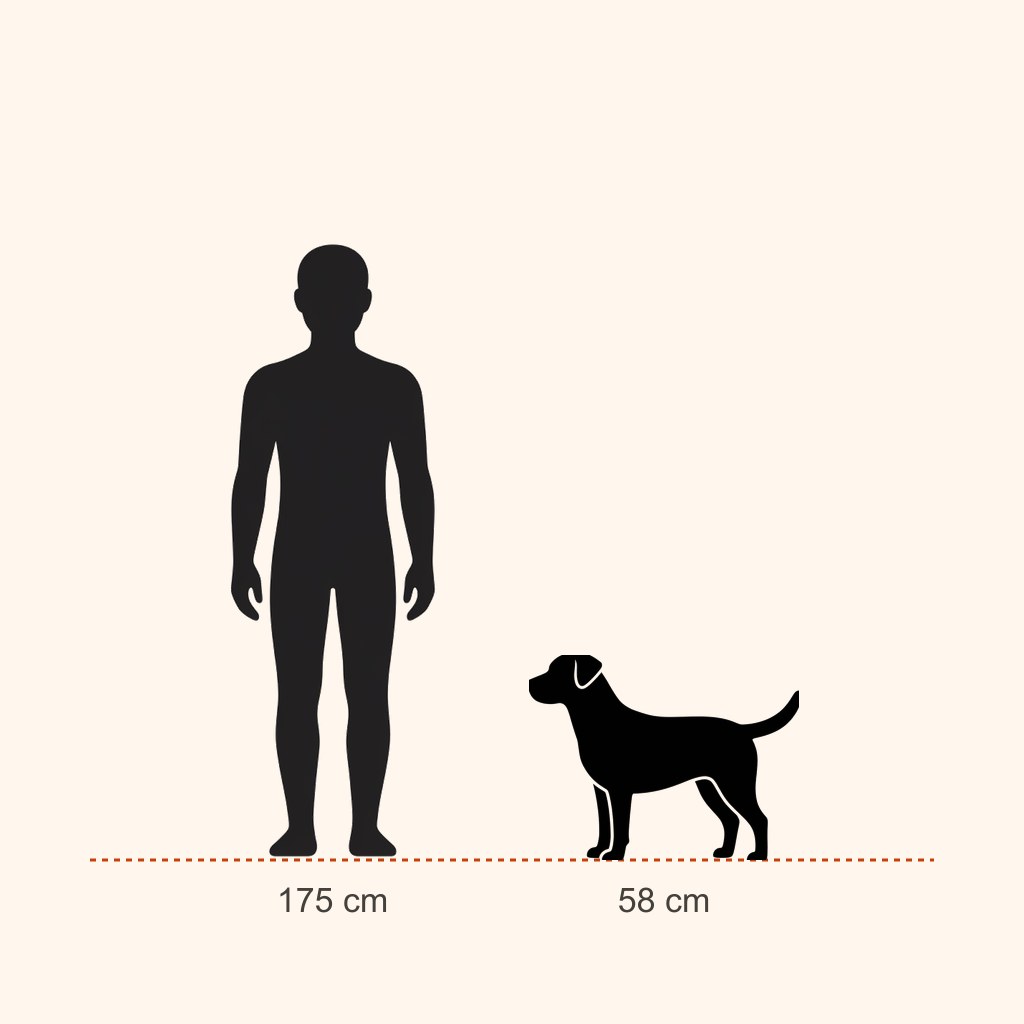
Golden Retriever Owner's Guide
Last updated:
Is a Golden Retriever right for you?
The Golden Retriever is one of the most popular family dogs in the world, and for good reason: devoted to people, patient, and eager to learn. But calling it "suitable for everyone" would be wrong. The table below answers the questions you should ask yourself before adopting.
| Situation | Suitability | Note |
|---|---|---|
| Apartment | Moderate | Works if you provide 1 to 1.5 hours of outdoor activity daily; without it, furniture and nerves suffer |
| Family with young children | Excellent | The breed's greatest strength; still, a 25-30 kg dog can knock over a small child in excitement |
| First-time dog owner | Excellent | A forgiving breed that is easy to train |
| Alone 8+ hours a day | Poor | Does not cope well without people; separation anxiety and destructive behaviour follow |
| Household with fur allergies | Poor | Sheds heavily twice a year and continuously the rest of the time |
| Hot climate | Moderate | Double coat; avoid midday walks in summer |
In short: nearly ideal for an active family where someone is home and shedding is tolerated. The wrong choice for someone living alone and working long hours.
Before you adopt
Look at three things when choosing: the hip and elbow x-ray results of both parents, whether the puppy stayed with its mother for at least eight weeks, and whether the breeder questions you in return. A breeder who does not ask questions does not care where the dog ends up.
Golden Retrievers and their mixes turn up regularly in shelters and rescue groups. Adopting an adult has a real advantage: the temperament is already known.
Temperament
The Golden's temperament can be summed up in three words: gentle, social, cooperative. Bred to retrieve, it enjoys working alongside people and is highly sensitive to praise. This makes training easy, but it has a consequence: a Golden that is ignored becomes unhappy.
It is not wary of strangers. It makes a poor guard dog and greets everyone at the door. It generally gets on well with other dogs and usually with cats. It barks little, but chewing whatever it picks up is the best-known bad habit when bored.
The puppy and adolescent period (0 to 2.5 years) deserves a warning: Goldens mature late. A two-year-old Golden has an adult body and a puppy's behaviour. This period requires patience and consistent exercise; channel the energy rather than waiting for the dog to "settle down".
Health issues and lifespan
Average lifespan is 10 to 12 years; with good care, individuals reaching 13 or 14 are not rare. The breed has a high predisposition to specific health problems, and knowing them saves lives both when choosing a puppy and as the dog ages.
- Cancer: According to the long-running study by the Golden Retriever Club of America, the leading cause of death in the breed. Hemangiosarcoma and lymphoma are the most common. After age seven, have a check-up and blood count every six months, and see a vet without delay for any new lump.
- Hip and elbow dysplasia: Poor seating of the joint; signs include limping, difficulty rising, and reduced running. Because it is genetic, ask for the parents' x-ray certification (OFA or FCI system). Excess weight increases the risk.
- Eye disease: Cataracts and progressive retinal atrophy (PRA). A DNA test exists for PRA and can be requested for the puppy's parents.
- Heart: Subaortic stenosis (SAS), a congenital narrowing. A vet should listen to the heart at the puppy's first vaccination visit; if a murmur is heard, a cardiology check follows.
- Hypothyroidism: Presents with weight gain, lethargy, and skin problems; diagnosed by blood test and easily controlled with medication.
- Skin and ears: The double coat and drop ears lead to fungal infections and otitis in humid weather. Drying the ears after swimming prevents most problems.
This list is not meant to frighten. Informed selection and early diagnosis change the outcome in most of these conditions.
Feeding
An adult Golden (28-34 kg) eats roughly 350-450 g of quality dry food per day; the amount varies with activity and brand, and the chart on the bag is a starting point. Splitting the ration into two meals reduces the risk of gastric torsion and cuts down on hunger-driven begging.
- Puppy (2-12 months): Large-breed puppy food. The "large breed" label matters; the calcium-phosphorus balance protects joint development. Do not push for fast growth, as it raises the dysplasia risk.
- Adult (1-7 years): Moderate-fat food with 22-26% protein. Goldens love food, and weight control is the owner's responsibility; the ribs should be palpable.
- Senior (7+ years): Reduced-calorie food with joint support (glucosamine, omega-3).
Avoid: chocolate, grapes and raisins, onion and garlic, sugar-free products containing xylitol, cooked bones. Fatty table scraps cause pancreatitis.
Grooming and coat
The Golden deserves honesty about its coat: it sheds a lot. The waterproof outer coat and soft undercoat shed heavily in spring and autumn, and continuously the rest of the year. Managing it:
- Brush two to three times a week, daily during shedding season. A deshedding rake removes the undercoat; an ordinary brush does not.
- Bathe every six to eight weeks; washing more often dries the skin.
- Clipping the coat short is not recommended; the undercoat provides sun protection and may not regrow properly. Only the paw pads and around the ears are tidied.
- Check ears weekly, trim nails every three to four weeks, brush teeth several times a week.
Training and exercise
The Golden's energy level is high: at least one hour, preferably 1.5 hours of active movement daily. Leash walking alone is not enough; running, fetch, and swimming where possible suit the breed's nature. A Golden that is not tired out will find its own job around the house.
Reward-based methods work exceptionally fast with this breed. From eight weeks:
- Name, sit, stay, come. The recall is vital here; you need to be able to call back a dog that puts everything in its mouth.
- Socialisation: meeting different people, dogs, sounds, and surfaces between 8 and 16 weeks. Once this window closes, it is hard to make up.
- Leash training: teaching a 30 kg adult not to pull starts in puppyhood.
- Being alone: start with short periods and build up; separation anxiety is common in this breed.
Mental tiredness matters as much as physical. Scent games and food puzzles replace an hour's walk on a rainy day.
History
The breed was developed in mid-19th century Scotland by Lord Tweedmouth. The aim was a gundog that retrieved shot waterfowl with a soft mouth on both land and water and could work in cold, wet terrain. A yellow Retriever was crossed with the now-extinct Tweed Water Spaniel; later generations added Irish Setter and Bloodhound. The Kennel Club recognised it as a separate breed in 1913. Today it is one of the most widely used breeds in the world as a guide dog, search-and-rescue dog, and therapy dog.
This guide is for information only and is not a substitute for veterinary advice. Prices are approximate and vary by region and time.
Adoption Prep Checklist
Housing
-
Large-breed dog bed
A comfortable bed supports joint health.
Feeding
-
Large-breed dog food
Food matched to breed size gives the right nutritional balance.
-
Food and water bowl set
Needed for daily feeding and water access.
Grooming
-
De-shedding brush
Regular brushing reduces shedding and matting.
-
Dog nail clippers
Regular nail care matters for healthy walking.
-
Dog shampoo
Use a dog-specific shampoo for skin and coat health.
Walking & Activity
-
Running/exercise dog harness
Needed for safe walks.
-
Interactive dog puzzle toy
Mental and physical stimulation reduces behavior problems.
Training
-
Training treats / beginner training guide
Basic obedience training is recommended for first-time dog owners.
Frequently Asked Questions
Does the Golden Retriever shed?
It sheds heavily, especially at seasonal changes. Expect near-daily brushing and regular cleaning at home; it is not a good choice for anyone sensitive to pet hair.
Can the Golden Retriever live in an apartment?
Possible but not ideal. A house with outdoor space is preferable; in an apartment you will need to increase daily exercise substantially.
Is the Golden Retriever good with children?
Generally yes. It adapts well to families with children. Even so, interactions should be supervised and children taught to respect the animal’s boundaries.
Is the Golden Retriever suitable for first-time dog owners?
Yes. Its care and training are relatively forgiving, which makes it a sound choice for first-time owners.
How much exercise does the Golden Retriever need?
It is high-energy and needs vigorous daily activity. Mental stimulation matters as much as physical exercise; without enough to do, destructive behaviour follows.
Can the Golden Retriever be left alone during the day?
It can be left alone for a few hours. Long, routine absences can bring on boredom-driven behaviour problems; enrichment and a predictable routine reduce that risk.
How long does the Golden Retriever live?
The Golden Retriever lives 12-14 years on average. Diet, regular veterinary check-ups and early screening for hereditary conditions all affect this directly.
Where does the Golden Retriever come from?
The Golden Retriever originates from United Kingdom (Scotland). The geography a breed was developed in, and the job it was bred for, explain much of its temperament and care needs today.