

Kangal Shepherd Dog
The image on this page is AI-generated and does not depict a real animal.
- Species
- Dog
- Origin
- Turkey (Sivas)
- Size
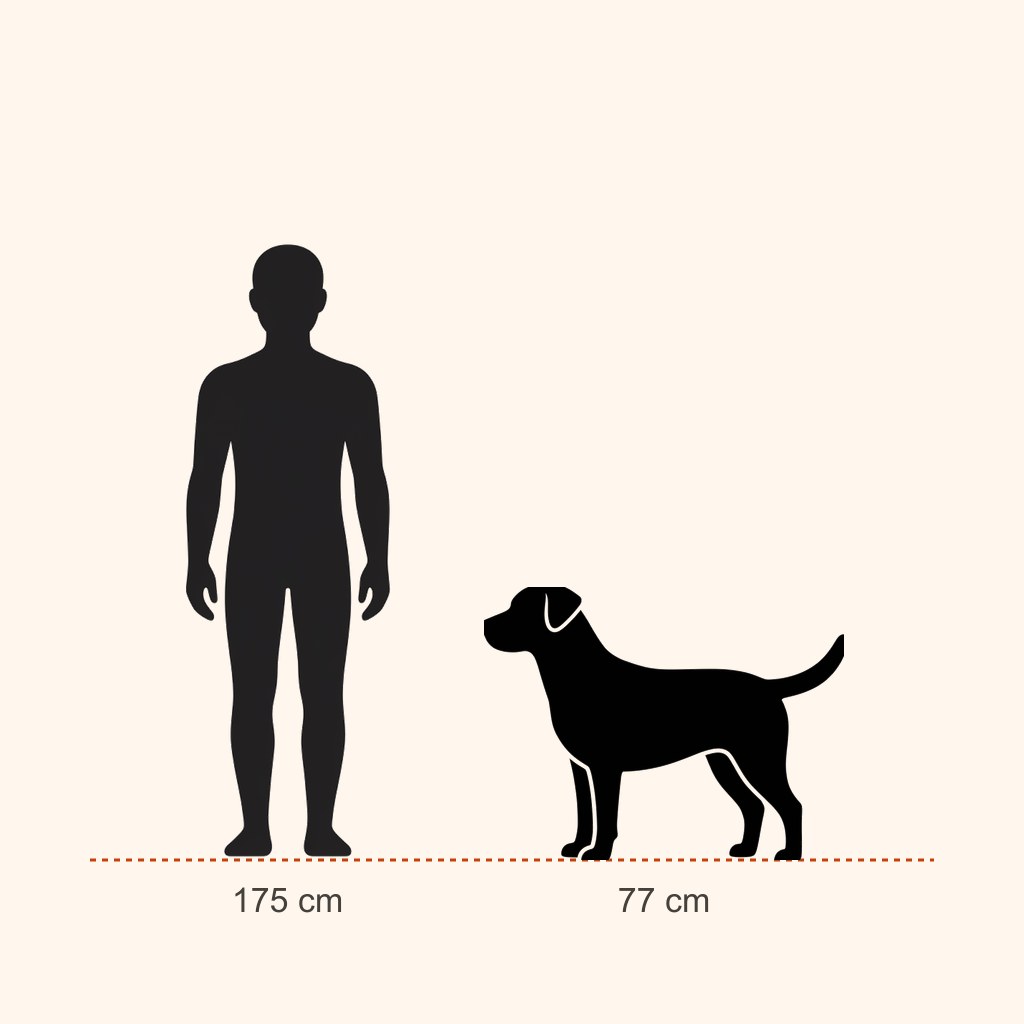
- Very Large
- Lifespan
- 12-15 years
- Temperament
- Loyal independent protective calm aloof with strangers
- Description
Originating from the Sivas region, this powerful and large-bodied Turkish shepherd dog breed was developed to guard livestock and is one of Turkey's officially recognized national breeds.
- Physical Traits
Large and muscular body, short-to-medium dark gray/fawn coat, black mask, thick neck, powerful jaw structure.
- Care / Environment Info
Suited to spacious yards or rural environments; apartment living is not recommended. Sheds moderately, with a noticeable seasonal coat change. Has a strong protective instinct, so early socialization is important. Generally a healthy and hardy breed that needs regular exercise.
Kangal Shepherd Dog Owner's Guide
Last updated:
Is a Kangal Shepherd Dog right for you?
The Kangal is Türkiye's national breed and one of the most respected livestock guardian dogs in the world. Understanding it properly requires accepting one thing: the Kangal is not a house dog, it is a working dog. For centuries it was selected to defend a flock against wolves and to make decisions independently of its handler.
| Situation | Suitability | Note |
|---|---|---|
| Apartment | Not suitable | Not the right environment for a 50-65 kg guardian dog |
| Family with young children | Caution | Calm and protective toward its family; its size requires constant supervision |
| First-time dog owner | Not suitable | An independently minded breed; experience is essential |
| House with a garden | Moderate to good | The garden must be large and the fence solid; it escapes when bored |
| Farm, flock, large land | Perfect | The reason the breed exists |
| Household with fur allergies | Poor | Double coat with heavy seasonal shedding |
| Dense residential area | Poor | Night barking is natural guarding behaviour |
Keeping a Kangal in a city runs against the breed's nature. If you are considering one, the honest question is: can you give this dog an area to guard and a job to do?
Before you adopt
Choose lines whose parents you can see and that work with livestock. Unregistered breeding is widespread, and a line with a working history is safer for both temperament and health.
Ask for hip x-ray certification for the parents.
Legal and ethical note: the Kangal is subject to export controls in Türkiye. Buying from a registered, traceable line supports the breed's future.
If the dog is to work with livestock, the puppy must be raised together with the animals it will protect between 8 and 16 weeks. This is a bond that is formed, not taught.
Temperament
The Kangal is calm, dignified, and self-assured. It does not bark unnecessarily and does not move unnecessarily; it conserves energy and uses it when required. The "low reactivity, high threshold" trait common to livestock guardian dogs is pronounced here.
It is surprisingly gentle toward its family and toward the creatures it considers itself responsible for: children, lambs, poultry. It is distant and evaluative with strangers.
Independence defines the breed. Rather than waiting for a command, the Kangal assesses the situation itself; this is not disobedience but a requirement of the job. Do not expect Retriever-style results in conventional obedience training.
It patrols and barks at night. This behaviour cannot be suppressed, only managed through choice of environment.
Health issues and lifespan
Average lifespan is 12 to 15 years, remarkably long for a giant breed and an advantage of being shaped by natural selection.
- Hip dysplasia: Common in giant breeds. Overfeeding and early heavy exercise during puppyhood increase the risk.
- Gastric torsion (bloat): The most serious emergency in this deep-chested breed. Distended abdomen, retching without vomiting, restlessness, heavy drooling. Fatal within hours; go to a vet immediately.
- Entropion: Inward rolling of the eyelid, presenting with constant watering and rubbing; surgical correction is needed.
- Hypothyroidism: Weight gain, lethargy, skin problems. Diagnosed by blood test.
- Anaesthetic sensitivity: Sensitivity to sedatives and anaesthetics has been reported in livestock guardian breeds. Inform your vet about the breed.
- Paw and nail problems: Injuries are frequent in working individuals; regular paw checks are needed.
Feeding
An adult Kangal (40-65 kg) consumes 700-1,000 g of quality dry food per day. Working individuals need more; inactive ones need less.
- Puppy (2-24 months): Giant-breed puppy food. Growth takes two years in this breed. Slow, balanced growth is the rule; excess calcium and rapid weight gain permanently damage joint development.
- Adult: 24-26% protein with balanced minerals. The Kangal eats little for its size and has an efficient metabolism.
- Senior (8+ years): Calories reduced, joint support added.
Two meals a day. No heavy activity for an hour before and after eating; this simple rule reduces the risk of gastric torsion.
Traditional village feeding (bread, leftovers) is common with this breed but inadequate; during the growth period it is a major cause of joint problems.
Grooming and coat
The Kangal's short to medium double coat insulates against both cold and heat.
- Brush weekly in normal periods; daily in spring and autumn.
- An undercoat rake is needed during seasonal changes.
- Bathe rarely; two or three times a year is enough. The coat's natural oils should be preserved.
- Never shave. The coat also protects from sun and heat in summer.
- Weekly ear checks; nails as required by terrain, since working dogs wear them down naturally.
- Tick control is critical in this breed; regular parasite protection is essential for dogs working outdoors.
Training and exercise
Daily requirement: free movement over a wide area plus 45 to 60 minutes of walking. The Kangal is not a running dog; it is enduring but does not need explosive exercise. What it really needs is space and a territory to watch.
Priorities:
- Socialisation (8-16 weeks). The most critical item for this breed. People, children, other animals, vehicles, sounds. An unsocialised Kangal becomes a serious risk in adulthood.
- Boundary training. The dog must learn what it is guarding; an unclear boundary means guarding behaviour spilling over to the neighbours.
- Leash discipline. If you cannot hold a 60 kg dog on a lead, you cannot walk it on the street.
- Recall. Difficult but essential; start at short distances with high-value rewards.
- Working with livestock: the puppy must be raised alongside the animals it will guard between 8 and 16 weeks.
Harsh methods do not work with this breed; the Kangal does not submit to pressure and loses trust. A calm, consistent, respectful approach is required.
History
The Kangal took shape in and around the Kangal district of Sivas province, within Anatolia's thousands-of-years-old livestock guarding tradition. Its job was not to herd the flock but to defend it: a guardian that stood with the shepherd against wolves and bears and made its own decisions when necessary. That function explains every feature of the breed, from its size and thick neck to its calm and its independence.
The breed attracted international interest in the 20th century, and the question of its relationship with the lines exported to America as the "Anatolian Shepherd" was debated for a long time. The FCI registered the Kangal Shepherd Dog as a separate breed of Turkish origin in 2018.
Today it is used in cheetah conservation programmes in Africa, where guarding livestock from predators saves both the flock and the predator; this is the breed's best-known international success story.
This guide is for information only and is not a substitute for veterinary advice. Prices are approximate and vary by region and time.
Adoption Prep Checklist
Housing
-
Large-breed dog bed
A comfortable bed supports joint health.
Feeding
-
Large-breed dog food
Food matched to breed size gives the right nutritional balance.
-
Food and water bowl set
Needed for daily feeding and water access.
Grooming
-
De-shedding brush
Regular brushing reduces shedding and matting.
-
Dog nail clippers
Regular nail care matters for healthy walking.
-
Dog shampoo
Use a dog-specific shampoo for skin and coat health.
Walking & Activity
-
Dog leash and collar set
Needed for safe walks.
-
Plush dog toy
Mental and physical stimulation reduces behavior problems.
Frequently Asked Questions
Does the Kangal Shepherd Dog shed?
It sheds a moderate amount. Brushing two or three times a week noticeably reduces both loose hair and matting.
Can the Kangal Shepherd Dog live in an apartment?
Not recommended. It needs a large garden or open space. Kept in confined quarters, restlessness and behavioural problems are the expected outcome.
Is the Kangal Shepherd Dog good with children?
Caution is warranted. With proper socialisation and adult supervision it can live with children, but it is not a first choice for homes with young children.
Is the Kangal Shepherd Dog suitable for first-time dog owners?
No — it suits experienced owners. Its character, energy or care requirements would be demanding for a first-time owner.
How much exercise does the Kangal Shepherd Dog need?
It needs a moderate amount of exercise. Daily activity plus some play time makes for a balanced routine.
Can the Kangal Shepherd Dog be left alone during the day?
It tolerates being alone well. That makes it workable for someone employed full time, though it will still expect attention and activity on your return.
How long does the Kangal Shepherd Dog live?
The Kangal Shepherd Dog lives 12-15 years on average. Diet, regular veterinary check-ups and early screening for hereditary conditions all affect this directly.
Where does the Kangal Shepherd Dog come from?
The Kangal Shepherd Dog originates from Turkey (Sivas). The geography a breed was developed in, and the job it was bred for, explain much of its temperament and care needs today.