

Russell Terrier
The image on this page is AI-generated and does not depict a real animal.
- Species
- Dog
- Origin
- England/Australia
- Size
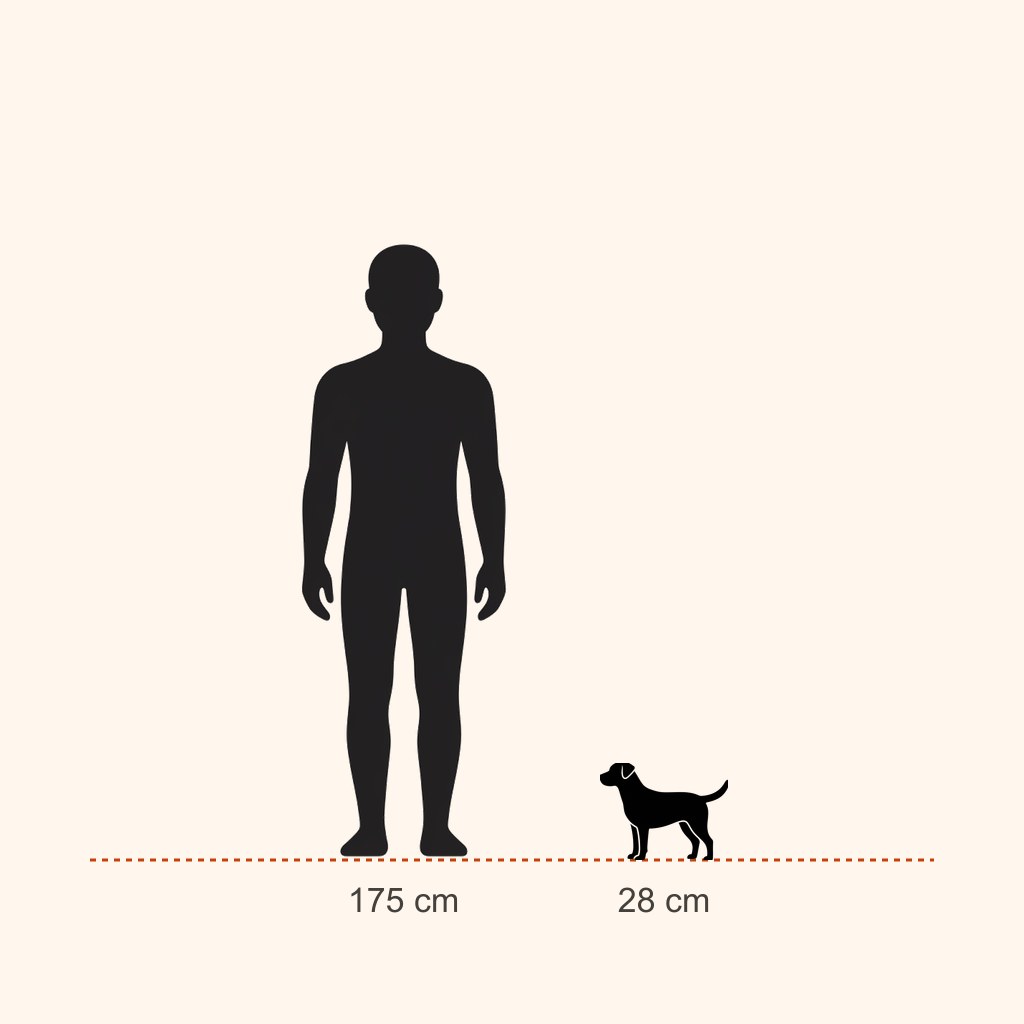
- Small
- Lifespan
- 12-14 years
- Temperament
- Energetic intelligent brave
- Description
From the Jack Russell Terrier family, a small and very energetic hunting/family dog.
- Physical Traits
Short smooth coat (patches on a white background), a small compact body.
- Care / Environment Info
Can live in an apartment with adequate exercise. Its short coat sheds little, easy to maintain. Very high exercise and mental stimulation needs.
Russell Terrier Owner's Guide
Last updated:
Is a Russell Terrier right for you?
Also known as the Jack Russell, this breed packs extraordinary energy into a small body. Intelligent, bold, and tireless. Looking at its size and assuming an "easy small dog" is the most common mistake made with this breed.
| Situation | Suitability | Note |
|---|---|---|
| Apartment | Moderate to poor | Small but very energetic; 1.5 hours of exercise is essential |
| Family with young children | Caution | Energetic; tolerance for rough play may be limited |
| First-time dog owner | Poor | Stubborn, independent, and very energetic; needs experience |
| Alone 8+ hours a day | Very poor | A bored Russell digs, chews, and barks |
| Household with fur allergies | Moderate | Smooth or wire coat; sheds regularly |
| Home with cats or small animals | Poor | The prey drive is very high |
| House with a garden | Caution | It digs and goes under fences; the fence base must be closed |
| Active owner who does sport | Perfect | One of the most successful breeds in agility and flyball |
The honest warning: the Russell Terrier has one of the highest energy levels relative to size of any breed. A Russell that is not tired out becomes the most destructive resident of the house.
Before you adopt
The most critical issue in this breed is the owner assessing their own energy level realistically. The Russell Terrier is among the breeds most often acquired on the assumption that "it will be easy because it is small" and then given up; it is frequently found in shelters and rehoming pages.
Always ask the breeder for the primary lens luxation (PLL) genetic test result; it is common in this breed and leads to loss of vision if untreated. Hereditary ataxia and myelopathy tests, an eye examination, and a patella evaluation should also be requested.
The risk of inherited deafness rises in individuals with a great deal of white; observe the puppy's response to sound.
See the parents and make sure the puppy has stayed with its mother for at least eight weeks. Adopting an adult Russell is sometimes the safer choice, because the temperament is already known.
Temperament
The Russell Terrier is bold, persistent, and highly intelligent. It was bred to go into a fox earth and bolt the fox, which explains its determination and fearlessness.
Because it was selected to work independently it is selective about obedience. It hears a cue, evaluates it, and prefers something more interesting if there is one.
The prey drive is very high. Cats, birds, rodents, and anything that moves can become a target. Households with cats need careful assessment.
It digs. Opening holes in the garden is genetic behaviour, and a designated digging area is the solution.
It is vocal. Barking is a common problem in this breed and must be managed with training.
It is attached to its owner and loves to play; it is a tireless playmate.
Health issues and lifespan
Average lifespan is 13 to 16 years, long for a small breed and generally robust.
- Patellar luxation: Common in small breeds; the sign is holding one leg up for a few steps.
- Legg-Calvé-Perthes disease: Disruption of the blood supply to the femoral head; lameness and muscle wasting at a young age.
- Hereditary ataxia and myelopathy: Neurological diseases reported in this breed, presenting with loss of balance and poor coordination. Genetic tests exist.
- Primary lens luxation: Displacement of the lens of the eye; sudden pain, redness, and loss of vision. It is common in this breed and requires emergency intervention. A genetic test exists.
- Deafness: Inherited deafness can occur in individuals with extensive white markings.
- Injuries: Because of its fearless character this breed will take on much larger dogs, jumps from heights, and gets hurt. Trauma is a common reason for veterinary visits in this breed.
Feeding
An adult Russell Terrier (6-8 kg) eats 100-160 g of quality dry food per day. Being an active breed, its energy needs are high for its size.
- Puppy (2-12 months): Small-breed puppy food, three meals a day.
- Adult: 24-28% protein, small kibble.
- Senior (10+ years): This breed stays active in old age; calories should be adjusted individually.
The ribs should be easy to feel. An overweight Russell contradicts the breed's athletic build and accelerates joint problems.
Grooming and coat
There are three coat types: smooth, broken, and rough.
- Smooth: a rubber brush once a week.
- Broken and rough: brushing once or twice a week; hand-stripping or trimming two or three times a year.
Shared care:
- All types shed more than expected.
- Bathe every six to eight weeks.
- Weekly ear checks.
- Nails every three to four weeks; active individuals may need less.
- Teeth several times a week.
- This breed digs in the garden and runs through undergrowth; paw and tick checks after walks should be routine.
Training and exercise
Daily requirement: at least 1 to 1.5 hours of active exercise plus mental work. That may seem high for a 7 kg dog but it is the breed's genuine need.
Priorities:
- Mental work. Food puzzles, scent games, trick training. Physical tiredness alone is not enough.
- Dog sport. Agility, flyball, earthdog. For this breed these are a need, not a hobby. It is extraordinarily athletic for its size.
- Recall. Very difficult because of the prey drive but very necessary. Even so, do not fully trust it off-lead.
- Socialisation (8-16 weeks). Especially with other dogs and cats.
- Redirecting barking and digging. Neither can be eliminated; an alternative outlet (a digging area, noisy play) must be provided.
- Impulse control. Prevent it from challenging larger dogs; that is the main risk of serious injury in this breed.
Work with rewards and keep sessions short and fast. A Russell tires of repetitive, slow training.
History
The breed was developed in 19th-century England in Devon by the Reverend John "Jack" Russell. Russell wanted specific qualities for fox hunting: the stamina to run with horses and hounds, a narrow chest to enter a fox earth, and the courage to meet a fox underground.
The white colour was functional, chosen so hunters could distinguish the dog from the fox.
In the 20th century the breed developed in different directions, and there are now three closely related registrations: the Jack Russell Terrier (longer-legged, Australian standard), the Parson Russell Terrier (longer-legged, English hunting type), and the Russell Terrier (shorter-legged). These are usually sold under a single name in many countries.
Its visibility in popular culture has made the breed very popular; however, the well-behaved image seen in films and series does not reflect its real energy level, and this misunderstanding has increased the number of Russells surrendered to shelters.
This guide is for information only and is not a substitute for veterinary advice. Prices are approximate and vary by region and time.
Adoption Prep Checklist
Housing
-
Small-breed dog bed
A comfortable bed supports joint health.
Feeding
-
Small-breed dog food
Food matched to breed size gives the right nutritional balance.
-
Food and water bowl set
Needed for daily feeding and water access.
Grooming
-
Short-hair dog brush
Regular brushing reduces shedding and matting.
-
Dog nail clippers
Regular nail care matters for healthy walking.
-
Dog shampoo
Use a dog-specific shampoo for skin and coat health.
Walking & Activity
-
Running/exercise dog harness
Needed for safe walks.
-
Interactive dog puzzle toy
Mental and physical stimulation reduces behavior problems.
Frequently Asked Questions
Does the Russell Terrier shed?
Shedding is low. Brushing once a week is usually enough, with a mild increase during seasonal changes.
Can the Russell Terrier live in an apartment?
Yes. It lives comfortably in an apartment as long as its daily needs are met. What matters is not floor area but consistent exercise and mental stimulation.
Is the Russell Terrier good with children?
Caution is warranted. With proper socialisation and adult supervision it can live with children, but it is not a first choice for homes with young children.
Is the Russell Terrier suitable for first-time dog owners?
No — it suits experienced owners. Its character, energy or care requirements would be demanding for a first-time owner.
How much exercise does the Russell Terrier need?
It is high-energy and needs vigorous daily activity. Mental stimulation matters as much as physical exercise; without enough to do, destructive behaviour follows.
Can the Russell Terrier be left alone during the day?
It can be left alone for a few hours. Long, routine absences can bring on boredom-driven behaviour problems; enrichment and a predictable routine reduce that risk.
How long does the Russell Terrier live?
The Russell Terrier lives 12-14 years on average. Diet, regular veterinary check-ups and early screening for hereditary conditions all affect this directly.
Where does the Russell Terrier come from?
The Russell Terrier originates from England/Australia. The geography a breed was developed in, and the job it was bred for, explain much of its temperament and care needs today.