

Staffordshire Bull Terrier
The image on this page is AI-generated and does not depict a real animal.
- Species
- Dog
- Origin
- England
- Size
- Medium
- Lifespan
- 12-14 years
- Temperament
- Brave affectionate reliable playful
- Description
Despite its appearance, a very affectionate breed especially fond of children, a muscular breed.
- Physical Traits
Short smooth coat (various colors), a broad head, a very muscular compact body.
- Care / Environment Info
Suitable for apartment living. Its short coat sheds little, easy to maintain. High exercise needs. May be subject to BSL restrictions in some countries and cities.
Staffordshire Bull Terrier Owner's Guide
Last updated:
Is a Staffordshire Bull Terrier right for you?
The Staffordshire Bull Terrier ("Staffie") is an English terrier that is short in stature but extremely muscular and strong. It has a long history as a family dog in England; the Kennel Club describes it as intelligent and affectionate, especially with children. It is also stubborn, very energetic and can be reactive towards other dogs. Its small size hides a lot of power.
| Situation | Suitability | Note |
|---|---|---|
| Apartment | Good | Calm and adaptable indoors if its daily exercise needs are met |
| Family with young children | Good | Affectionate with people, especially children; its exuberance still requires supervision |
| First-time dog owner | Moderate | Friendly but strong and stubborn; be ready for consistent training |
| Alone 8+ hours a day | Poor | Very people-oriented; may become destructive when alone |
| Home with another dog | Caution | Can be reactive towards other dogs; varies between individuals |
| Household with fur allergies | Moderate | Short coat, but sheds regularly |
| Hot climate | Caution | Sensitive to heat; adjust exercise times in summer |
Before you adopt
Legal status. The Staffordshire Bull Terrier is not banned in most countries, but the rules vary. In Turkey it is not on the dangerous-breed list, whereas the American Staffordshire Terrier, a different breed, is. In Spain, by contrast, the Staffordshire Bull Terrier is listed as a potentially dangerous dog and requires a licence. Because of name confusion, keep documents showing your dog's breed (pedigree, veterinary records), and check local laws before moving abroad.
Beware of Pit Bull mixes. Some dogs sold as "Staffies" may actually be Pit Bull or AmStaff mixes, which can create legal problems where those breeds are restricted. Do not buy a puppy without seeing the parents and paperwork.
Health tests. Ask the breeder for the parents' L2HGA and hereditary cataract (HC-HSF4) DNA test results; the Kennel Club lists both as best practice. Elbow evaluation and eye examination should also be requested.
Adoption. If you are adopting an adult Staffie, finding out in advance how it behaves with other dogs, cats and children is a big advantage.
Temperament
The Staffie is extremely people-loving. It adores sitting close, following its owner everywhere and receiving attention. It is usually friendly with strangers too, so it is not a good guard dog.
Its relationship with children is the breed's best-known trait, and the "nanny dog" nickname is widespread. But the nickname is no guarantee: a strong, excitable dog can knock a small child over during play without meaning to. Never leave any dog alone with a young child.
It is courageous and tenacious. Its blood-sport past explains why it does not give up easily once it starts something. It may react to other dogs, particularly when it feels challenged.
Its energy is high, but a well-exercised Staffie will happily sleep for long stretches at home. Its urge to chew is strong; durable toys are a must.
Health issues and lifespan
Average lifespan is 12 to 14 years. The breed club describes the breed as generally healthy and robust, but there are two serious inherited diseases for which DNA tests exist.
- L-2-hydroxyglutaric aciduria (L2HGA): An inherited, recessive metabolic disease affecting the central nervous system. Signs usually begin between six months and one year, though they can appear later: wobbly gait, tremors, muscle stiffness triggered by exercise or excitement, behaviour changes, seizures. See a vet without delay if you notice these signs.
- Hereditary cataract (HC): Caused by a mutation in the HSF4 gene; it starts at a young age and the lens clouding can progress to blindness. Have the eyes examined if you notice whitening of the pupil or bumping into objects.
- Persistent hyperplastic primary vitreous (PHPV): A congenital eye abnormality detected by eye examination in puppyhood.
- Hip and elbow dysplasia, patellar luxation: Lameness, occasionally skipping on a hind leg, difficulty rising.
- Skin conditions: Itching and skin inflammation occur occasionally; the breed club notes a higher incidence in puppies from two blue parents.
- Degenerative myelopathy: Progressive weakness and loss of coordination in the hind legs in older dogs.
- Heat sensitivity: Rapid panting, weakness and stumbling are signs of heatstroke.
Feeding
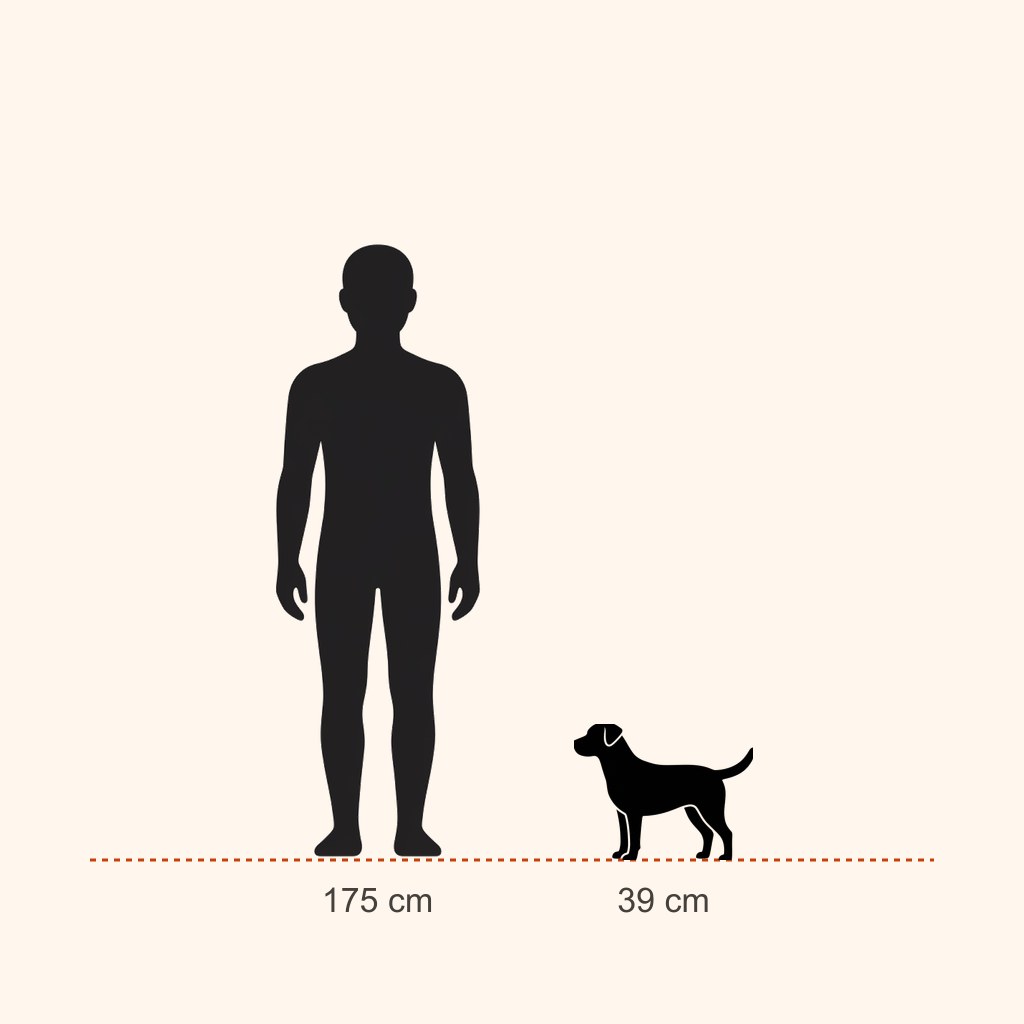
Under the Kennel Club standard, males weigh about 13-17 kg and females 11-15.4 kg, with a height of 35.5-40.5 cm. An adult of that weight eats roughly 180-280 g of quality dry food per day depending on activity.
- Puppy: Three to four meals a day at regular times.
- Adult: Two meals a day. Staffies gain weight easily; measure portions.
- Treats: Responds very well to food rewards in training; deduct treats from the daily ration. PetMD suggests low-calorie options such as carrots.
- Senior (8+ years): Reduce calories and monitor joints.
For dogs with skin problems, discuss the possibility of a food allergy with your vet rather than switching foods frequently on your own.
Grooming and coat
- Short, smooth coat; the Kennel Club considers grooming once a week sufficient. A rubber mitt or brush does the job.
- The coat sheds dirt easily and dries quickly; baths are rarely needed.
- Nails monthly. Get a strong dog used to nail trims from puppyhood.
- Check ears and teeth weekly.
- Keep up regular flea and tick prevention.
- Summer: Keep the dog in during the midday heat and watch for sunburn on light-coloured dogs.
Training and exercise
Daily requirement: up to one hour of exercise, according to the Kennel Club. Long on-lead walks, tug games, scent work and agility are activities this breed enjoys.
Priorities:
- Socialisation (8-16 weeks and beyond). Calm, positive experiences, especially with other dogs. Keep your eyes on your dog during dog encounters.
- Leash discipline. A small but strong dog; loose-lead training must start early.
- "Drop it". Being able to get a toy or chew released matters because of the breed's strong jaw.
- Alone-time training. Start with short periods, as it is very attached to people.
- Settling. Being able to switch off play excitement and send the dog to its bed.
Harsh methods damage trust and increase stubbornness in this sensitive, people-oriented breed. Short, rewarding, fun sessions give the best results.
History
The Staffordshire Bull Terrier was developed in 19th-century England, particularly in the 1860s, by crossing Bulldogs with terriers. It is named after Staffordshire in the English Midlands, where the breed took shape.
These dogs were used both for vermin control and in the blood sports of the time. In the Kennel Club's words, the modern Staffordshire has since become a wonderful family pet.
The Kennel Club recognised the breed in the 1930s. It is still traditionally shown wearing a broad leather collar decorated with brass Staffordshire knot emblems. The American branch eventually produced the larger American Staffordshire Terrier; today the two breeds have separate standards.
This guide is for information only and is not a substitute for veterinary advice. Prices are approximate and vary by region and time.
Sources
- www.royalkennelclub.com/search/breeds-a-to-z/breeds/terrier/staffordshire-bull-terrier/
- sbtca.com/health/
- www.petmd.com/dog/breeds/staffordshire-bull-terrier
- www.tarimorman.gov.tr/DKMP/Haber/209/Tehlike-Arz-Eden-Hayvanlara-Iliskin-Genelge
- www.laboklin.co.uk/laboklin/showGeneticTest.jsp?testID=8712
- www.boe.es/buscar/act.php?id=BOE-A-2002-6016
Adoption Prep Checklist
Housing
-
Medium-breed dog bed
A comfortable bed supports joint health.
Feeding
-
Medium-breed dog food
Food matched to breed size gives the right nutritional balance.
-
Food and water bowl set
Needed for daily feeding and water access.
Grooming
-
Short-hair dog brush
Regular brushing reduces shedding and matting.
-
Dog nail clippers
Regular nail care matters for healthy walking.
-
Dog shampoo
Use a dog-specific shampoo for skin and coat health.
Walking & Activity
-
Running/exercise dog harness
Needed for safe walks.
-
Interactive dog puzzle toy
Mental and physical stimulation reduces behavior problems.
Training
-
Training treats / beginner training guide
Basic obedience training is recommended for first-time dog owners.
Frequently Asked Questions
Does the Staffordshire Bull Terrier shed?
Shedding is low. Brushing once a week is usually enough, with a mild increase during seasonal changes.
Can the Staffordshire Bull Terrier live in an apartment?
Yes. It lives comfortably in an apartment as long as its daily needs are met. What matters is not floor area but consistent exercise and mental stimulation.
Is the Staffordshire Bull Terrier good with children?
Generally yes. It adapts well to families with children. Even so, interactions should be supervised and children taught to respect the animal’s boundaries.
Is the Staffordshire Bull Terrier suitable for first-time dog owners?
Yes. Its care and training are relatively forgiving, which makes it a sound choice for first-time owners.
How much exercise does the Staffordshire Bull Terrier need?
It is high-energy and needs vigorous daily activity. Mental stimulation matters as much as physical exercise; without enough to do, destructive behaviour follows.
Can the Staffordshire Bull Terrier be left alone during the day?
It can be left alone for a few hours. Long, routine absences can bring on boredom-driven behaviour problems; enrichment and a predictable routine reduce that risk.
How long does the Staffordshire Bull Terrier live?
The Staffordshire Bull Terrier lives 12-14 years on average. Diet, regular veterinary check-ups and early screening for hereditary conditions all affect this directly.
Where does the Staffordshire Bull Terrier come from?
The Staffordshire Bull Terrier originates from England. The geography a breed was developed in, and the job it was bred for, explain much of its temperament and care needs today.