

Whippet
The image on this page is AI-generated and does not depict a real animal.
- Species
- Dog
- Origin
- England
- Size
- Medium
- Lifespan
- 12-15 years
- Temperament
- Calm affectionate docile alert
- Description
From the sighthound family, capable of running very fast but extremely calm at home.
- Physical Traits
Very short smooth coat, a slender muscular elegant body, a deep chest, long thin legs.
- Care / Environment Info
Very suitable for apartment living. Its very short coat barely sheds, very easy to maintain. Needs short bursts of running but is quite calm at home. Sensitive to cold due to its thin coat and low body fat.
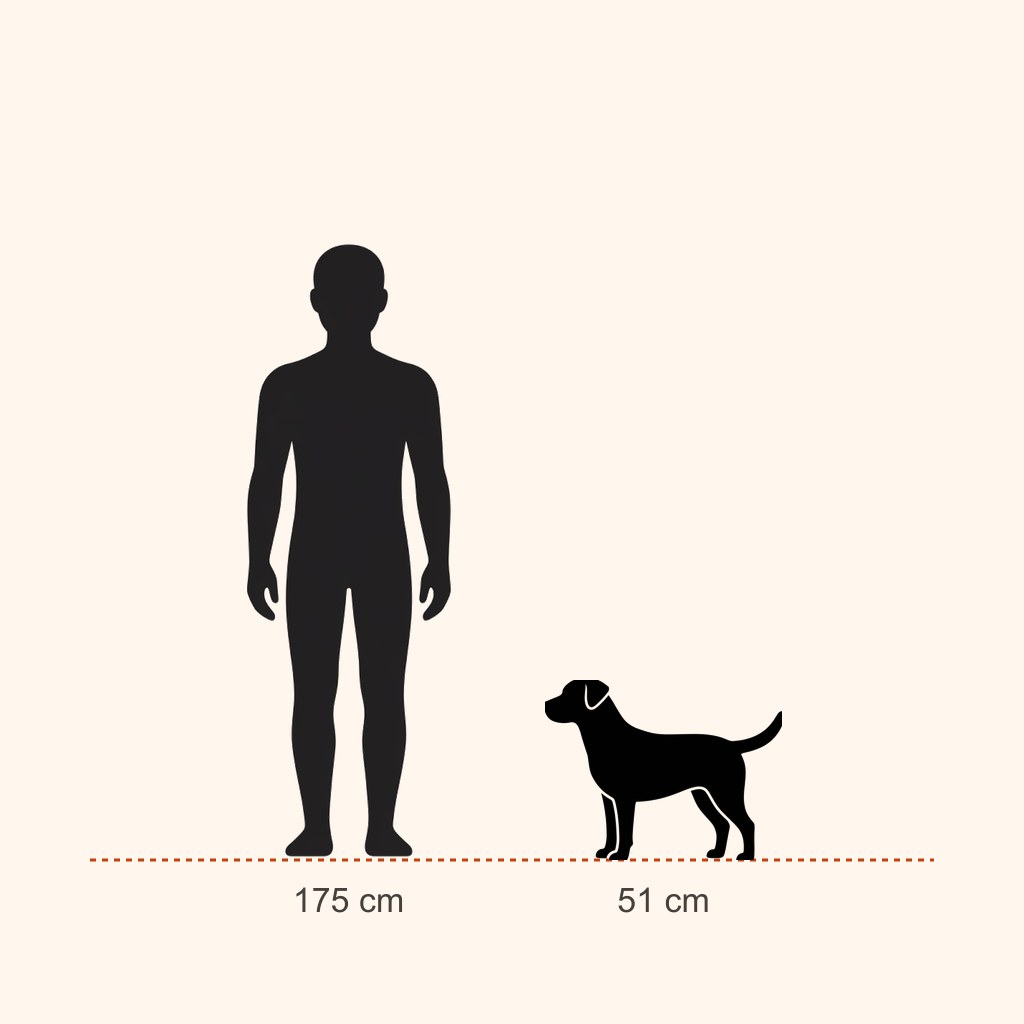
Whippet Owner's Guide
Last updated:
Is a Whippet right for you?
The Whippet is a sighthound in miniature: a sprinter that tops 30 mph over short distances and a dog that spends most of the day asleep indoors. That contrast is the essence of the breed and surprises most people. What makes a Whippet demanding is not its energy but its fragile build and its unstoppable urge to chase.
| Situation | Suitability | Note |
|---|---|---|
| Apartment | Good | Quiet indoors and rarely barks, but the daily sprint must happen outside |
| Family with young children | Moderate | A gentle breed, yet those thin legs are injured in rough play; supervise |
| First-time dog owner | Good | Easy-going and undemanding; off-lead safety is the only hard part |
| Household with a cat | Caution | High prey drive; individuals raised with cats from puppyhood are more manageable |
| Home with a garden | Good | The fence must be high and closed at the base; this dog jumps higher than you expect |
| Alone 8+ hours a day | Poor | A very people-focused breed that copes badly with long isolation |
| Cold, wet winters | Poor | Almost no body fat or coat; needs a coat outdoors |
| Household with fur allergies | Moderate | Sheds little, but allergens are in skin and saliva, so "non-allergenic" is not accurate |
One thing to accept up front: a Whippet is not safe off-lead in open ground. When something moves it does not hear you and does not weigh the options; it runs. That is not disobedience, it is the reflex the breed was selected for.
Before you adopt
Whippets are far less common than Greyhounds in many countries, so lurcher and sighthound crosses are sometimes sold under the name. Ask to see the mother and watch her temperament: Whippets may be reserved, but a panicky mother tends to produce puppies with the same sensitivity.
Ask the breeder about heart examinations and whether there is any history of deafness, eye disease, or abnormal bleeding in the line. Adopting an adult Whippet through rescue is also a strong option, because temperament is already readable in a grown dog.
If you have a cat or small pets, say so plainly to the breeder or rescue. Some Whippets accept the household cat as family and some never will; this is an individual difference that training softens but does not erase.
Temperament
The Whippet is calm, polite, and deeply attached to its people. Indoors it is nearly invisible: it finds the softest seat, burrows under a blanket, and sleeps for hours. Guarding instinct is weak; it may bark at the doorbell, but it is not a protection dog.
It is sensitive. Shouting, harsh tones, and rough handling produce lasting timidity in this breed. Reward-based, quiet repetition works; pressure does not.
Whippets usually get on well with other dogs and settle better in calm homes than chaotic ones. Expect a shadow: this dog would rather sleep at your feet than in another room.
Outdoors you meet a different animal, one that runs a few minutes of wide, astonishingly fast circles and then goes straight back to the sofa.
Health issues and lifespan
Sources generally give a lifespan of 12-15 years. Because the Whippet has kept a functional, unexaggerated build, its overall health record is better than that of many purebred dogs; most of its problems come from its anatomy.
- Skin tears and lacerations: The skin is thin with little fat beneath it. Brush, wire fencing, rough play, or a claw strike can cause wide wounds that need stitches. Check the running area, control bleeding, and see a vet the same day.
- Sensitivity to cold and wet: Short coat plus low body fat makes hypothermia a real risk. Use a coat in winter, keep the dog dry in rain, and never leave it waiting outside in the cold.
- Anaesthetic sensitivity: Some anaesthetic drugs are metabolised slowly in sighthounds and recovery can be prolonged; gene variants affecting drug metabolism have been demonstrated in Greyhounds. Always tell your vet that your dog is a sighthound before any procedure.
- Mitral valve disease: In middle age and later, a murmur, coughing, tiring quickly, or laboured breathing. Do not skip the yearly heart check.
- Von Willebrand disease (a clotting disorder): Prolonged bleeding from small cuts, or unexpected bleeding after dental work or surgery. Clotting assessment may be requested before surgery.
- Inherited deafness: Reported in predominantly white and heavily marked dogs. Watch a puppy's response to sound; BAER testing settles any doubt.
- Gastric dilatation and volvulus (bloat): The emergency seen in deep-chested breeds. A distended abdomen, retching without producing anything, restlessness; fatal within hours.
A Whippet is meant to look lean. The last few ribs faintly visible and a clearly defined waist is correct condition in this breed; trying to fatten one up harms joints and heart.
Feeding
An adult Whippet usually weighs 20-40 pounds and does well on roughly 200-300 g of good-quality dry food per day. The exact amount depends on activity, the calorie density of the food, and the individual, so judge by body condition rather than by the scoop.
- Puppy: Medium-breed puppy food, three meals a day. Do not push growth with extra food.
- Adult: Two meals a day. Splitting the ration rather than feeding one large meal helps reduce bloat risk.
- Senior: Fewer calories but muscle must be preserved; sudden weight loss in an older Whippet needs a veterinary check.
Avoid hard running for an hour either side of meals. Whippets can seem to have small appetites, which is usually normal, but several days of poor appetite alongside any other sign deserves attention.
Grooming and coat
Short, single-layered, fine coat. Grooming is the easiest part of this breed.
- A weekly pass with a rubber brush or grooming mitt is enough.
- Bathe only a few times a year; the skin is dry and sensitive and frequent shampoo irritates it.
- After every run, check the skin by hand for cuts and scrapes.
- Nails grow fast and long nails spoil this dog's stance; trim every two weeks.
- Brush teeth several times a week.
- Provide a thick, soft bed: bony elbows and hips develop calluses and pressure sores on hard floors.
- Use a coat in winter and keep walks short in severe cold.
Training and exercise
Daily needs: two lead walks plus a few free runs a week in a securely enclosed space. The run does not have to be long; for a Whippet, 10-15 minutes of genuine sprinting satisfies more than an hour of steady walking.
Priorities:
- Get the dog used to a martingale collar. A Whippet's head is narrower than its neck and it can back out of a flat collar. This is the most common cause of escapes.
- Recall. Teach it, but never treat it as a safety net; with a moving target in sight most Whippets will not respond.
- Early socialisation (8-16 weeks). This is a sensitive breed, and positive exposure to sounds, surfaces, and people shapes how confident the adult will be.
- Introductions to cats and small pets. Controlled, on lead, in short sessions, and never allowing a chase to start.
- Learning to be alone. Start with short absences and build up; this breed likes to follow you from room to room.
Whippets are intelligent but not flashy workers. Scent games, target training, and low-impact agility tire both body and mind. High-impact sports with jumps and sharp turns carry a real injury risk for this build.
History
The Whippet took shape in the mining and mill districts of northern England in the 19th century, generally credited to small Greyhounds crossed with terrier types. The aim was a dog that could catch a rabbit and still fit into a working family's home, without the upkeep of a large sighthound.
The breed made its name at weekend straight-track races. Dogs ran toward a waved handkerchief, which earned the Whippet the nickname "the poor man's racehorse"; its quick snatching action also gave it the name "snap dog". Racing was both income and entertainment for mining families, and it selected the breed firmly for speed.
Today Whippets live as house dogs and compete in racing and lure coursing. Show and racing lines differ somewhat in build, but for a family home the individual temperament matters far more than the line it came from.
This guide is for information only and is not a substitute for veterinary advice. Prices are approximate and vary by region and time.
Adoption Prep Checklist
Housing
-
Medium-breed dog bed
A comfortable bed supports joint health.
Feeding
-
Medium-breed dog food
Food matched to breed size gives the right nutritional balance.
-
Food and water bowl set
Needed for daily feeding and water access.
Grooming
-
Short-hair dog brush
Regular brushing reduces shedding and matting.
-
Dog nail clippers
Regular nail care matters for healthy walking.
-
Dog shampoo
Use a dog-specific shampoo for skin and coat health.
Walking & Activity
-
Dog leash and collar set
Needed for safe walks.
-
Plush dog toy
Mental and physical stimulation reduces behavior problems.
Training
-
Training treats / beginner training guide
Basic obedience training is recommended for first-time dog owners.
Frequently Asked Questions
Does the Whippet shed?
Shedding is low. Brushing once a week is usually enough, with a mild increase during seasonal changes.
Can the Whippet live in an apartment?
Yes. It lives comfortably in an apartment as long as its daily needs are met. What matters is not floor area but consistent exercise and mental stimulation.
Is the Whippet good with children?
Generally yes. It adapts well to families with children. Even so, interactions should be supervised and children taught to respect the animal’s boundaries.
Is the Whippet suitable for first-time dog owners?
Yes. Its care and training are relatively forgiving, which makes it a sound choice for first-time owners.
How much exercise does the Whippet need?
It needs a moderate amount of exercise. Daily activity plus some play time makes for a balanced routine.
Can the Whippet be left alone during the day?
It can be left alone for a few hours. Long, routine absences can bring on boredom-driven behaviour problems; enrichment and a predictable routine reduce that risk.
How long does the Whippet live?
The Whippet lives 12-15 years on average. Diet, regular veterinary check-ups and early screening for hereditary conditions all affect this directly.
Where does the Whippet come from?
The Whippet originates from England. The geography a breed was developed in, and the job it was bred for, explain much of its temperament and care needs today.