

Australian Shepherd
The image on this page is AI-generated and does not depict a real animal.
- Species
- Dog
- Origin
- United States
- Size
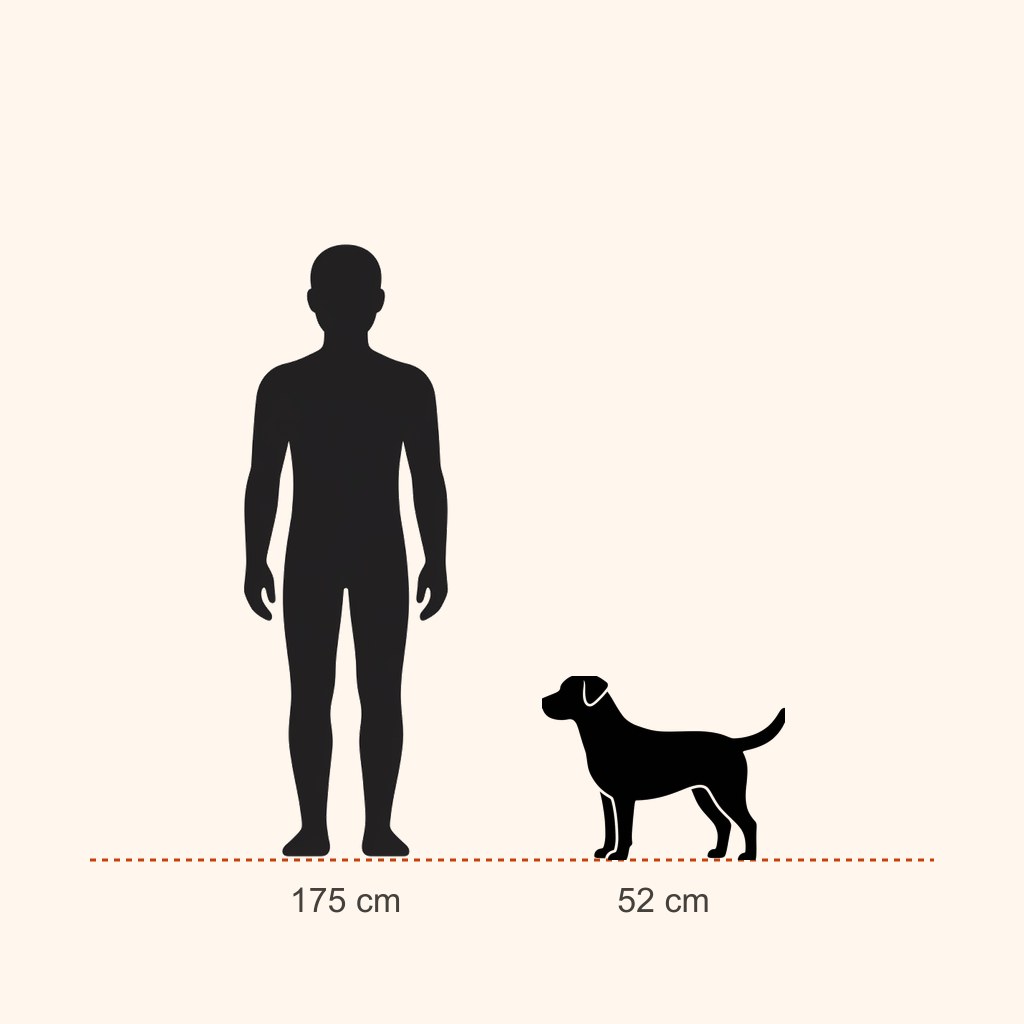
- Medium
- Lifespan
- 12-15 years
- Temperament
- Intelligent hard-working energetic loyal
- Description
Bred for herding livestock, a very energetic and intelligent working dog.
- Physical Traits
Medium-length wavy coat (merle, black, brown patterns), often odd-colored eyes, a short or nearly absent tail.
- Care / Environment Info
A house with a garden, active household preferred. Its coat sheds heavily, requiring regular brushing. Very high exercise and mental stimulation needs.
Australian Shepherd Owner's Guide
Last updated:
Is an Australian Shepherd right for you?
The Australian Shepherd, or Aussie, has become very popular in recent years for its intelligence and striking looks. Blue eyes and merle coats drive the purchase, and then the breed's real energy level emerges. This is a working breed, not an ornament.
| Situation | Suitability | Note |
|---|---|---|
| Apartment | Poor | Even with physical exercise, the mental needs are hard to meet |
| Family with young children | Good, with caution | Affectionate, but the herding instinct can lead it to circle running children |
| First-time dog owner | Moderate to poor | Easy to train, but managing the energy takes experience |
| Alone 8+ hours a day | Very poor | A bored Aussie becomes destructive and anxious |
| Household with fur allergies | Poor | Medium-length double coat; sheds heavily |
| House with a garden, active family | Perfect | An environment suited to the breed |
| Owner who does dog sport | Perfect | One of the most successful breeds in agility and obedience |
The most underestimated aspect of the Aussie is its mental need. Two hours of running a day is not enough; if its brain is not working, it stays restless.
Before you adopt
The MDR1 gene test must always be asked for in this breed. The mutation is common in Aussies and creates a fatal sensitivity to several common medicines.
Merle warning: breeding two merle dogs together ("double merle") produces deaf and blind puppies. If you are buying a merle puppy, confirm that both parents are not merle. The risk of hearing and vision problems also rises in individuals with excessive white markings.
Ask for hip certification and CEA and PRA genetic test results as well.
Australian Shepherds appear in shelters and breed rescues, usually surrendered because the owner underestimated the energy. Adopting an adult means the drive level is already visible.
Temperament
The Aussie is intelligent, energetic, and extremely attached to its owner. It is called a "shadow dog"; it follows you from room to room and does not like being alone.
It is reserved with strangers, so good socialisation is needed. Toward its family it is deeply affectionate.
The herding instinct is obvious in domestic life: it tries to circle running children, bicycles, and other animals and to nip at their heels. This is a work reflex rather than aggression, but it must be redirected.
It loves having a job and is eager to learn. It does well at learning tricks, helping with household tasks, and picking up toys.
In bored individuals, compulsive behaviours develop, including shadow chasing, tail chasing, and excessive barking.
Health issues and lifespan
Average lifespan is 12 to 15 years.
- MDR1 gene mutation: Common in this breed. It creates a serious, potentially fatal sensitivity to certain common medicines, including some parasite treatments, painkillers, and sedatives. The genetic test must be done and the result shared with your vet.
- Hip and elbow dysplasia: Parental certification should be requested.
- Collie eye anomaly (CEA) and progressive retinal atrophy (PRA): Genetic tests exist.
- Cataracts: Can appear at a young age in this breed.
- Epilepsy: Reported; usually begins between one and five years of age.
- Double merle problems: Deafness, blindness, and eye developmental defects in individuals from two merle parents.
- Autoimmune disease: Thyroid and skin-related autoimmune problems have been reported.
- Compulsive behaviours: A serious welfare problem arising from insufficient mental stimulation.
Feeding
An adult Australian Shepherd (18-30 kg) consumes 300-400 g of quality dry food per day; working individuals need more.
- Puppy (2-15 months): Medium or large breed puppy food, three meals a day.
- Adult: 24-28% protein. Energy density matters for an active breed.
- Senior (9+ years): Calorie adjustment; this breed stays active into old age.
Medication warning: if the MDR1 test has not been done, alert your vet about the breed when parasite treatments and sedatives are being chosen.
Grooming and coat
A medium-length, water-repellent double coat.
- Brush two to three times a week; daily during seasonal changes with an undercoat rake.
- Matting risk is highest behind the ears, on the ruff, in the armpits, and on the rear leg feathering.
- Bathe every 8 to 12 weeks.
- Do not shave; the double coat also insulates in summer.
- Nails every three to four weeks, teeth several times a week.
- Because this breed runs through undergrowth, tick and paw checks should be routine.
- Some individuals are born with a naturally short tail; this is normal.
Training and exercise
Daily requirement: at least 1.5 to 2 hours of physical exercise plus 30 to 45 minutes of mental work.
Priorities:
- Mental work. The breed's number-one need. Trick training, scent work, food puzzles, teaching object names.
- Dog sport. Agility, obedience sport, frisbee, treibball. The Aussie is one of the most successful breeds in these fields.
- Socialisation (8-16 weeks). Critical because of its reserved nature.
- Herding control. Redirect the urge to chase running children and vehicles.
- Recall and leash discipline.
- A "finished" cue. Teaching an off switch is the most effective way to prevent obsession. Endless ball throwing is not a solution here; it is a source of obsession.
Work with rewards; this is a sensitive breed that shuts down under harsh methods.
History
Despite the name, the Australian Shepherd is not Australian in origin; the breed was developed in the United States, in California and the western states.
The name comes from 19th-century migration: Basque shepherds who reached America via Australia brought with them herding dogs from Spain. American farmers called these dogs "shepherds from Australia", and the name stuck.
The breed was shaped in the American West to herd sheep and cattle, selected for endurance and intelligence. Being able to work at altitude and on difficult terrain was a selective advantage.
After the Second World War it became popular through rodeo shows; the performing dogs of rodeo entertainer Jay Sisler introduced the breed to a wide audience. The AKC recognised it in 1993.
Today it works as a herding dog on farms and also serves in search and rescue and as a therapy dog.
This guide is for information only and is not a substitute for veterinary advice. Prices are approximate and vary by region and time.
Adoption Prep Checklist
Housing
-
Medium-breed dog bed
A comfortable bed supports joint health.
Feeding
-
Medium-breed dog food
Food matched to breed size gives the right nutritional balance.
-
Food and water bowl set
Needed for daily feeding and water access.
Grooming
-
De-shedding brush
Regular brushing reduces shedding and matting.
-
Dog nail clippers
Regular nail care matters for healthy walking.
-
Dog shampoo
Use a dog-specific shampoo for skin and coat health.
Walking & Activity
-
Running/exercise dog harness
Needed for safe walks.
-
Interactive dog puzzle toy
Mental and physical stimulation reduces behavior problems.
Frequently Asked Questions
Does the Australian Shepherd shed?
It sheds heavily, especially at seasonal changes. Expect near-daily brushing and regular cleaning at home; it is not a good choice for anyone sensitive to pet hair.
Can the Australian Shepherd live in an apartment?
Possible but not ideal. A house with outdoor space is preferable; in an apartment you will need to increase daily exercise substantially.
Is the Australian Shepherd good with children?
Generally yes. It adapts well to families with children. Even so, interactions should be supervised and children taught to respect the animal’s boundaries.
Is the Australian Shepherd suitable for first-time dog owners?
Partly. Someone with basic experience will manage well, but it would not be the first choice for a complete beginner.
How much exercise does the Australian Shepherd need?
It is high-energy and needs vigorous daily activity. Mental stimulation matters as much as physical exercise; without enough to do, destructive behaviour follows.
Can the Australian Shepherd be left alone during the day?
It can be left alone for a few hours. Long, routine absences can bring on boredom-driven behaviour problems; enrichment and a predictable routine reduce that risk.
How long does the Australian Shepherd live?
The Australian Shepherd lives 12-15 years on average. Diet, regular veterinary check-ups and early screening for hereditary conditions all affect this directly.
Where does the Australian Shepherd come from?
The Australian Shepherd originates from United States. The geography a breed was developed in, and the job it was bred for, explain much of its temperament and care needs today.