

Basenji
The image on this page is AI-generated and does not depict a real animal.
- Species
- Dog
- Origin
- Central Africa
- Size
- Medium
- Lifespan
- 14-16 years
- Temperament
- Independent intelligent curious quiet
- Description
Known as the 'barkless dog', an independent hunting dog that is clean like a cat.
- Physical Traits
Short smooth coat (red-white common), a curled tail, a wrinkled forehead, a slender muscular body.
- Care / Environment Info
Suitable for apartment living. Its very short coat barely sheds, it grooms itself like a cat, very easy to maintain. Moderate-to-high exercise needs. Doesn't bark but can make other sounds (a howl-like 'baroo').
Basenji Owner's Guide
Last updated:
Is a Basenji right for you?
The Basenji, known as the "barkless dog", is a small-to-medium, intelligent, cat-like and independent hunting dog from Central Africa. It stands out with its curled tail, wrinkled forehead, and elegant build. "Doesn't bark" leads many people to assume it is ideal for flats; in reality the Basenji is not silent, and it is high-energy, escape-minded, and hard to train.
| Situation | Suitability | Note |
|---|---|---|
| Apartment | Moderate | Doesn't bark but howls and yodels; needs vigorous daily exercise |
| Family with young children | Caution | Can be uneasy with unpredictable movement; better with older children |
| First-time dog owner | Poor | Independent and stubborn; resists conventional obedience training |
| Home with cats, rabbits, or rodents | Poor | Strong prey drive; caution even if raised together |
| Alone for long hours | Poor | Chews, destroys, and looks for escape routes when bored |
| Household with fur allergies | Good | Short coat, light shedding, little odour (no allergy guarantee) |
| Garden with a low fence | Not suitable | Climbs and jumps; a solid fence of about 1.8 m is recommended |
Know two things before getting a Basenji: it cannot be trusted off-lead, and until at least its first birthday it will "explore" your cables, shoes, and furniture.
Before you adopt
The Basenji Club of America recommends asking breeders for these health test results:
- Fanconi syndrome DNA test: A direct gene test has existed since 2011, with results of clear, carrier, or affected. If at least one parent is clear, the puppies will not be affected.
- PRA-BJ1 test: Screens for one form of progressive retinal atrophy (covering roughly half of cases in the breed).
- Hip evaluation and thyroid panel.
Basenjis are uncommon in many countries, and curly-tailed, short-coated mixes are sometimes sold as Basenjis. Avoid sellers who cannot show test results and parent information.
Unlike most dogs, female Basenjis come into season only once a year, one of the breed's primitive traits.
The Basenji is not on restricted-breed lists in most countries, but check local rules.
Temperament
The Basenji is intelligent, curious, playful, and independent. It is often called "cat-like": it grooms itself and shows affection on its own terms.
It doesn't bark, but it isn't quiet. Instead of a conventional bark it produces a song-like "yodel", howls, growls, grumbles, and high-pitched screams when excited. Most individuals are fairly quiet overall, but an unhappy or lonely Basenji can be very loud.
It can be reserved with strangers. It is attached to its family without being clingy.
Prey drive is strong. It hunts by sight as well as scent, and when it sees a fleeing cat or squirrel it does not hear your call. It is a very agile jumper and climber.
Health issues and lifespan
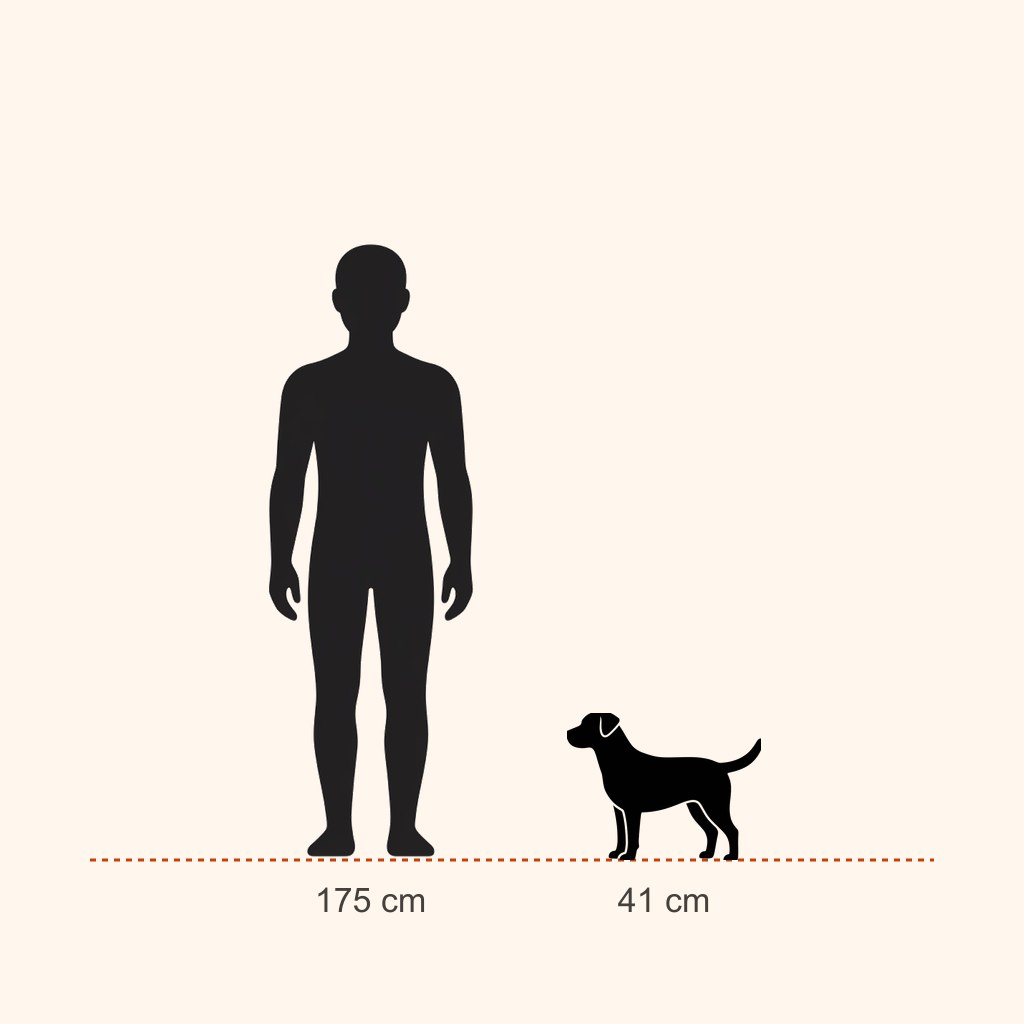
Sources usually give a lifespan of 13-14 years; well-cared-for dogs may live longer. Adults weigh roughly 9-11 kg and stand 41-43 cm.
- Fanconi syndrome: An inherited kidney disease in which the kidney tubules fail to reabsorb glucose, amino acids, and electrolytes. The signs are excessive drinking, excessive urination, and glucose in the urine; as it progresses, weight loss, muscle wasting, and weakness follow. It usually appears in adulthood. If your Basenji starts drinking noticeably more, ask your vet for a urinalysis; glucose can also be monitored at home with urine strips. With early diagnosis and the supplement regimen known as the Gonto Protocol, affected dogs can have a nearly normal lifespan.
- Progressive retinal atrophy (PRA): Night blindness first, then daytime vision loss. Usually begins at 5-8 years or later.
- Hypothyroidism: Autoimmune thyroiditis usually becomes symptomatic at 2-5 years. Weight gain, symmetrical hair loss, skin changes, lethargy, and behaviour changes.
- IPSID (immunoproliferative small intestinal disease): An uncommon inflammatory bowel disease seen in the breed. See your vet for chronic diarrhoea, vomiting, or weight loss.
- Hip dysplasia: Low incidence in the breed, but screening is still recommended.
Feeding
An adult Basenji (9-11 kg) typically eats 120-180 g of quality dry food a day depending on activity; adjust to the feeding guide and body condition.
- Puppy (2-12 months): Small-to-medium breed puppy food, three meals a day.
- Adult: Two meals a day. Its activity level makes obesity less common, but count the treats.
- Senior (8+ years): Calorie needs fall; annual blood and urine tests are especially important for Fanconi and thyroid monitoring.
A Basenji diagnosed with Fanconi syndrome should follow a diet and supplement plan only under veterinary supervision. Fresh water must always be available; notice how fast the bowl empties so you can spot a sudden rise in drinking.
Basenjis are opportunistic thieves, so keep counters and bins secure.
Grooming and coat
The Basenji is one of the easiest breeds to groom.
- Short, fine coat; a soft brush or grooming mitt once a week.
- Grooms itself like a cat and has very little doggy odour. Baths are rarely needed.
- Nails every two to four weeks; check them given all the jumping and running.
- Check ears weekly and brush teeth several times a week.
- Its short coat and lean build make it sensitive to cold; a coat may be needed on cold, wet winter days, and it may dislike going out in the rain.
Training and exercise
Daily requirement: at least one hour. Brisk walks, running in a secure area, and mental games. An under-exercised Basenji redecorates the house.
Priorities:
- Lead and secure fencing. Never let it off-lead in open areas; fences must be high and hard to climb.
- Socialisation (8-16 weeks). Early exposure to people, children, dogs, and other household pets.
- Crate training. Prevents damage and dangerous chewing when alone.
- Short, fun sessions. Basenjis bore quickly with repetition and simply opt out; 5-10 minute, game-based sessions work.
- Mental stimulation. Food puzzles, scent games, and sports like lure coursing give the prey drive a safe outlet.
Harsh methods backfire completely. You cannot force a Basenji, but you can persuade it to want to do something.
History
The Basenji was used for thousands of years as a hunting dog by peoples of Central Africa, particularly the Congo region. Hunters used these fast, quiet, clever dogs to drive game into nets, and this practice continues in some areas today.
Depictions of Basenji-type dogs are said to date back to ancient Egypt, and genetic research places the breed among very old dog lineages.
Early attempts to bring the breed to the West were difficult. Imports to England in the 1930s established it, and it soon reached North America. The Basenji Club of America was founded in 1942, and the American Kennel Club recognised the breed in 1943.
This guide is for information only and is not a substitute for veterinary advice. Prices are approximate and vary by region and time.
Adoption Prep Checklist
Housing
-
Medium-breed dog bed
A comfortable bed supports joint health.
Feeding
-
Medium-breed dog food
Food matched to breed size gives the right nutritional balance.
-
Food and water bowl set
Needed for daily feeding and water access.
Grooming
-
Short-hair dog brush
Regular brushing reduces shedding and matting.
-
Dog nail clippers
Regular nail care matters for healthy walking.
-
Dog shampoo
Use a dog-specific shampoo for skin and coat health.
Walking & Activity
-
Running/exercise dog harness
Needed for safe walks.
-
Interactive dog puzzle toy
Mental and physical stimulation reduces behavior problems.
Frequently Asked Questions
Does the Basenji shed?
Shedding is low. Brushing once a week is usually enough, with a mild increase during seasonal changes.
Can the Basenji live in an apartment?
Yes. It lives comfortably in an apartment as long as its daily needs are met. What matters is not floor area but consistent exercise and mental stimulation.
Is the Basenji good with children?
Caution is warranted. With proper socialisation and adult supervision it can live with children, but it is not a first choice for homes with young children.
Is the Basenji suitable for first-time dog owners?
Partly. Someone with basic experience will manage well, but it would not be the first choice for a complete beginner.
How much exercise does the Basenji need?
It is high-energy and needs vigorous daily activity. Mental stimulation matters as much as physical exercise; without enough to do, destructive behaviour follows.
Can the Basenji be left alone during the day?
It tolerates being alone well. That makes it workable for someone employed full time, though it will still expect attention and activity on your return.
How long does the Basenji live?
The Basenji lives 14-16 years on average. Diet, regular veterinary check-ups and early screening for hereditary conditions all affect this directly.
Where does the Basenji come from?
The Basenji originates from Central Africa. The geography a breed was developed in, and the job it was bred for, explain much of its temperament and care needs today.