

Dogue de Bordeaux
The image on this page is AI-generated and does not depict a real animal.
- Species
- Dog
- Origin
- France
- Size
- Large
- Lifespan
- 5-8 years
- Temperament
- Loyal calm protective
- Description
One of France's oldest mastiff breeds; a strong but calm-at-home guard dog for its family.
- Physical Traits
Short dense coat (fawn/red tones), a large wrinkled head, a very muscular body.
- Care / Environment Info
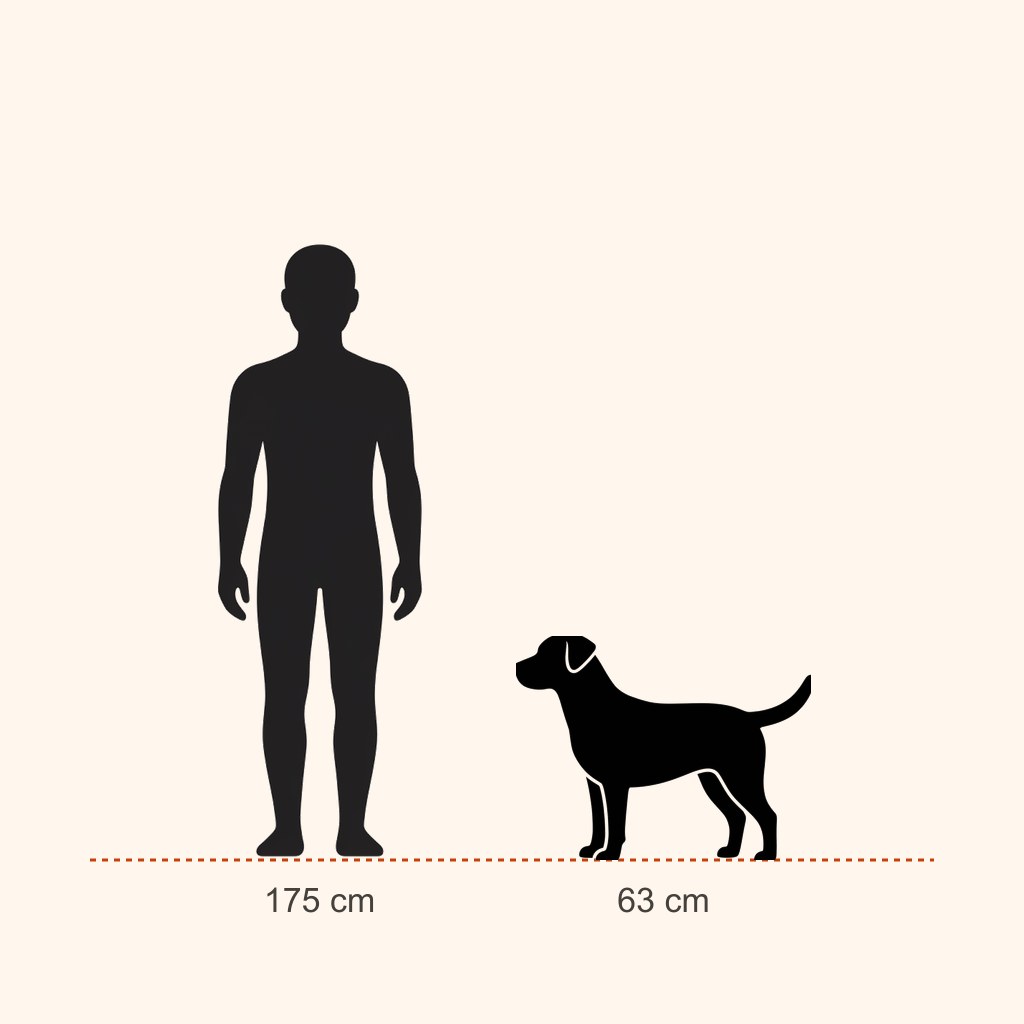
A house with a garden is preferred. Its short coat sheds little, facial wrinkle cleaning is important. Moderate exercise needs, drooling tendency is noticeable, heat-intolerant.
Dogue de Bordeaux Owner's Guide
Last updated:
Is a Dogue de Bordeaux right for you?
The Dogue de Bordeaux (French Mastiff) is one of France's oldest breeds, recognisable by its huge head, wrinkled brow and coat ranging from pale fawn to mahogany. At home it is calm, devoted and protective. But anyone considering one needs to face a hard fact first: the Dogue de Bordeaux is among the shortest-lived of all registered breeds. Your years together are often limited, and heart disease, cancer and bloat are real risks during them.
| Situation | Suitability | Note |
|---|---|---|
| Apartment | Poor | Calm, but a 50 kg-plus, drooling, heat-intolerant dog |
| First-time dog owner | Unsuitable | Powerful and stubborn; males can be dominant |
| Family with children | Caution | Gentle with family; size and strength need supervision |
| Hot summers without air conditioning | Unsuitable | Short muzzle means a high risk of heatstroke |
| Very tidy household | Poor | Drool and facial fold care are daily jobs |
| Left alone for long hours | Poor | Strongly attached to its people |
| Calm, experienced, home-based family | Moderate | Provided you are prepared for vet costs and a short life |
Before you adopt
The Dogue de Bordeaux is not usually on breed-restriction lists (it is not on Turkey's dangerous-breeds list, for example), but it is a powerful dog and full responsibility for control rests with you. Check local rules anyway.
Breeder choice is critical. Ask for the parents' echocardiogram results from a veterinary cardiologist, plus hip and elbow evaluations. A murmur may be heard with a stethoscope, but diagnosis needs an echo. Look at the puppy's footpads: cracks or thickening can indicate hereditary hyperkeratosis.
Avoid exaggerated types with very short muzzles, very loose eyelids and heavy wrinkling; these features increase breathing and eye problems. Asking how old the parents are and at what age the grandparents died gives you a sense of the line's health.
Adult Dogues are sometimes given up to rescues because of their care needs; an adult with a cardiac check is more predictable than a puppy.
Temperament
The FCI standard describes the Dogue as a vigilant, courageous guardian without aggressiveness; very attached and affectionate to its owner, calm and balanced, with a high stimulus threshold. It also notes that males normally have a dominant character.
At home it mostly sleeps and wants to be near its family. It is wary of strangers and territorial; it barks rarely but convincingly. It can clash with other dogs, especially large dogs of the same sex.
It is sensitive. Harshness and shouting make it shut down; praise and rewards work far better. Its stubbornness is not a lack of understanding but a lack of perceived need.
Health issues and lifespan
Sources usually give an average lifespan of 5 to 8 years. A UK study based on veterinary records found a median age at death of 5.5 years in a small sample of 21 dogs, placing the breed among the shortest-lived. Make your decision knowing this.
- Heart disease: Subaortic stenosis (SAS) and dilated cardiomyopathy (DCM) are among the leading causes of death. Tiring quickly, fainting, coughing, fast breathing and a swollen belly are signs. Have murmurs investigated in puppyhood and arrange regular cardiac checks in adulthood.
- Gastric dilatation-volvulus (bloat): The stomach fills with gas and twists. A swollen belly, unproductive retching, heavy drooling and restlessness mean going straight to an emergency vet; it can kill within hours. The MSD Veterinary Manual recommends preventive gastropexy for at-risk breeds, often done at neutering.
- Cancer: Lymphoma, haemangiosarcoma, mast cell tumours and bone cancer are reported. A growing lump, swollen lymph nodes, unexplained lameness or weight loss need a vet.
- Hip and elbow dysplasia: Lameness and difficulty rising. Controlled growth and a lean weight are the best protection.
- Heatstroke and breathing difficulty: The short muzzle makes cooling hard. Heavy noisy breathing, a bluish tongue or staggering are emergencies.
- Footpad hyperkeratosis: Pads harden and crack, usually from 4-6 months, sometimes with lameness and infection.
- Eyelid problems: Entropion and ectropion; watering, redness and squinting are signs.
Feeding
An adult Dogue (under the FCI standard at least 50 kg for males and 45 kg for females) typically eats roughly 550-850 g of quality dry food a day, depending on energy density and activity. The breed gains weight easily, and extra weight strains both joints and heart.
- Puppy (2-18 months): Giant-breed puppy food. Do not push growth; do not add calcium.
- Adult: At least two, ideally three, smaller meals a day.
- Senior (from about 5-6 years): Ageing starts early in this breed; adjust calories and joint support with your vet.
To reduce bloat risk, use a slow-feeder for fast eaters, limit activity for about an hour before and after meals, and avoid feeding in stressful situations. A possible link between some grain-free diets and DCM is still under investigation; choose food with your vet.
Grooming and coat
- Fine, short coat; a weekly rubber brush. Moderate shedding.
- Facial folds should be wiped daily with a damp cloth and dried thoroughly; trapped moisture causes skin infection.
- Keep drool cloths handy, especially after drinking and eating.
- Check eyes daily for discharge and redness.
- Nails every three to four weeks; long nails affect a heavy dog's posture.
- Summer care: No walks in the heat of the day; cool floors, shade and plenty of water. In hot climates air conditioning is close to essential.
Training and exercise
Daily requirement: 30-60 minutes of steady walking and short play sessions. The Dogue is not a running partner; long runs and exercise in heat are dangerous.
Priorities:
- Early socialisation (8-16 weeks). Essential for an adult that is balanced with strangers and other dogs.
- Leash manners. A 50-60 kg dog pulling is a dog you cannot hold; teach it in puppyhood.
- Basic cues and calm greetings. Not jumping on people is a safety issue at this size.
- Controlled growth. Avoid stairs, jumping down and long strenuous walks until about 18 months.
- Handling for vet visits. Accustom the puppy to having its mouth, ears, paws and folds touched.
Short, rewarding, enjoyable sessions give the best results.
History
According to the FCI standard, the Dogue de Bordeaux is one of the most ancient French breeds and probably descends from the dogs of the Alans. In the 14th century Gaston Phébus, Count of Foix, wrote in his hunting book that such a dog held its bite more strongly than three sighthounds.
Until the mid-19th century it was little known outside Aquitaine. It was used for hunting boar, guarding homes and cattle, working for butchers and, at times, fighting. It appeared under its present name at the first French dog show in Paris in 1863. Of the Toulouse, Paris and Bordeaux types, the Bordeaux type became today's breed; the first standard was published in 1896.
Badly hit by both world wars, the breed was threatened with extinction after the second and was revived in the 1960s. Much of its international fame comes from the 1989 film "Turner & Hooch".
This guide is for information only and is not a substitute for veterinary advice. Prices are approximate and vary by region and time.
Sources
- www.fci.be/Nomenclature/Standards/116g02-en.pdf
- www.petmd.com/dog/breeds/dogue-de-bordeaux
- ddbrescue.org/dogue-de-bordeaux-health-information-sheet/
- pmc.ncbi.nlm.nih.gov/articles/PMC9050668/
- www.msdvetmanual.com/digestive-system/diseases-of-the-stomach-and-intestines-in-small-animals/gastric-dilation-and-volvulus-in-small-animals
- www.tarimorman.gov.tr/DKMP/Haber/209/Tehlike-Arz-Eden-Hayvanlara-Iliskin-Genelge
Adoption Prep Checklist
Housing
-
Large-breed dog bed
A comfortable bed supports joint health.
Feeding
-
Large-breed dog food
Food matched to breed size gives the right nutritional balance.
-
Food and water bowl set
Needed for daily feeding and water access.
Grooming
-
Short-hair dog brush
Regular brushing reduces shedding and matting.
-
Dog nail clippers
Regular nail care matters for healthy walking.
-
Dog shampoo
Use a dog-specific shampoo for skin and coat health.
Walking & Activity
-
Dog leash and collar set
Needed for safe walks.
-
Plush dog toy
Mental and physical stimulation reduces behavior problems.
Frequently Asked Questions
Does the Dogue de Bordeaux shed?
Shedding is low. Brushing once a week is usually enough, with a mild increase during seasonal changes.
Can the Dogue de Bordeaux live in an apartment?
Possible but not ideal. A house with outdoor space is preferable; in an apartment you will need to increase daily exercise substantially.
Is the Dogue de Bordeaux good with children?
Generally yes. It adapts well to families with children. Even so, interactions should be supervised and children taught to respect the animal’s boundaries.
Is the Dogue de Bordeaux suitable for first-time dog owners?
Partly. Someone with basic experience will manage well, but it would not be the first choice for a complete beginner.
How much exercise does the Dogue de Bordeaux need?
It needs a moderate amount of exercise. Daily activity plus some play time makes for a balanced routine.
Can the Dogue de Bordeaux be left alone during the day?
It can be left alone for a few hours. Long, routine absences can bring on boredom-driven behaviour problems; enrichment and a predictable routine reduce that risk.
How long does the Dogue de Bordeaux live?
The Dogue de Bordeaux lives 5-8 years on average. Diet, regular veterinary check-ups and early screening for hereditary conditions all affect this directly.
Where does the Dogue de Bordeaux come from?
The Dogue de Bordeaux originates from France. The geography a breed was developed in, and the job it was bred for, explain much of its temperament and care needs today.