

Rhodesian Ridgeback
The image on this page is AI-generated and does not depict a real animal.
- Species
- Dog
- Origin
- South Africa
- Size
- Large
- Lifespan
- 12-14 years
- Temperament
- Loyal independent confident protective
- Description
Known for the characteristic reverse-growing ridge of fur on its back, a strong and independent hunting dog.
- Physical Traits
Short smooth wheaten coat, a distinct reverse-growing ridge of fur along the back, a muscular athletic body.
- Care / Environment Info
A house with a garden is preferred. Its short coat sheds little, easy to maintain. High exercise needs. Its independent character requires consistency in training.
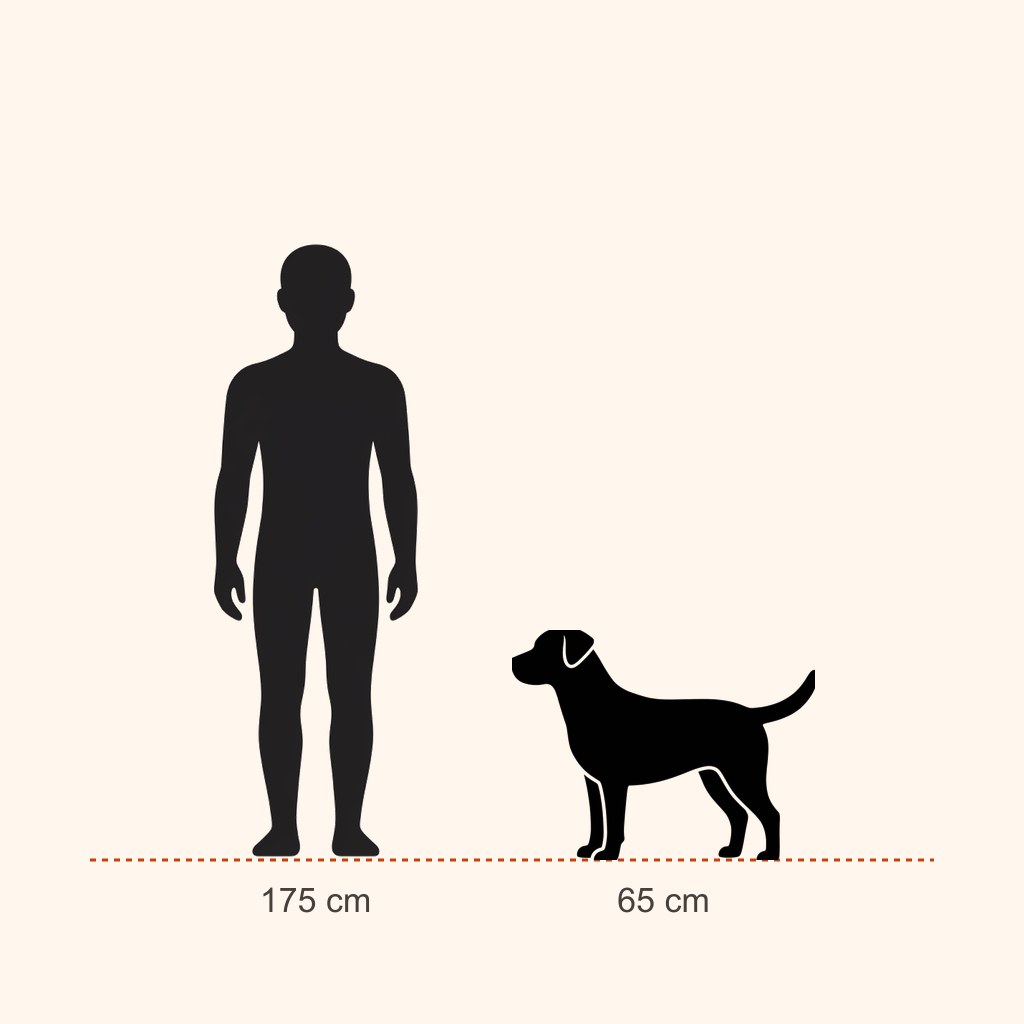
Rhodesian Ridgeback Owner's Guide
Last updated:
Is a Rhodesian Ridgeback right for you?
The Rhodesian Ridgeback is a strong, athletic hound from southern Africa, recognised by the "ridge" of hair growing in the opposite direction along its back. Historically used to track lions and hold them at bay until the hunter arrived, it is also called the "lion dog". It is deeply attached to its family and calm indoors, but strong-willed, independent and physically powerful. For people looking for an easy short-haired family dog, it is harder than it looks.
| Situation | Suitability | Note |
|---|---|---|
| Apartment | Poor | A 32-40 kg dog that wants a long run every day |
| Active family that runs | Excellent | VCA rates it as a very good jogging partner |
| Family with young children | Moderate | Gentle with its family; its size and strength can knock a small child over |
| First-time dog owner | Poor | Stubborn and independent; needs consistent training |
| Home with cats and small pets | Caution | Accepts animals it grew up with; strong prey drive towards unfamiliar small animals |
| Dog parks | Poor | VCA generally does not consider it suited to dog parks |
| Hot climate | Good | The short coat suits warm weather but offers little protection from cold |
| Looking for a watchdog | Good | Reserved with strangers and alert |
The key thing to know: a Ridgeback can take around two years to become a settled adult, and in the meantime you live with a strong, clever adolescent that tests boundaries.
Before you adopt
Dermoid sinus check: A congenital problem specific to the breed (details in the health section). Ask the breeder whether a vet has palpated each puppy along the neck, back and tail. The Ridgeback club clearly recommends that dogs with dermoid sinus are not bred from.
Other tests: The American breed club recommends hip and elbow evaluation, thyroid screening, eye examination, and DNA tests for degenerative myelopathy (DM) and early-onset adult deafness (EOAD). Ask for the parents' results.
Ridgeless puppies: Some puppies are born without a ridge. This is not a health problem, and a ridgeless Ridgeback makes just as good a family dog. However, a seller who does not disclose it openly is a warning sign.
Legal status: The breed is not commonly restricted, but always check local rules. In Turkey, for example, it is not on the dangerous-breed list under Law No. 5199.
Temperament
The FCI standard describes the breed as dignified, even-tempered and reserved with strangers. VCA describes a strong-willed, powerful and somewhat independent dog.
It is loyal to its family and usually calm, even lazy, at home; it loves to stretch out on the sofa. Outdoors it can switch into a fast, sharp-sighted hunter in an instant. A fleeing cat or rabbit can pull even a trained Ridgeback after it.
It is not aggressive towards strangers but keeps its distance; it does not embrace people it does not know. It is not a big barker, and when it barks there is usually a reason.
It thinks for itself. It understands a cue but may not follow it if it sees no point. Harsh methods create resistance and insecurity in this breed.
Health issues and lifespan
VCA gives a lifespan of 10-12 years. The American breed club considers it a relatively healthy breed; the main concerns are:
- Dermoid sinus: A congenital tube-like channel running between the skin and the spine, usually on the midline of the neck, back or tail. A small tuft of upright hair may be visible at 3-5 weeks, and it can be felt in newborns. Hair and oily material collect inside, and it can become infected and discharge; if it reaches the spinal cord it can cause serious problems such as meningitis. Treatment is surgical; club resources recommend early surgery, before five months. See a vet straight away for swelling, discharge, pain or a change in gait along the spine.
- Hypothyroidism: Highlighted in the American club's health resources. Weight gain, lethargy, hair loss. Diagnosed by blood test, treated with lifelong tablets.
- Hip and elbow dysplasia: Limping, difficulty rising. Parent X-rays and weight control in puppies matter.
- Degenerative myelopathy (DM): A progressive spinal cord disease of older dogs, with dragging hind feet, slipping and eventually inability to walk. A DNA test exists.
- Epilepsy and juvenile myoclonic epilepsy: Muscle jerks, especially when falling asleep, or seizures in young dogs. See a vet after the first episode.
- Gastric dilatation-volvulus (bloat): An emergency in this deep-chested breed. For a swelling belly, unproductive retching, drooling and restlessness, go to an emergency vet without delay.
- Early-onset adult deafness: Reduced response to sound in young adulthood. A DNA test is available.
Feeding
An adult Ridgeback (females about 32 kg, males about 36-40 kg) eats roughly 350-500 g of quality dry food a day depending on activity. VCA notes that some individuals gain weight easily; the waist should stay visible and the ribs easy to feel.
- Puppy (2-15 months): Large-breed puppy food, three meals a day. Do not push growth; excess calories and added calcium harm joints.
- Adult: 22-26% protein, portions matched to activity.
- Senior (8+ years): Reduce calories; monitor thyroid and weight.
Feed two meals a day and avoid vigorous exercise for about an hour before and after. Ridgebacks are expert counter-surfers; do not leave food out in the kitchen.
Grooming and coat
A short, dense, glossy coat that is easy to care for.
- A rubber brush or hound glove once a week is enough; VCA rates shedding as below average.
- Bathe only when dirty.
- Check along the spine regularly: Especially in puppies and young dogs, feel the neck-back-tail line for swelling or discharge.
- Nails every three to four weeks; long nails affect gait.
- Check ears weekly and brush teeth several times a week.
- The short coat gives little protection in cold, wet weather, so a coat may help in winter. In summer, choose shade and cooler hours to protect thin-haired areas and paws from hot ground.
Training and exercise
Daily requirement: about one to two hours. VCA recommends a good walk or jog every day, or a run in an enclosed area. Do not let it off lead in open areas without a proven recall; it is fast and prey-focused.
Priorities:
- Early socialisation (8-16 weeks). In a breed that is reserved with strangers, varied people, sounds and places keep wariness from turning defensive.
- Lead manners. A strong 35-40 kg dog that pulls is a real problem; solve it in puppyhood.
- Recall. Difficult because of prey drive; work on a long line with high-value rewards.
- Boundaries and house rules. Be consistent about counters, doorways and the sofa; it will exploit any gap.
- Mental work. Scent games, lure coursing and tracking suit the breed's nature.
Positive reinforcement with short sessions and little repetition works best. Avoid long runs and repeated jumping on hard ground during puppyhood.
History
The Rhodesian Ridgeback developed in southern Africa. Hunting and guard dogs brought by European settlers were crossed with the semi-domesticated ridged dogs of the local Khoikhoi people, producing a dog able to withstand African heat, thirst and rough terrain.
In the late 19th century, in Rhodesia (today's Zimbabwe), these dogs were used in lion hunting. Their job was not to kill the lion but to track it and keep it at bay with agile movements until the hunter arrived; the AKC notes that the breed became famous for this ability.
The first breed standard was drawn up in Bulawayo, Rhodesia, in 1922. The FCI definitively recognised the breed in 1955 and places it in Group 6 (scent hounds), with South Africa as its country of origin. Today it is mostly kept as a family dog and watchdog, and some compete in lure coursing and tracking.
This guide is for information only and is not a substitute for veterinary advice. Prices are approximate and vary by region and time.
Adoption Prep Checklist
Housing
-
Large-breed dog bed
A comfortable bed supports joint health.
Feeding
-
Large-breed dog food
Food matched to breed size gives the right nutritional balance.
-
Food and water bowl set
Needed for daily feeding and water access.
Grooming
-
Short-hair dog brush
Regular brushing reduces shedding and matting.
-
Dog nail clippers
Regular nail care matters for healthy walking.
-
Dog shampoo
Use a dog-specific shampoo for skin and coat health.
Walking & Activity
-
Running/exercise dog harness
Needed for safe walks.
-
Interactive dog puzzle toy
Mental and physical stimulation reduces behavior problems.
Frequently Asked Questions
Does the Rhodesian Ridgeback shed?
Shedding is low. Brushing once a week is usually enough, with a mild increase during seasonal changes.
Can the Rhodesian Ridgeback live in an apartment?
Possible but not ideal. A house with outdoor space is preferable; in an apartment you will need to increase daily exercise substantially.
Is the Rhodesian Ridgeback good with children?
Caution is warranted. With proper socialisation and adult supervision it can live with children, but it is not a first choice for homes with young children.
Is the Rhodesian Ridgeback suitable for first-time dog owners?
No — it suits experienced owners. Its character, energy or care requirements would be demanding for a first-time owner.
How much exercise does the Rhodesian Ridgeback need?
It is high-energy and needs vigorous daily activity. Mental stimulation matters as much as physical exercise; without enough to do, destructive behaviour follows.
Can the Rhodesian Ridgeback be left alone during the day?
It tolerates being alone well. That makes it workable for someone employed full time, though it will still expect attention and activity on your return.
How long does the Rhodesian Ridgeback live?
The Rhodesian Ridgeback lives 12-14 years on average. Diet, regular veterinary check-ups and early screening for hereditary conditions all affect this directly.
Where does the Rhodesian Ridgeback come from?
The Rhodesian Ridgeback originates from South Africa. The geography a breed was developed in, and the job it was bred for, explain much of its temperament and care needs today.