

Siberian Husky
The image on this page is AI-generated and does not depict a real animal.
- Species
- Dog
- Origin
- Siberia (Russia)
- Size
- Large
- Lifespan
- 12-14 years
- Temperament
- Friendly outgoing energetic independent
- Description
Bred for pulling snow sleds, a hardy and energy-filled working dog.
- Physical Traits
Thick double coat, often blue or different colored 'ice blue' eyes, upright ears and a fox-like tail.
- Care / Environment Info
A house with a garden in a cool climate is preferred. Its double coat sheds very heavily twice a year ('coat blow'), requiring frequent brushing during these periods. Very high exercise needs. Strong tendency to escape/dig, secure fencing is essential; a vocal breed (howls).
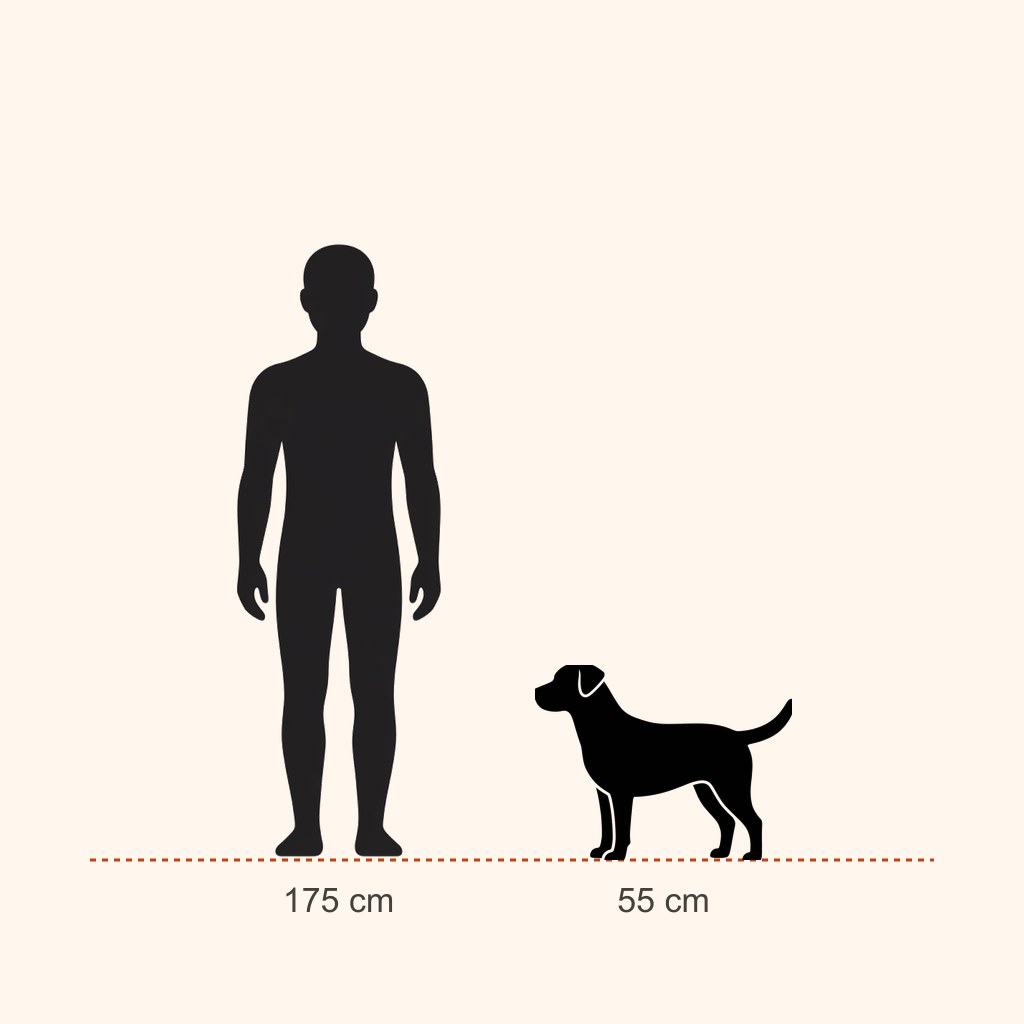
Siberian Husky Owner's Guide
Last updated:
Is a Siberian Husky right for you?
The Husky is the breed most often adopted for the wrong reasons. Blue eyes and a wolf-like appearance drive the purchase, and then the breed's real nature emerges: a sled dog that loves to escape, is extremely energetic, and is selective about obedience. The rising number of Huskies in shelters is no accident.
| Situation | Suitability | Note |
|---|---|---|
| Apartment | Poor | Will wreck the house without two hours of running a day |
| Family with young children | Good | Not aggressive, but exuberant and strong |
| First-time dog owner | Not suitable | Its independent character requires experience |
| Alone 8+ hours a day | Very poor | Howls, digs, escapes; neighbour complaints are inevitable |
| Household with fur allergies | Very poor | Blows its entire coat twice a year |
| Hot climate | Poor | An arctic breed; struggles badly in summer |
| Garden with a high fence | Excellent | The fence must be at least 180 cm with a dig-proof base |
Be clear before getting a Husky: this dog is not safe off-lead. You cannot guarantee that a breed selected for centuries to run will stop on a recall cue.
Before you adopt
Ask for hip certification and an eye examination certificate. Blue eyes are not a health indicator; blue, brown, and odd eyes are equally normal in this breed.
Adult Huskies are easy to find in shelters and breed rescues, precisely because so many are adopted on impulse. Adopting an adult means you know the energy level and escape tendency in advance, which is a real advantage with this breed.
Check the fence before the dog arrives, not after. Huskies dig under fences, climb them, and squeeze through gaps.
Temperament
The Husky is friendly but not obedient. As a sled dog it was selected to make decisions independently of its handler. It hears a cue, evaluates it, and calculates what complying will earn it. This does not mean it is unintelligent; on the contrary, its motivation is simply different.
It does not guard. It treats strangers as friends and greets everyone who enters. Being a pack dog it usually gets on with other dogs, but the prey drive toward cats and small animals is high.
Two characteristic behaviours: howling (it does not bark, it howls; this is the breed's voice) and digging (opening holes is natural behaviour, and setting aside a digging area is the solution).
Health issues and lifespan
Average lifespan is 12 to 14 years. The Husky is considered healthy compared with breeds of similar size.
- Eye disease: The area needing most attention. Juvenile cataracts, corneal dystrophy, and progressive retinal atrophy occur. Ask the breeder for an annual eye examination certificate.
- Hip dysplasia: Less common than in other large breeds but present. Parental certification matters.
- Zinc-responsive dermatosis: Specific to arctic breeds; crusting and hair loss around the nose, eyes, and paws due to poor zinc absorption. Managed with zinc supplementation.
- Hypothyroidism: Weight gain, lethargy, poor coat quality. Diagnosed by blood test and controlled with medication.
- Heat stroke: The most realistic risk in a hot climate. The double coat insulates, but humidity combined with high temperature is dangerous. In summer, move exercise to early morning and late evening.
Feeding
An adult Husky (16-27 kg) consumes 350-450 g of quality dry food per day. A surprising detail: the Husky eats little for its size. A sled-dog metabolism uses fuel very efficiently.
- Puppy (2-12 months): Medium or large breed puppy food, three meals a day.
- Adult: 24-30% protein with a moderate to high fat level. This breed uses fat well.
- Senior (8+ years): Calories reduced, joint support added.
A Husky may appear to have no appetite, and this is usually normal; worrying and constantly changing food creates fussy eating. Leave the bowl down for 15 minutes and remove it if untouched.
Avoid: chocolate, grapes, onion and garlic, xylitol, cooked bones.
Grooming and coat
The coat is the most demanding aspect of the breed. Twice a year, in what is called "blowing coat", it sheds the entire undercoat. That means weeks of hair everywhere in the house.
- Brush once or twice a week normally, daily during the shedding period.
- An undercoat rake is essential; a normal brush does not reach the undercoat.
- Three or four baths a year are enough. The Husky is not a smelly breed and cleans itself.
- Never shave. The coat also insulates in summer and protects from the sun; if clipped, the dog overheats more and the coat may not regrow properly.
- Nails every three to four weeks, teeth several times a week.
Training and exercise
Daily requirement: at least 1.5 to 2 hours of intense exercise. Walking is not enough; running, cycling alongside, sled or scooter pulling, or agility are needed. A Husky that is not run enough chews furniture, walls, and doors.
Priorities:
- Lead and safety. This breed should not be let loose in unfenced areas. A microchip and ID tag are essential.
- Pulling. Pulling is genetic; set up two separate systems, one where pulling in harness is allowed and one where pulling on the walking lead is not.
- Socialisation (8-16 weeks). Especially with cats and small animals.
- Managing howling. It cannot be eliminated; preventing boredom reduces it.
- Mental work. Scent games, food puzzles, trick training. Physical tiredness alone is not enough.
Work with rewards and keep repetitions low. A Husky quickly tires of dull repetition and disengages.
History
The breed was developed by the Chukchi people of north-eastern Siberia. The aim was a dog that could pull a sled over long distances on little food, work harmoniously in a team, and live alongside people. It was brought to Alaska in 1908 during the gold rush and quickly gained fame in sled races. The breed's best-remembered moment is the 1925 Nome serum run: during a diphtheria outbreak, the teams that carried the antitoxin 1,085 kilometres by sled were Siberian Huskies, among them Balto and Togo. The AKC recognised the breed in 1930.
This guide is for information only and is not a substitute for veterinary advice. Prices are approximate and vary by region and time.
Adoption Prep Checklist
Housing
-
Large-breed dog bed
A comfortable bed supports joint health.
Feeding
-
Large-breed dog food
Food matched to breed size gives the right nutritional balance.
-
Food and water bowl set
Needed for daily feeding and water access.
Grooming
-
De-shedding brush
Regular brushing reduces shedding and matting.
-
Dog nail clippers
Regular nail care matters for healthy walking.
-
Dog shampoo
Use a dog-specific shampoo for skin and coat health.
Walking & Activity
-
Running/exercise dog harness
Needed for safe walks.
-
Interactive dog puzzle toy
Mental and physical stimulation reduces behavior problems.
Frequently Asked Questions
Does the Siberian Husky shed?
It sheds heavily, especially at seasonal changes. Expect near-daily brushing and regular cleaning at home; it is not a good choice for anyone sensitive to pet hair.
Can the Siberian Husky live in an apartment?
Possible but not ideal. A house with outdoor space is preferable; in an apartment you will need to increase daily exercise substantially.
Is the Siberian Husky good with children?
Generally yes. It adapts well to families with children. Even so, interactions should be supervised and children taught to respect the animal’s boundaries.
Is the Siberian Husky suitable for first-time dog owners?
No — it suits experienced owners. Its character, energy or care requirements would be demanding for a first-time owner.
How much exercise does the Siberian Husky need?
It is high-energy and needs vigorous daily activity. Mental stimulation matters as much as physical exercise; without enough to do, destructive behaviour follows.
Can the Siberian Husky be left alone during the day?
It can be left alone for a few hours. Long, routine absences can bring on boredom-driven behaviour problems; enrichment and a predictable routine reduce that risk.
How long does the Siberian Husky live?
The Siberian Husky lives 12-14 years on average. Diet, regular veterinary check-ups and early screening for hereditary conditions all affect this directly.
Where does the Siberian Husky come from?
The Siberian Husky originates from Siberia (Russia). The geography a breed was developed in, and the job it was bred for, explain much of its temperament and care needs today.